
Cooking Oils Compared: Smoke Points, Fats, and Everyday Use
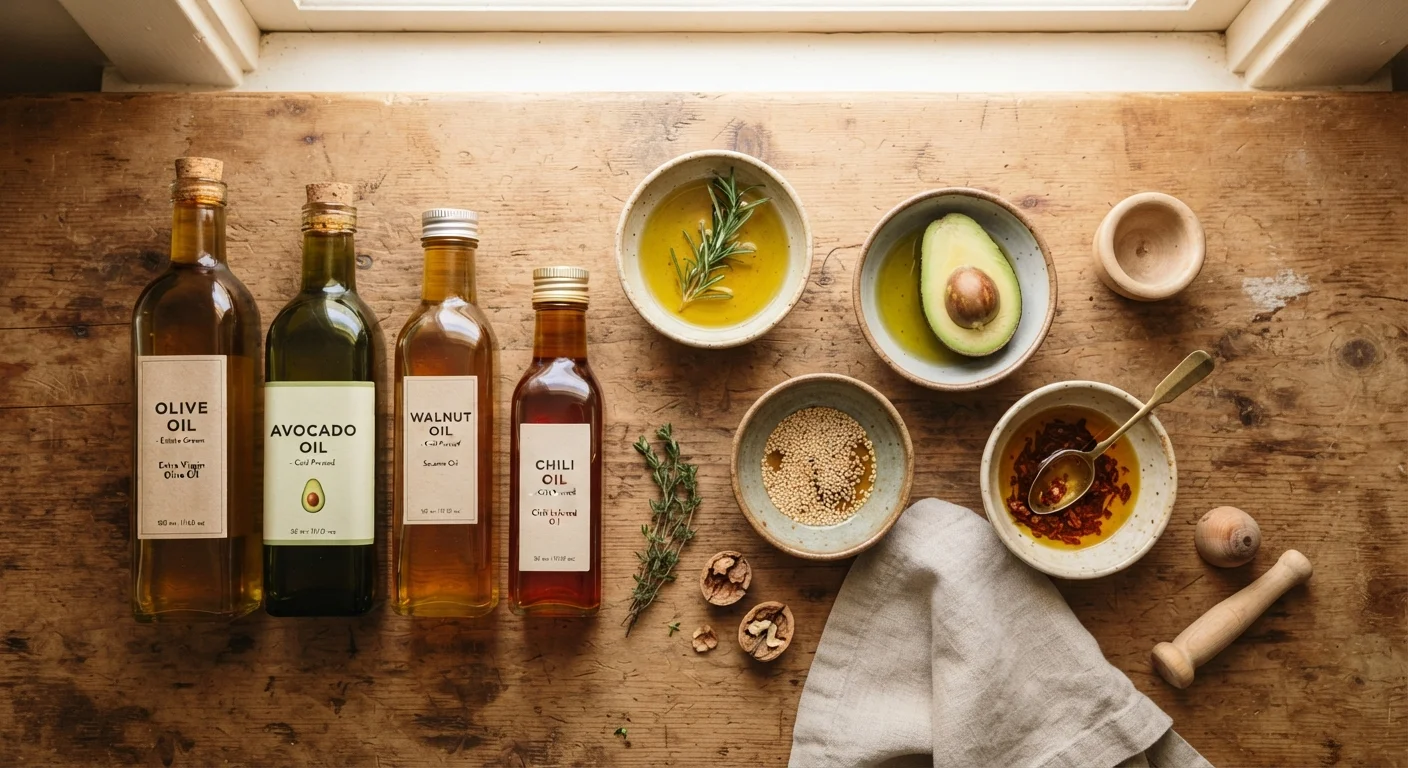
Photo credit: SyndicateExpert.com | Information At The Ready
In this article
A practical comparison of common cooking oils — olive, avocado, vegetable, and more — by nutritional profile and best kitchen uses.
Key Takeaways
- Smoke point determines which oils are safe for high-heat cooking like searing and frying.
- Oils high in monounsaturated fats — like olive and avocado — are generally linked to heart health benefits.
- No single oil is ideal for every cooking task; having two or three on hand covers most needs.
- Refined oils typically have higher smoke points than their unrefined counterparts.
- Store oils away from heat and light to prevent rancidity and preserve nutritional quality.
Why Smoke Point Matters
The smoke point of an oil is the temperature at which it begins to visibly smoke and break down. When an oil exceeds its smoke point, it doesn't just produce an unpleasant smell — it releases potentially harmful compounds, including aldehydes and free radicals, while also degrading flavor. Understanding smoke points helps you match an oil to your cooking method before you turn on the burner.
High-heat methods — such as stir-frying, searing meat, and deep frying — demand oils with smoke points above 400°F. Low-heat tasks like gentle sautéing and baking typically fall below 375°F. Cold applications such as salad dressings and dips don't require any heat tolerance at all, opening the door to flavorful unrefined oils you'd never want to subject to a hot pan.
| Olive Oil (EVOO) | Avocado Oil (Refined) | Canola Oil | Coconut Oil (Unrefined) | Sesame Oil (Unrefined) | |
|---|---|---|---|---|---|
| Smoke Point | 375–405°F | 500–520°F | ~400°F | ~350°F | ~350°F |
| Primary Fat Type | Monounsaturated | Monounsaturated | Monounsaturated/Polyunsaturated | Saturated | Polyunsaturated |
| Best Cooking Method | Medium heat, raw | High heat, searing | General all-purpose | Baking, low-heat | Finishing only |
| Flavor Profile | Fruity, robust | Neutral, mild | Neutral | Coconut, distinct | Nutty, bold |
| Relative Cost | Moderate | Moderate–High | Low | Moderate | Moderate |
| Heart-Health Research | Well-supported | Promising, less studied | Generally favorable | Debated/limited | Mixed evidence |
The Fat Profile: What's Actually in Your Oil
All cooking oils are essentially 100% fat, but the type of fat varies significantly and carries real nutritional implications. There are three primary categories to understand:
- Monounsaturated fats (MUFAs): Found in high concentrations in olive and avocado oils. Research broadly supports their role in maintaining healthy cholesterol levels and cardiovascular health when they replace saturated fats in the diet.
- Polyunsaturated fats (PUFAs): Dominant in vegetable, sunflower, and flaxseed oils. These include omega-6 and omega-3 fatty acids. While essential, the typical American diet already skews heavily toward omega-6s; oils like flaxseed and walnut oil can help shift that balance toward omega-3s.
- Saturated fats: Concentrated in coconut and palm oils. Current dietary guidance from organizations like the American Heart Association recommends limiting saturated fat intake, though research on coconut oil's specific effects remains an active area of study.
Trans fats, once common in partially hydrogenated oils, have been largely removed from the food supply following regulatory action — but it's worth checking labels on older processed products.
Common Oils and Their Best Kitchen Uses
Here's a practical breakdown of the oils most Americans are likely to encounter:
- Extra-virgin olive oil (EVOO)
- Smoke point roughly 375–405°F depending on quality and filtration. Rich in MUFAs and polyphenol antioxidants. Best for sautéing at medium heat, roasting vegetables, salad dressings, and finishing dishes. Its flavor is a genuine asset in Mediterranean-style cooking.
- Avocado oil (refined)
- Smoke point around 500–520°F — among the highest of any cooking oil. Mild, neutral flavor. An excellent choice for high-heat searing, grilling, and deep frying when you don't want the oil to contribute its own taste to the dish.
- Canola oil (refined)
- Smoke point approximately 400°F. Affordable and widely available. Contains a relatively favorable omega-6 to omega-3 ratio compared to many vegetable oils. A practical, neutral all-purpose oil for everyday cooking and baking.
- Coconut oil
- Smoke point around 350°F for unrefined varieties. High in saturated fat. Its distinctive flavor suits certain baked goods and Southeast Asian dishes, but it's not a universal substitute for other oils, particularly for those monitoring saturated fat intake.
- Sesame oil (unrefined)
- Smoke point roughly 350°F. Not suited for high heat but prized as a finishing oil in Asian cooking. Its bold, nutty character is best added after cooking rather than used as the primary cooking fat.
Storage, Freshness, and Practical Tips
Even a nutritionally excellent oil becomes less useful — and potentially harmful — if it goes rancid. Oxidation is the enemy: heat, light, and air all accelerate it. Store oils in a cool, dark pantry rather than next to the stove. Tightly seal bottles after each use. Oils with higher PUFA content (like flaxseed oil) are especially prone to oxidation and may benefit from refrigeration.
Signs an oil has turned include a crayon-like or sour smell and a noticeably bitter taste. When in doubt, trust your nose — rancid oil is worth discarding.
For most households, a practical setup is simple: one neutral high-heat oil (refined avocado or canola) and one flavorful finishing oil (extra-virgin olive oil). That combination covers the vast majority of everyday cooking needs without requiring a cabinet full of specialty bottles.
This article is for general informational and educational purposes only. It is not intended as personalized medical or dietary advice. Consult a registered dietitian or qualified healthcare professional for guidance tailored to your individual health needs.

Author
Health & Wellness Editorial Team
Health & Wellness Editorial Team is the collective byline for our editorial team and contributor network. Articles published under this byline or an editorial pen name are researched, written, and reviewed according to our editorial standards for clarity, consistency, and independence before publication.
View all articles →