
Crate Training Done Right: The Logic Behind the Method
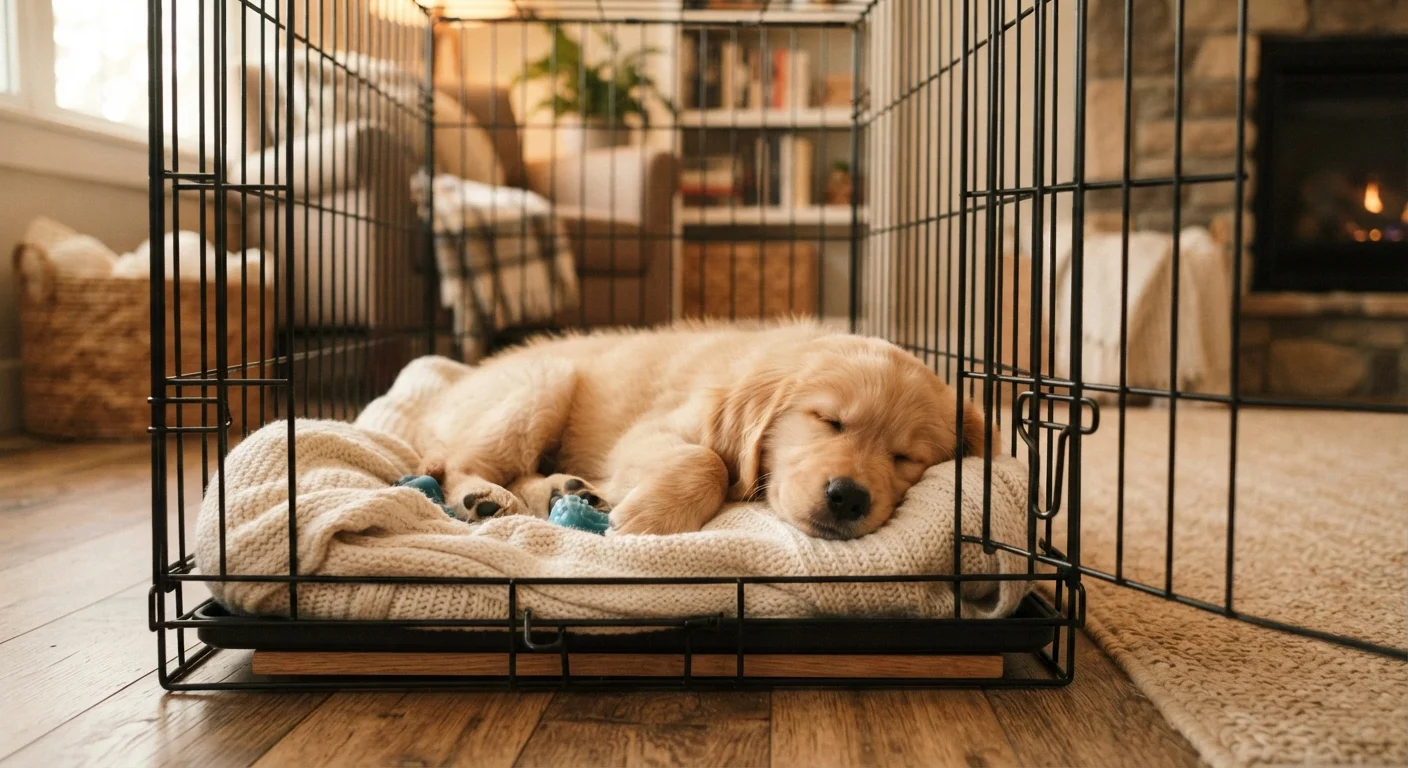
Photo credit: SyndicateExpert.com | Information At The Ready
In this article
Crate training is often misunderstood as punishment. Learn the behavioral science behind it and how to use it humanely and effectively.
Key Takeaways
- Dogs are den animals by nature — a crate taps into an instinct for enclosed, secure spaces.
- Crate training works through gradual positive association, never force or punishment.
- The right crate size matters: large enough to stand and turn, but not so big it loses den-like quality.
- Puppies need crate breaks every few hours to prevent accidents and relieve stress.
- A dog that views its crate as a safe haven can self-settle more easily when anxious.
Why Crate Training Makes Behavioral Sense
Crate training is one of the most misunderstood tools in dog ownership. Critics often frame it as imprisonment, but the behavioral science tells a different story. Dogs are descended from den-dwelling ancestors, and many retain a natural tendency to seek small, enclosed spaces when they feel stressed or want to rest undisturbed. A well-introduced crate satisfies that instinct.
The method works on the same principle as any positive conditioning: when a dog consistently experiences comfort, treats, and calm inside the crate, the space becomes a predictor of good things rather than a source of anxiety. That association — built gradually and never forced — is the entire foundation of humane crate training.
Understanding where your dog sleeps and spends time is part of broader decisions about their environment. Indoor vs. outdoor living arrangements affect how much a dog relies on interior safe spaces like a crate, so it's worth thinking about your setup holistically.
Let the Dog Set the Pace
Every dog moves through crate training at a different speed — some adapt within days, others take several weeks. Resist the urge to accelerate the process based on a fixed timeline. Moving faster than the dog's comfort level will create setbacks that take longer to repair than the time you were trying to save.
What You'll Need Before You Start
Setting yourself up for success means gathering the right equipment and setting realistic expectations before your dog ever steps near the crate.
What you will need
Wire or plastic dog crate
Provides the primary safe, enclosed space for training; wire crates offer visibility, plastic crates offer more den-like enclosure.
Crate divider panel
Allows you to reduce the interior space for puppies so the crate doesn't feel too large to retain its den quality.
Soft crate mat or blanket
Makes the crate floor comfortable and helps the dog associate the space with rest.
High-value training treats
Used to build positive associations at each stage of the introduction process.
Chew toy or stuffed food puzzle
Gives the dog a calming, rewarding activity inside the crate during early closed-door sessions.
Step-by-Step: Introducing and Using the Crate
Follow these steps in order. Rushing any phase — especially the early ones — is the most common reason crate training stalls or creates negative associations. Let your dog set the pace within reason.
Place the crate in a low-key, familiar area
Position the crate in a room where the dog already spends time — a living room corner works well. Leave the door open and let the dog investigate on its own terms. Do not push, lure, or prompt the dog inside on day one. Simply let the crate exist in the dog's environment as a neutral object.
Begin tossing treats near and then inside the crate
With the door still open, toss a high-value treat just outside the crate entrance. Once the dog retrieves it calmly, toss the next treat just inside the threshold. Gradually move the treat placement deeper into the crate over multiple short sessions. Never close the door during this phase.
Feed meals inside the open crate
Begin placing the dog's regular meals inside the crate with the door open. This links the strongest daily positive event — eating — directly to the crate space. If the dog is hesitant, start with the bowl at the crate entrance and gradually move it inward over several meals.
Introduce short closed-door sessions
Once your dog enters the crate voluntarily and eats comfortably inside, try closing the door briefly while it finishes a meal or works on a food puzzle. Start with 30–60 seconds, then open the door before the dog shows any sign of distress. Gradually extend duration over several days.
Practice leaving the room while the dog is crated
Once your dog is comfortable with the closed door for several minutes, begin stepping out of sight briefly. Return before the dog becomes distressed, reward calmly, and open the door. Build duration and distance at a pace your dog can handle without excessive whining or pawing.
Establish a consistent crating routine
Integrate crate time into the dog's daily schedule — for naps, overnight sleep, and when you need to leave the home briefly. Consistency helps the dog predict when it will be in the crate and removes the uncertainty that drives anxiety. Always provide a potty break before crating and immediately after releasing the dog.
Never Use the Crate as Punishment
Sending a dog to its crate after scolding or during a tense moment will undo your training progress. The crate must remain a consistently positive space. If you find yourself wanting to use the crate punitively, redirect that impulse — use a brief time-out in a neutral space instead, and consult a certified trainer if behavior issues persist.
Common Mistakes and How to Avoid Them
Even owners with the best intentions can undermine crate training through a few predictable errors. Using the crate as a punishment is the most damaging: if a dog is scolded and then placed inside, it will quickly associate the crate with distress. The crate must always be a neutral-to-positive space.
Leaving a dog crated for too long is another frequent pitfall. Adult dogs can generally tolerate four to five hours, but puppies need breaks far more frequently — roughly one hour per month of age, up to a maximum of around four hours during the day. Extended confinement beyond these windows can increase anxiety and undermine housetraining progress.
Finally, skipping the door-open phase and immediately shutting a dog inside tends to trigger panic in sensitive dogs. The gradual approach described in the steps above is not optional — it is the mechanism through which the training actually works.
This article is for general informational purposes only. For personalized guidance on your dog's behavior or health, consult a licensed veterinarian or certified dog trainer.

Author
Pets & Animals Editorial Team
Pets & Animals Editorial Team is the collective byline for our editorial team and contributor network. Articles published under this byline or an editorial pen name are researched, written, and reviewed according to our editorial standards for clarity, consistency, and independence before publication.
View all articles →