
A Practical Glossary of Fitness Terms Every Active Adult Should Know
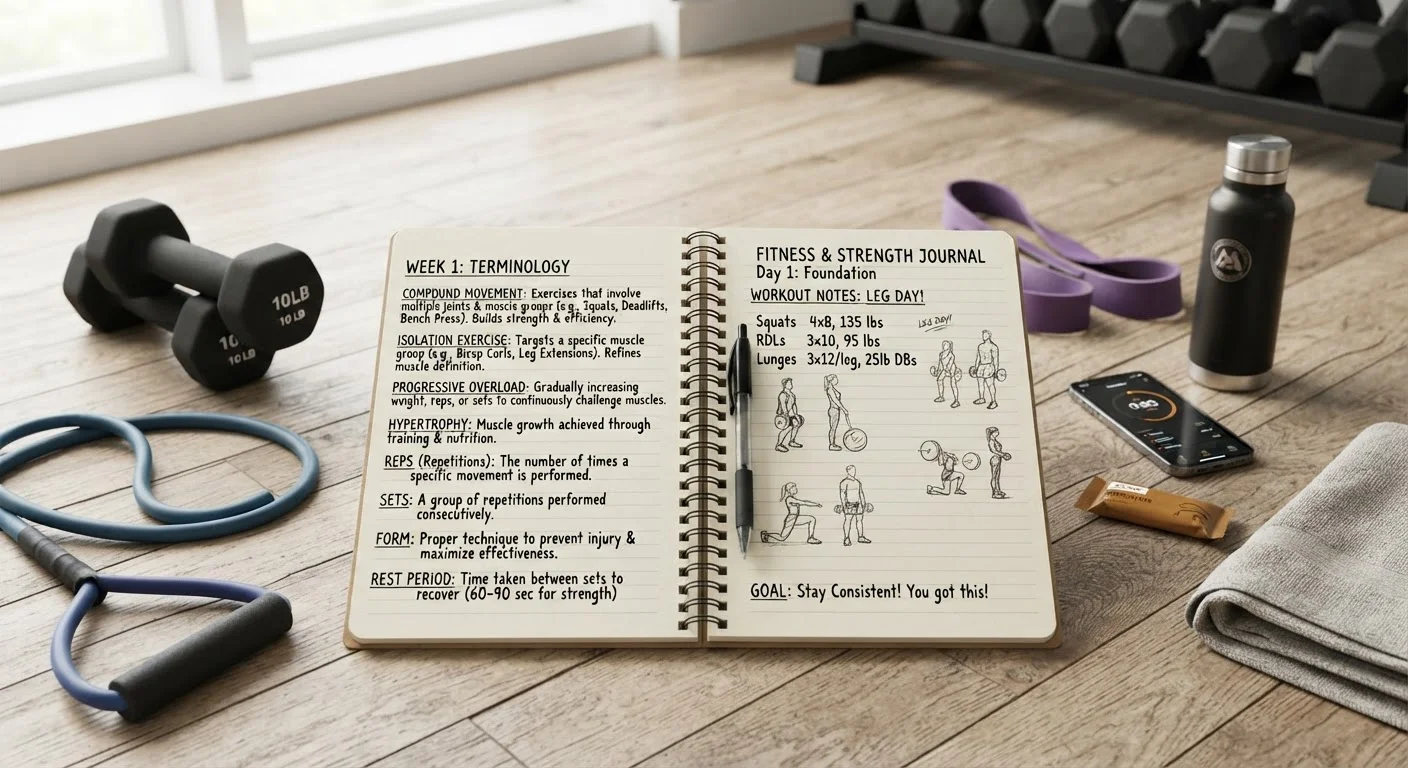
Photo credit: SyndicateExpert.com | Information At The Ready
In this article
From progressive overload to RPE, this reference covers the most commonly used fitness and exercise terms in plain, accessible language.
Why Fitness Vocabulary Matters
Walk into any gym, open a training app, or read a workout plan and you'll quickly encounter a shorthand language — sets, reps, VO2 max, periodization — that can feel impenetrable to newcomers and even to experienced exercisers who've never had formal instruction. Knowing what these terms actually mean helps you follow programs correctly, understand your body's responses, and have more productive conversations with trainers or healthcare providers.
This reference is organized around the concepts you're most likely to encounter in everyday fitness contexts. Whether you're returning to exercise after a break or deepening an established routine, having a shared vocabulary is a practical first step.
Progressive Overload
The principle of gradually increasing training demands — weight, reps, or intensity — to continue stimulating adaptation. Without progressive overload, fitness gains typically plateau over time.
RPE (Rate of Perceived Exertion)
A self-reported scale (usually 1–10) measuring how hard an activity feels. It allows exercisers to regulate effort without requiring heart-rate monitors or other equipment.
Periodization
The systematic organization of training into structured phases — such as building volume, increasing intensity, then recovering — to optimize performance and manage fatigue over time.
VO2 Max
The maximum volume of oxygen the body can use during intense exercise, expressed in milliliters per kilogram of body weight per minute. It is widely used as a benchmark of aerobic fitness.
DOMS
Delayed Onset Muscle Soreness — the muscle discomfort that typically appears 24–72 hours after intense or unfamiliar exercise. It reflects a normal inflammatory repair process, not lasting damage.
Deload
A planned reduction in training volume or intensity — typically lasting one week — designed to allow full recovery from accumulated fatigue before resuming harder training.
EPOC
Excess Post-Exercise Oxygen Consumption — the elevated oxygen uptake that continues after exercise as the body returns to its resting state. Sometimes called the 'afterburn effect.'
Active Recovery
Low-intensity movement performed on rest days — such as walking or gentle stretching — that supports circulation and reduces stiffness without adding significant training stress.
Training Structure and Load
These terms describe how a workout is organized and how effort is quantified over time.
Repetitions (Reps) and Sets: A rep is one complete execution of an exercise — one squat, one push-up. A set is a group of consecutive reps performed without rest. A common notation is "3×10," meaning three sets of ten reps.
Progressive Overload is one of the most evidence-supported principles in exercise science. It refers to gradually increasing the demand placed on the body — through more weight, more reps, shorter rest, or greater range of motion — so that the body continues adapting. Without it, progress tends to plateau. See our beginner's guide to strength training for practical examples of how to apply this principle.
Periodization is the deliberate structuring of training into phases — such as building a base, increasing intensity, then recovering — to manage fatigue and peak performance at the right times. Most organized training programs use some form of periodization, even informal ones.
Rest interval is the recovery time taken between sets or exercises. Shorter rest (30–60 seconds) tends to support muscular endurance and cardiovascular conditioning; longer rest (2–5 minutes) supports maximal strength and power output.
Effort, Energy, and Physiology
RPE (Rate of Perceived Exertion) is a self-reported scale used to gauge how hard an activity feels. The most common version runs from 1 (no effort) to 10 (maximum effort). RPE allows individuals to regulate intensity without equipment, making it widely applicable across fitness levels.
Aerobic vs. Anaerobic exercise describes two fundamentally different energy systems. Aerobic activity — sustained, moderate-intensity movement like jogging — primarily uses oxygen to generate energy. Anaerobic activity, such as sprinting or heavy lifting, relies on stored energy sources and doesn't depend on oxygen in the same way. For a fuller explanation, see what your body is actually doing during each type of exercise.
VO2 Max refers to the maximum rate at which the body can consume oxygen during intense exercise. It is commonly used as a marker of cardiovascular fitness and aerobic capacity. Higher VO2 max values are generally associated with better endurance performance, though genetics and training history both influence this measure.
EPOC (Excess Post-Exercise Oxygen Consumption) — sometimes called the "afterburn effect" — describes the elevated oxygen uptake that continues after a workout ends. The body uses this extra oxygen to restore itself to a resting state. The magnitude of EPOC varies considerably by exercise type and individual factors.
Recovery and Adaptation
Recovery is not passive — it's where physiological adaptation actually occurs. Understanding recovery terminology helps you build a more balanced program.
DOMS (Delayed Onset Muscle Soreness) refers to the muscle discomfort that typically peaks 24–72 hours after unfamiliar or intense exercise. It is caused partly by microscopic muscle damage and the inflammatory response that follows. DOMS is normal, especially when starting a new movement pattern, but severe or persistent pain warrants medical attention.
Active recovery means engaging in low-intensity movement — walking, light cycling, gentle stretching — on rest days rather than complete inactivity. It can help reduce muscle stiffness without adding meaningful training stress.
Deload is a planned, temporary reduction in training volume or intensity, typically lasting one week. It allows the body to fully recover accumulated fatigue before resuming higher-intensity training. Many structured programs incorporate deload weeks every four to eight weeks. Your fitness needs also shift across life stages — recovery strategies that work in your 30s may need adjustment by your 50s.
This article is for general informational and educational purposes only and is not a substitute for advice from a qualified healthcare or fitness professional. Consult a licensed provider before starting or significantly changing an exercise program, especially if you have any existing health conditions.

Author
Health & Wellness Editorial Team
Health & Wellness Editorial Team is the collective byline for our editorial team and contributor network. Articles published under this byline or an editorial pen name are researched, written, and reviewed according to our editorial standards for clarity, consistency, and independence before publication.
View all articles →