
Car Maintenance From the Ground Up: Everything That Keeps a Vehicle Running
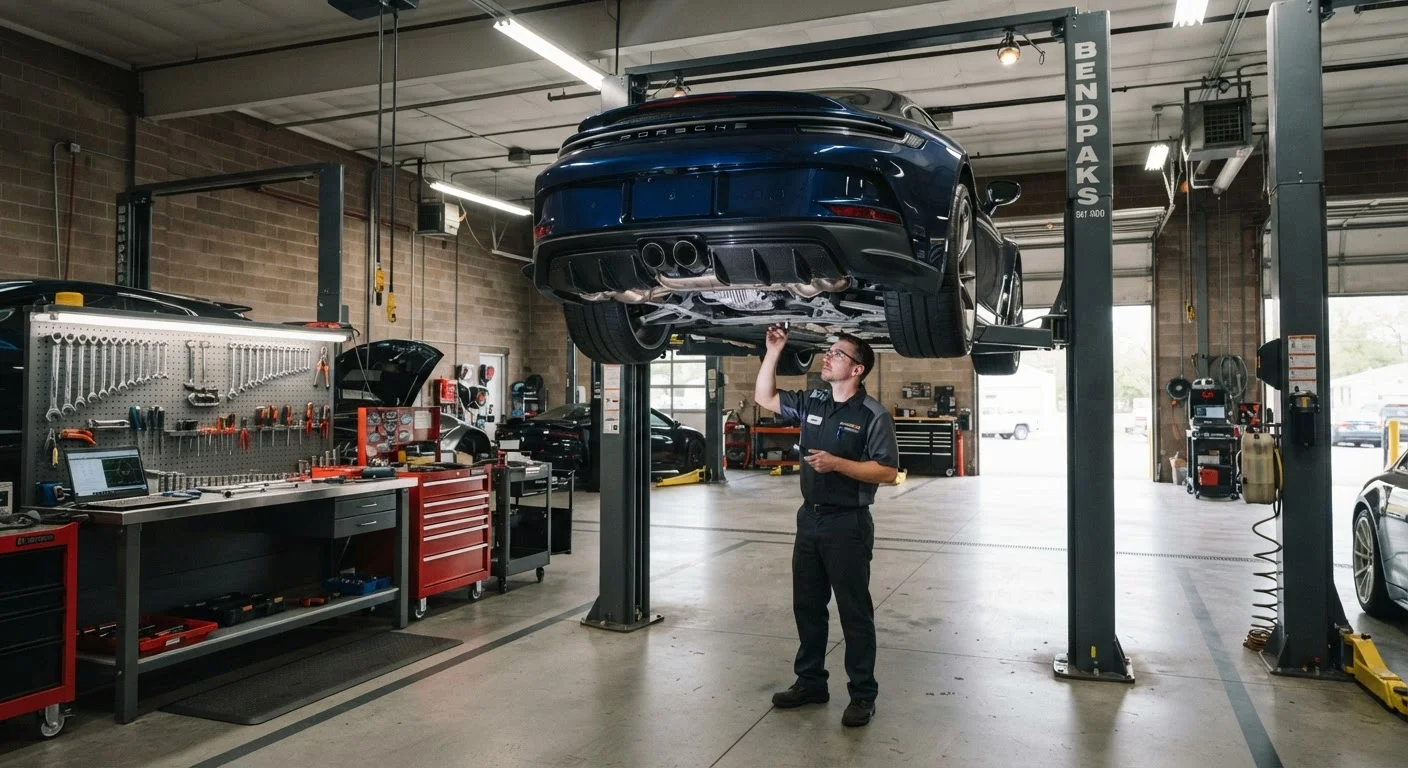
Photo credit: SyndicateExpert.com | Information At The Ready
In this article
An end-to-end resource covering every major vehicle system, its maintenance needs, typical service intervals, and the consequences of neglect.
Key Takeaways
- Oil changes remain the single highest-impact routine maintenance task for engine longevity.
- Brake fluid, coolant, and transmission fluid degrade over time and must be replaced on schedule.
- Tire pressure and tread depth directly affect braking distance, fuel economy, and handling safety.
- A timing belt or chain failure can cause catastrophic engine damage; never skip that interval.
- Keeping a simple maintenance log protects your investment and supports resale value.
Why Proactive Maintenance Pays Off
A car is the second-largest purchase most Americans make, yet the gap between how much people spend on vehicles and how much attention they give to preserving them is striking. Routine maintenance is not about spending money - it is about protecting the money already spent.
Neglect compounds quickly. A worn serpentine belt stresses the alternator. A low coolant level stresses the water pump. Deferred oil changes accelerate wear on every moving part inside the engine. Each skipped service creates conditions that make the next problem more likely and more expensive. For a deeper foundation on what to maintain and when, see our beginner's guide to car ownership.
~$1,200
Average annual car maintenance cost per vehicle
According to AAA's annual "Your Driving Costs" study, routine maintenance and repair average roughly $1,200 per year for a typical passenger vehicle.
35%
Tire-related crashes linked to underinflation
NHTSA data consistently show that underinflated tires are a contributing factor in a significant share of tire-related road incidents in the U.S.
Engine and Oil System
The engine is where fuel and air combine to create motion. Keeping it healthy starts with clean oil. Engine oil lubricates metal components moving at thousands of revolutions per minute, carries heat away from friction points, and suspends microscopic contaminants until the oil filter can trap them.
Over time, oil breaks down thermally and accumulates byproducts that cause sludge. The old rule of 3,000 miles per oil change is largely outdated for modern vehicles; many manufacturer intervals now fall between 5,000 and 10,000 miles, with some synthetic-oil vehicles going up to 15,000 miles. Always defer to your owner's manual. When you do change the oil, replace the oil filter at the same time.
Low Oil or Coolant? Stop Driving Immediately
Running an engine low on oil or coolant - even briefly - can cause permanent internal damage within minutes. If a warning light illuminates for either fluid, pull off safely as soon as possible, allow the engine to cool before checking levels, and do not restart until the problem is diagnosed. Driving through these warnings is one of the most common causes of avoidable engine replacement.
Beyond oil, check the air filter annually - a clogged filter restricts airflow, reducing combustion efficiency and fuel economy. The PCV valve (positive crankcase ventilation), which routes combustion gases back through the intake, is inexpensive and often overlooked; most manufacturers suggest inspection every 30,000 to 50,000 miles.
Cooling, Brakes, and Fluids
The cooling system prevents the engine from destroying itself through heat. It circulates coolant (also called antifreeze) through the engine block, absorbs heat, and dissipates it through the radiator. Coolant degrades over time, becoming acidic and corrosive to metal passages. A full coolant flush every two to five years - depending on fluid type and manufacturer guidance - keeps the system healthy. Always inspect hoses and the radiator cap at the same service.
Brake fluid is hygroscopic, meaning it absorbs moisture from the air through microscopic permeation in hoses and seals. As moisture content rises, the fluid's boiling point drops. During hard braking, this can cause vapor lock - a condition where the fluid boils and compresses like air, dramatically reducing stopping power. Most manufacturers recommend a brake fluid flush every two to three years regardless of mileage.
Check your tire pressure when the tires are cold - ideally before you've driven more than a mile. Pressure readings taken on warm tires run higher than actual and can give you a false sense of security.
Tire pressure expands with heat, so a cold reading is the only accurate baseline. The correct target PSI is listed on the driver's door jamb sticker, not the tire sidewall.
When in doubt about a fluid's condition, rub a small amount between your fingers. Healthy transmission fluid is translucent red; dark brown with a burnt smell means it's overdue for a change.
Visual and tactile checks take seconds but can flag degraded fluid before it damages expensive components like the transmission or power steering pump.
Other fluids that require periodic attention include transmission fluid (automatic transmissions typically specify a change every 30,000 to 60,000 miles under normal conditions), power steering fluid where applicable, and differential fluid in rear- and all-wheel-drive vehicles. Each system's fluid has a defined service life - checking your owner's manual for each one is the most reliable approach.
Tires, Suspension, and Steering
Tires are the only part of the vehicle actually touching the road, making them among the most safety-critical components to monitor. Check tire pressure at least monthly using a quality gauge. Underinflated tires build excess heat, wear unevenly, and reduce fuel efficiency. Overinflated tires reduce the contact patch and diminish grip.
Tread depth is measured in 32nds of an inch. New tires typically start at 10/32" or more. The legal minimum in most U.S. states is 2/32", but handling and wet-braking performance degrade significantly before that threshold is reached - many safety experts recommend considering replacement at 4/32". A simple way to gauge depth is the quarter test: insert a quarter into the tread groove with Washington's head down; if you can see the top of his head, the tread is at approximately 4/32".
Rotate tires every 5,000 to 7,500 miles to promote even wear across all four corners. Get a wheel alignment checked annually or any time you notice uneven wear, pulling to one side, or after a significant pothole impact. The suspension - comprising shocks or struts, control arms, ball joints, and tie rods - absorbs road impacts and controls vehicle body motion. Worn shocks extend braking distance and reduce stability; most manufacturers recommend inspection around 50,000 miles, though driving conditions affect wear rate significantly. For more on road safety, visit our Driving & Safety hub.
Electrical, Filters, and Belts
Modern vehicles are as much electronic as mechanical. The battery powers the starter and all onboard electronics; most batteries last three to five years. A battery showing signs of slow cranking, corrosion at terminals, or more than four years of age warrants a load test at a service center. The alternator charges the battery while the engine runs; a failing alternator will drain even a healthy battery.
Never Skip the Timing Belt Interval
The timing belt (or timing chain) synchronizes your engine's camshaft and crankshaft. If it snaps, pistons and valves can collide, causing damage that often costs more than the car is worth. Always follow your manufacturer's replacement interval - typically between 60,000 and 105,000 miles - and do not wait for symptoms, because there usually aren't any before failure.
The cabin air filter keeps dust, pollen, and particulates out of the passenger compartment through the HVAC system. Unlike the engine air filter, it affects air quality inside the car and is often overlooked. Most manufacturers suggest replacement every 15,000 to 25,000 miles, or annually. In dusty environments, more frequent changes may be necessary.
The serpentine belt drives accessories like the alternator, power steering pump, and air conditioning compressor. Inspect it for cracks, fraying, or glazing every 30,000 miles, and replace it according to your manufacturer's interval - typically between 50,000 and 100,000 miles. A snapped serpentine belt will immediately disable charging and power steering, leaving you stranded.
Building a Maintenance Routine That Sticks
Knowing what to maintain is only half the challenge - the other half is following through consistently. The simplest system is a maintenance log: a notebook in the glove compartment or a notes app on your phone where you record every service with the date and odometer reading. This makes it easy to spot what's coming due, and it adds documented evidence of care that supports resale value.
Severe Driving Conditions Change Everything
Manufacturers define "severe" driving as frequent short trips under five miles, stop-and-go city traffic, extreme heat or cold, towing, and dusty environments. If these describe your typical driving, follow the more frequent "severe service" intervals in your owner's manual rather than the standard schedule.
Group services intelligently. When you bring the car in for an oil change, ask the shop to do a multi-point inspection. Catching a cracked belt or a leaking CV boot during a routine visit costs far less than a roadside breakdown or an emergency repair. For practical strategies on budgeting around these intervals, our article on managing ongoing car costs offers a useful framework.
Finally, take dashboard warning lights seriously. Modern vehicles are equipped with sensors monitoring oil pressure, coolant temperature, battery voltage, tire pressure, and dozens of other parameters. A warning light is not a suggestion - it is the car communicating a condition that warrants prompt attention. Addressing it early is almost always less expensive than waiting. Explore the full scope of what responsible ownership entails through our Car Ownership Basics hub.

Author
Cars & Driving Editorial Team
Cars & Driving Editorial Team is the collective byline for our editorial team and contributor network. Articles published under this byline or an editorial pen name are researched, written, and reviewed according to our editorial standards for clarity, consistency, and independence before publication.
View all articles →