
Breathing Exercises That Actually Calm an Anxious Nervous System
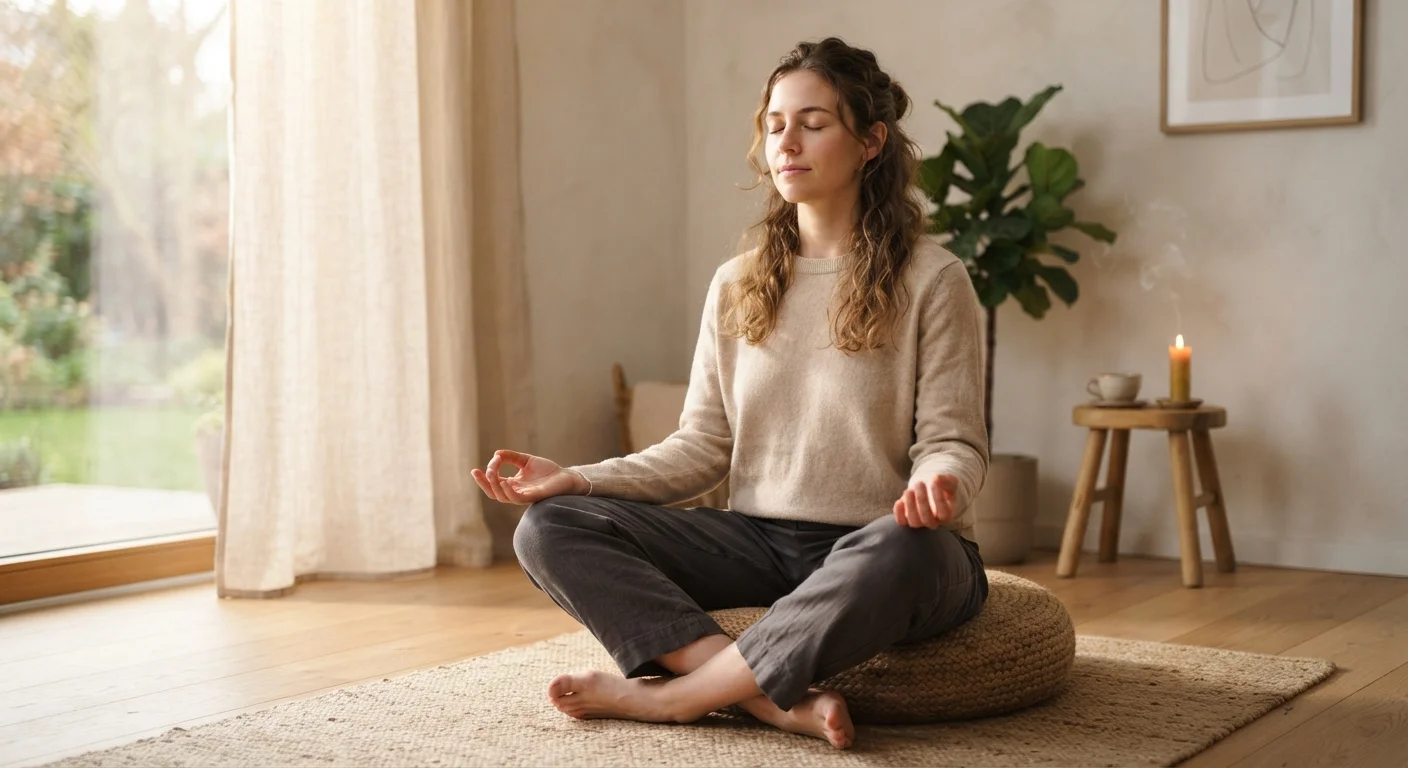
Photo credit: SyndicateExpert.com | Information At The Ready
In this article
Learn evidence-informed breathing techniques—like diaphragmatic and 4-7-8 breathing—and how each signals safety to your nervous system.
Key Takeaways
- Slow, controlled breathing activates the parasympathetic nervous system, counteracting the stress response.
- Techniques like diaphragmatic breathing and 4-7-8 breathing are backed by credible physiological evidence.
- Consistent daily practice—even just a few minutes—yields stronger long-term anxiety management benefits.
- Breathing exercises complement but do not replace professional mental health care when needed.
Why Breathing Changes How Your Nervous System Feels
Anxiety is, in part, a physiological event. When the brain perceives a threat—real or imagined—the sympathetic nervous system triggers the well-known fight-or-flight response: heart rate climbs, muscles tense, and breathing becomes shallow and rapid. What makes breathing uniquely powerful is that it sits at the intersection of voluntary and involuntary control. Unlike heart rate or digestion, you can consciously change your breath pattern—and in doing so, send measurable signals back through the vagus nerve to slow the stress cascade.
Research in respiratory physiology shows that slow, extended exhalations in particular stimulate the parasympathetic nervous system—sometimes called the "rest and digest" system—helping to lower heart rate and reduce the subjective sense of alarm. This isn't about distraction or positive thinking; it's a mechanical process rooted in how your autonomic nervous system is wired.
For a broader look at evidence-informed strategies for managing stress over time, see our guide to protecting mental health during high-stress periods.
Consistency Matters More Than Duration
Even five minutes of intentional breathing practiced daily appears to produce greater cumulative benefit than longer, infrequent sessions. Think of it as conditioning the nervous system's baseline response rather than applying an emergency reset. Building a brief, regular practice is more sustainable and typically more effective long term.
What You'll Need Before You Start
These techniques require no equipment and no special environment, though a few conditions help maximize effectiveness. Choose a quiet space where you won't be interrupted for at least five minutes. Sit upright—either in a chair with both feet flat on the floor or cross-legged on a cushion. Lying down works too, but some people find it easier to fall asleep than to focus on the practice.
What you will need
Four Evidence-Informed Breathing Techniques
The techniques below target slightly different aspects of the stress response. Start with whichever feels most approachable, and treat the others as tools you can reach for in different situations.
Diaphragmatic (Belly) Breathing
Place one hand on your chest and one on your belly. Inhale slowly through your nose for about 4 seconds, directing the breath so that your belly rises while your chest stays relatively still. Exhale through pursed lips for 6–8 seconds, feeling your belly fall. The longer exhale is key: it gives the vagus nerve more time to signal the heart to slow down.
Practice this as your baseline technique—5 to 10 breath cycles whenever anxiety feels elevated, or as a daily morning habit.
4-7-8 Breathing
Inhale quietly through your nose for a count of 4. Hold the breath for a count of 7. Exhale completely through your mouth with a gentle whooshing sound for a count of 8. That is one cycle. Repeat for four cycles to start, working up to eight as the practice feels comfortable.
The extended breath-hold and prolonged exhale together create a pronounced parasympathetic shift, which many people find useful before sleep or after an acute stressor.
Box Breathing (4-4-4-4)
Inhale through your nose for 4 counts. Hold at the top of the breath for 4 counts. Exhale slowly for 4 counts. Hold at the bottom—lungs empty—for 4 counts. That completes one "box." Repeat for 4–6 cycles.
The symmetrical structure makes this technique easy to remember under pressure, which is why it's used in high-stress occupational training programs. It's particularly effective when anxiety manifests as racing thoughts, because the counting gives the mind a concrete anchor.
Resonance (Coherent) Breathing
Breathe in slowly for 5–6 seconds, then out for 5–6 seconds—aiming for roughly five to six full breath cycles per minute. This rate is associated with heart rate variability (HRV) coherence, a state where the heart and respiratory rhythms synchronize in a way linked to lower physiological arousal. You don't need to hold the breath at any point; simply find a smooth, unhurried rhythm.
This technique is well-suited for longer daily practice sessions of 10–20 minutes and may support cumulative reductions in baseline anxiety when practiced consistently over weeks.
This article is for general informational purposes only and is not a substitute for professional medical or mental health advice. If you experience severe or persistent anxiety, please consult a qualified healthcare provider.

Author
Health & Wellness Editorial Team
Health & Wellness Editorial Team is the collective byline for our editorial team and contributor network. Articles published under this byline or an editorial pen name are researched, written, and reviewed according to our editorial standards for clarity, consistency, and independence before publication.
View all articles →