
Therapy, Counseling, and Psychiatry: Understanding the Differences
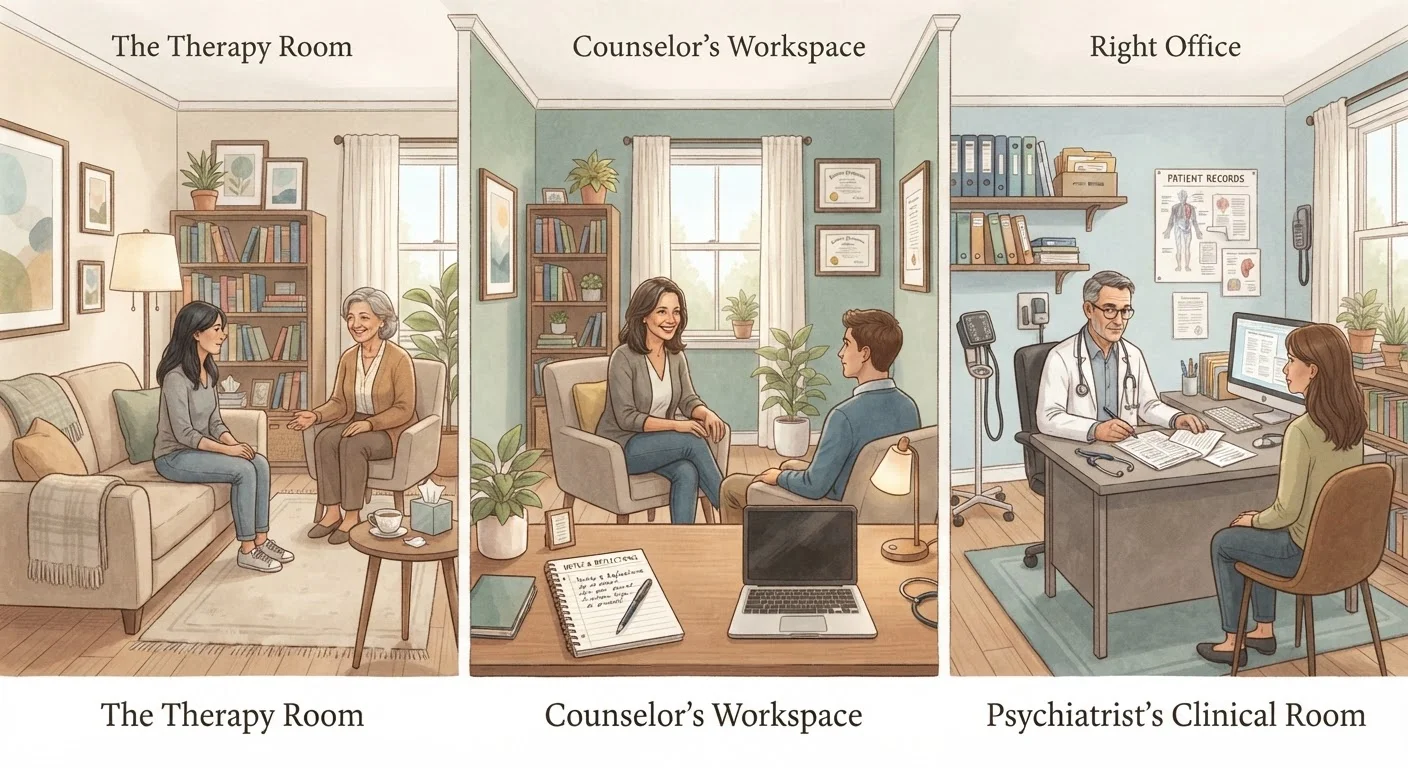
Photo credit: SyndicateExpert.com | Information At The Ready
In this article
Confused about which mental health professional to see? Here's a plain-language breakdown of what each type of provider does.
Key Takeaways
- Therapists, counselors, and psychiatrists have different training, scopes, and roles in mental health care.
- Psychiatrists are medical doctors who can prescribe medication; most therapists and counselors cannot.
- Therapists typically focus on long-term emotional exploration, while counselors often address specific, shorter-term challenges.
- Many people benefit from a combination of providers working together as part of a care team.
- Deciding who to see first depends on your symptoms, goals, and whether medication may be relevant.
Why the Distinctions Matter
When you decide to seek mental health support, one of the first questions you'll face is: who do I actually call? The terms therapist, counselor, and psychiatrist are often used interchangeably in everyday conversation — but they describe meaningfully different professionals with distinct training, credentials, and scopes of practice.
Understanding those differences isn't just academic. It can help you find the right fit faster, set realistic expectations, and navigate the care system more confidently. It can also reduce a common barrier: the feeling of not knowing where to start. For a broader look at common misconceptions that keep people from seeking help, see mental health myths worth examining.
What Each Provider Does
Therapists (Psychotherapists) hold graduate-level degrees — typically a master's or doctorate — in fields such as psychology, social work, or marriage and family therapy. They use structured, evidence-based approaches (such as cognitive behavioral therapy, psychodynamic therapy, or EMDR) to help people explore thoughts, emotions, behavioral patterns, and past experiences. Sessions tend to be ongoing and are well-suited to deeper emotional work, including processing trauma, relationship difficulties, or persistent mood challenges.
Counselors also typically hold graduate degrees, often in counseling or a related field. The distinction from therapists is not always sharp — and in many states, licensing categories overlap — but counselors often focus on more specific, present-focused challenges: career transitions, grief, relationship stress, or adjustment difficulties. Sessions may be shorter-term and more goal-oriented than traditional therapy.
Psychiatrists are medical doctors (MD or DO) who completed medical school followed by a residency in psychiatry. As physicians, they can diagnose mental health conditions and prescribe medication — a key distinction. While some psychiatrists also provide talk therapy, many focus primarily on medication evaluation and management, often working alongside a therapist or counselor as part of a broader care team.
| Therapist | Counselor | Psychiatrist | |
|---|---|---|---|
| Typical degree | Master's or doctorate (psychology, social work, MFT) | Master's in counseling or related field | Medical degree (MD or DO) + psychiatry residency |
| Can prescribe medication | No (in most states) | No | Yes |
| Primary focus | Deep emotional exploration, long-term patterns | Specific challenges, shorter-term goals | Diagnosis, medication management |
| Session format | Ongoing talk therapy | Structured, often time-limited sessions | Medical evaluation and follow-up visits |
| Best suited for | Trauma, relationship issues, persistent mood concerns | Life transitions, grief, situational stress | Complex diagnoses, medication needs, severe symptoms |
| Often works alongside | Psychiatrist for medication if needed | Therapist or psychiatrist as needed | Therapist for talk support |
When to Consider Each Type of Support
If you're dealing with persistent sadness, anxiety, difficulty functioning day-to-day, or want to work through longstanding emotional patterns, a therapist is typically a sound starting point. If you're experiencing a specific stressor — a job loss, a divorce, a major life transition — a counselor may be a practical fit.
If your symptoms feel more severe, or if previous therapy hasn't resolved significant depression, anxiety, or other conditions, a psychiatric evaluation may be appropriate. A psychiatrist can assess whether medication might be beneficial alongside — not instead of — other forms of support. Your primary care physician may also be an entry point: they can screen for mental health conditions and refer you to the right specialist.
Many people find that a combination works best. A psychiatrist may manage medication while a therapist provides ongoing talk support. These roles are designed to complement each other. For a fuller picture of the care landscape in the US, including how to access these providers, mental health resources available in America offers a useful overview.
Not Sure Where to Start? Try Your Primary Care Doctor
If navigating the mental health system feels overwhelming, your primary care physician is a reasonable first call. They can screen for common conditions, rule out physical contributors to your symptoms, and refer you to an appropriate mental health professional. Many practices now have integrated behavioral health staff on-site.
It's also worth knowing that peer support — through community or online spaces — can offer meaningful connection alongside professional care, though it's not a substitute for it. Online support communities have real value, but understanding their limits matters.
This article is for general informational and educational purposes only and is not a substitute for professional medical or mental health advice. Always consult a qualified healthcare provider about your individual circumstances, symptoms, or treatment options.

Author
Health & Wellness Editorial Team
Health & Wellness Editorial Team is the collective byline for our editorial team and contributor network. Articles published under this byline or an editorial pen name are researched, written, and reviewed according to our editorial standards for clarity, consistency, and independence before publication.
View all articles →