
New Fish Owner Checklist: What to Confirm Before Your Fish Comes Home
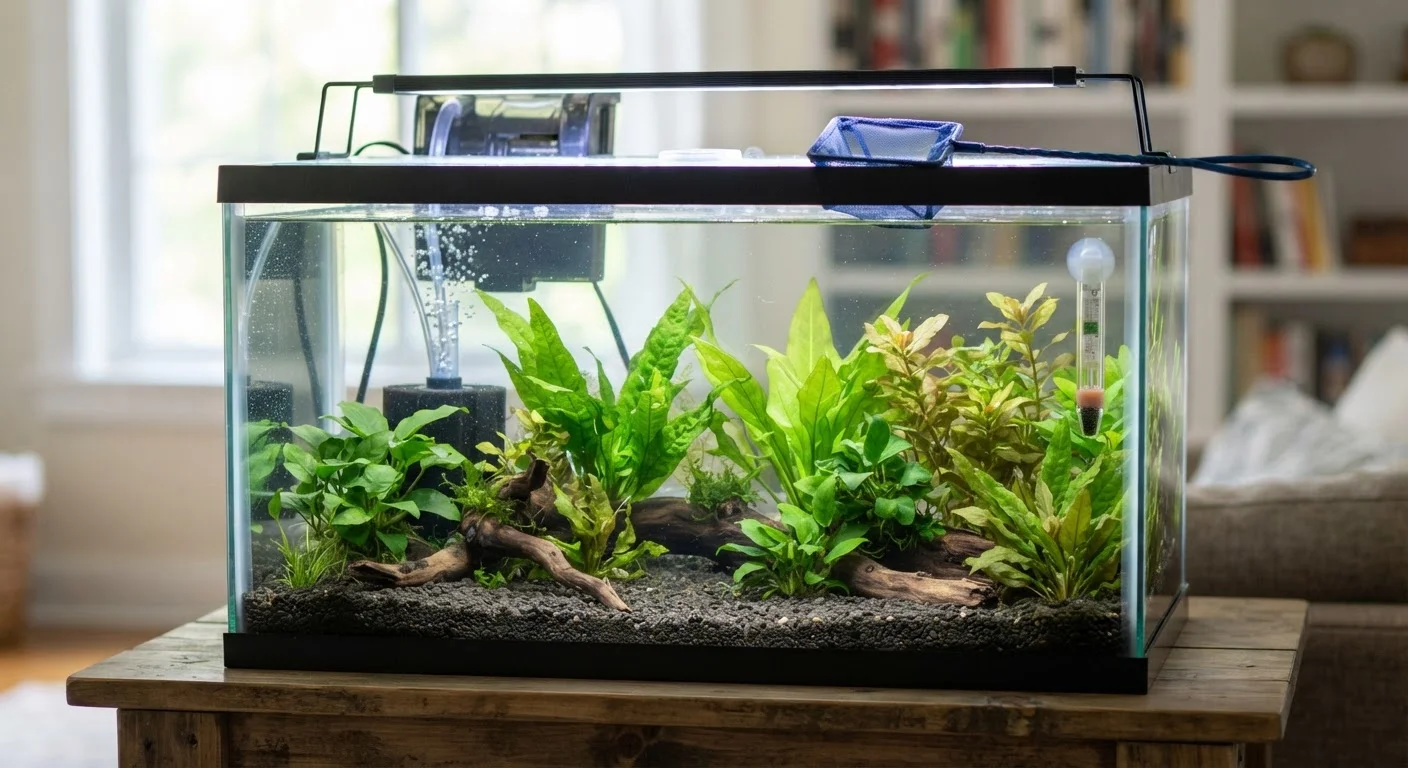
Photo credit: SyndicateExpert.com | Information At The Ready
In this article
A practical checklist covering tank cycling, water parameters, equipment, and compatibility checks — everything to verify before adding fish to your aquarium.
Key Takeaways
- A fully cycled tank with stable water parameters is the single most critical requirement before adding fish.
- Matching fish species to your tank size, temperature range, and community compatibility prevents most common beginner mistakes.
- Equipment should be tested and running for at least 24 hours before fish arrive.
- Transport stress can weaken fish immunity — a proper acclimation protocol reduces shock and die-off.
- Quarantine procedures protect your existing stock when adding new fish to an established tank.
Why Pre-Arrival Preparation Matters More Than You Think
Fish are often marketed as low-maintenance starter pets, but aquarium water chemistry is genuinely complex. Unlike bringing home a cat — where you can course-correct supplies and setup relatively quickly (see our guide on bringing a cat home for the first time) — an uncycled or poorly balanced tank can kill fish within hours of arrival. Most new fish deaths trace directly back to preparation failures, not bad luck.
This checklist is designed to be used before you leave for the fish store or accept a delivery. Work through it methodically. If a step isn't complete, hold off on purchasing — a delay of a few days is far less costly than losing fish and starting over.
Liquid Aquarium Test Kit
Accurately measures ammonia, nitrite, nitrate, and pH — essential for confirming cycle completion and ongoing water quality.
Separate Digital or Glass Thermometer
Independently verifies actual tank temperature, independent of heater dial readings which can drift.
Water Conditioner (Dechlorinator)
Neutralises chlorine and chloramines in tap water before it enters the tank.
Quarantine Tank
Isolates new fish for observation before introduction to an established community, reducing disease risk.
Drip Acclimation Kit or Air Tubing with Valve
Allows slow, controlled introduction of tank water to transport bag water, minimising osmotic and chemical shock.
GH/KH Test Kit
Measures water hardness levels critical for species that require soft or hard water conditions.
Tank Cycling and Water Chemistry
The nitrogen cycle — the process by which beneficial bacteria convert toxic ammonia into less harmful compounds — is the foundation of a healthy aquarium. Skipping or rushing this step is the leading cause of early fish loss. Use a liquid test kit (not paper strips, which are significantly less accurate) to verify all parameters before fish arrive.
Tank Cycling
Equipment Check
Species Compatibility
Acclimation Preparation
Supplies and Safety
Acclimation, Compatibility, and Final Checks
Even after a tank is fully cycled and equipment is confirmed working, the moment fish enter your home presents its own risks. Temperature shock, pH mismatch between the store's water and your tank, and overcrowding are all avoidable with a systematic final review.
If you're adding fish to an established tank rather than starting fresh, a quarantine tank is strongly recommended. New fish frequently carry pathogens that show no visible symptoms for days or weeks, and introducing them directly to a community tank can trigger disease outbreaks affecting all inhabitants.
Never Skip the Quarantine Step for New Fish
Even fish that appear healthy at the store may carry ich, bacterial infections, or parasites with no visible signs. Introducing unquarantined fish directly into a community tank puts every existing inhabitant at risk. A minimum two-week quarantine period in a separate tank is considered standard practice by most experienced aquarists and aquatic veterinarians.
Avoid Overstocking — It Happens Quickly
The common "one inch of fish per gallon" rule is an oversimplification that can lead to dangerous overstocking, particularly with large-bodied or high-bioload species. Research the specific waste output and swimming space requirements of each species rather than relying on size-to-volume ratios alone.
Just as you'd run through a checklist before any high-stakes preparation — much like travelers use a pre-trip checklist before departing — running through each item below before your fish arrives is the most reliable way to prevent preventable losses.
This article is for general informational purposes only and does not substitute for guidance from a qualified aquatic veterinarian or experienced aquarist for specific health or disease concerns.

Author
Pets & Animals Editorial Team
Pets & Animals Editorial Team is the collective byline for our editorial team and contributor network. Articles published under this byline or an editorial pen name are researched, written, and reviewed according to our editorial standards for clarity, consistency, and independence before publication.
View all articles →