
Finding Your People: A Practical Map to Locating the Right Online Community
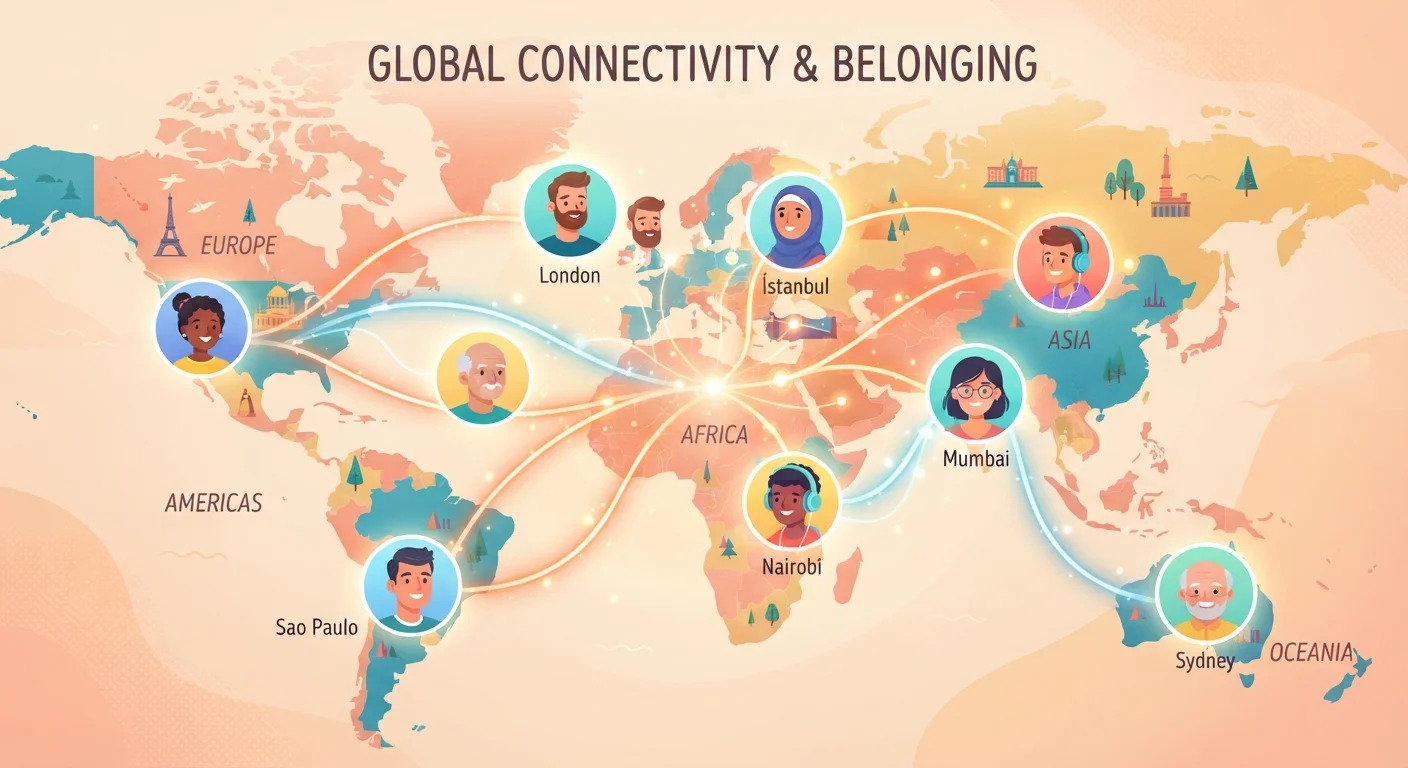
Photo credit: SyndicateExpert.com | Information At The Ready
In this article
Not every community is worth your time. Here's how to search, evaluate, and identify online spaces that genuinely match your interests and goals.
Key Takeaways
- Defining your specific interests and goals before searching saves significant time and frustration.
- Community quality depends on moderation, culture, and activity level — not just member count.
- Lurking before engaging helps you assess fit without over-committing your time or energy.
- Multiple platforms serve different social needs; trying more than one is often worthwhile.
- A poor-fit community isn't a dead end — it's useful signal pointing you toward a better one.
Why Most Community Searches Fail
Most people approach online community searches the same way they browse a store — scrolling until something looks vaguely interesting, then wondering why nothing sticks. The problem isn't the platforms. It's that a vague search produces vague results.
Online communities aren't monolithic. A subreddit about personal finance can feel like a graduate seminar or a late-night Twitter argument, depending on its culture. A Discord server for a creative hobby might be a warm creative workshop or a ghost town. Understanding what you're actually looking for — and what different community types offer — dramatically changes what you find. If you're not yet familiar with the major formats, exploring the key types of online communities is a solid first step before starting your search.
This guide gives you a repeatable process: define what you need, search strategically, evaluate what you find, and commit with intention.
What you will need
How to Find and Evaluate the Right Community
Follow these steps in order. Each one builds on the last, and skipping ahead tends to result in wasted time or landing in a space that doesn't quite fit.
Clarify what you actually need
Before you search, answer two questions: What topic or interest brings me here? and What kind of interaction am I hoping for?
These are different things. Someone interested in personal finance might want peer accountability, others might want expert Q&A, and others might want casual conversation. All three could lead you to very different communities, even within the same subject area. Write down a one-sentence answer to each question — it will anchor your search and help you evaluate what you find.
Choose where to search based on format preferences
Different platforms host fundamentally different kinds of communities. Reddit is organized around topic-based forums with threaded discussion. Discord is chat-first and often more real-time. Facebook Groups tend to be relationship-oriented. Standalone forums offer slower, more structured conversation.
Your format preference matters as much as the topic. If you find fast-moving chat exhausting, a Discord server may not suit you regardless of how good the community is. Understanding the structural differences between major platforms helps you decide where to look before you start searching.
Search with specific, varied keywords
Use the platform's own search function plus a general web search (e.g., "best [topic] Discord server" or "[interest] Reddit community"). Try several keyword combinations: the topic name, related subtopics, and the type of community you want (support group, hobbyist group, professional network).
Make a short list of five to ten candidates rather than committing to the first result. Volume of options at this stage is a feature, not a problem.
Evaluate each candidate before joining
For each community on your list, look at four things:
- Activity level: Are posts recent and regular, or is the last activity weeks old?
- Moderation: Is there a visible ruleset? Do moderators respond to issues? Healthy communities typically show signs of active stewardship.
- Tone of replies: Read several threads. Are members helpful, respectful, and substantive — or defensive, dismissive, and cliquey?
- Diversity of voices: Does conversation reflect a range of experience levels, or does it cater only to experts or only to beginners?
Many platforms let you read public content without an account. Use this to pre-screen before committing your email address.
Lurk first, then engage gradually
Once you've joined a promising community, resist the urge to introduce yourself with a big post immediately. Spend one to two weeks reading threads, understanding inside references, and getting a feel for the culture. This is called lurking, and it's a normal and respected part of community entry.
When you're ready to participate, start small: a helpful comment on someone else's post, a question that reflects you've read the existing content, or a response to a prompt. Build your presence incrementally.
Reassess after 30 days
After a month of genuine engagement, check in with yourself: Do you look forward to visiting? Have you had at least one interaction that felt genuinely useful or connecting? Do you feel like you belong, or like an outsider watching through glass?
If the answers are mostly positive, you've found a community worth investing in further. If not, return to your candidate list or refine your search. Finding the right space often takes more than one attempt — that's not failure, it's the process working as intended.
When a Community Doesn't Feel Right
Sometimes you'll do everything right and still find that a community isn't working for you. That's normal, and it's worth understanding why before you give up or move on without reflection.
Common mismatches include tone (a group that's more combative or more casual than you expected), pace (some communities move fast with dozens of daily posts; others are slow-burn), and purpose (members who use the space to vent versus members who want to build something). None of these are moral failures — they're just bad fits.
It's Okay to Be in Multiple Communities
Different needs don't have to be met by a single space. Many people find they benefit from one community centered on a professional interest, another around a hobby, and perhaps one more for personal support. The key is not spreading yourself so thin that you can't participate meaningfully in any of them. Start with one, get comfortable, and expand from there.
It's also worth asking whether you've given the community enough time. Research in social psychology suggests that belonging develops gradually; people often underestimate how long it takes to feel part of a new social group. If a space has genuinely good values and thoughtful members, consider staying a little longer before deciding. That said, trust your instincts if a community feels unwelcoming or unsafe.
Once you've found a community that feels right, the next challenge is showing up well. Our guide for newcomers settling into an online community walks through that transition in detail. And if you want a broader look at the trade-offs of community participation, weighing the real costs and benefits is worth reading before you invest heavily in any single space.

Author
Relationships & Community Editorial Team
Relationships & Community Editorial Team is the collective byline for our editorial team and contributor network. Articles published under this byline or an editorial pen name are researched, written, and reviewed according to our editorial standards for clarity, consistency, and independence before publication.
View all articles →