
Dealership Service Centers vs. Independent Mechanics: How to Think Through the Choice
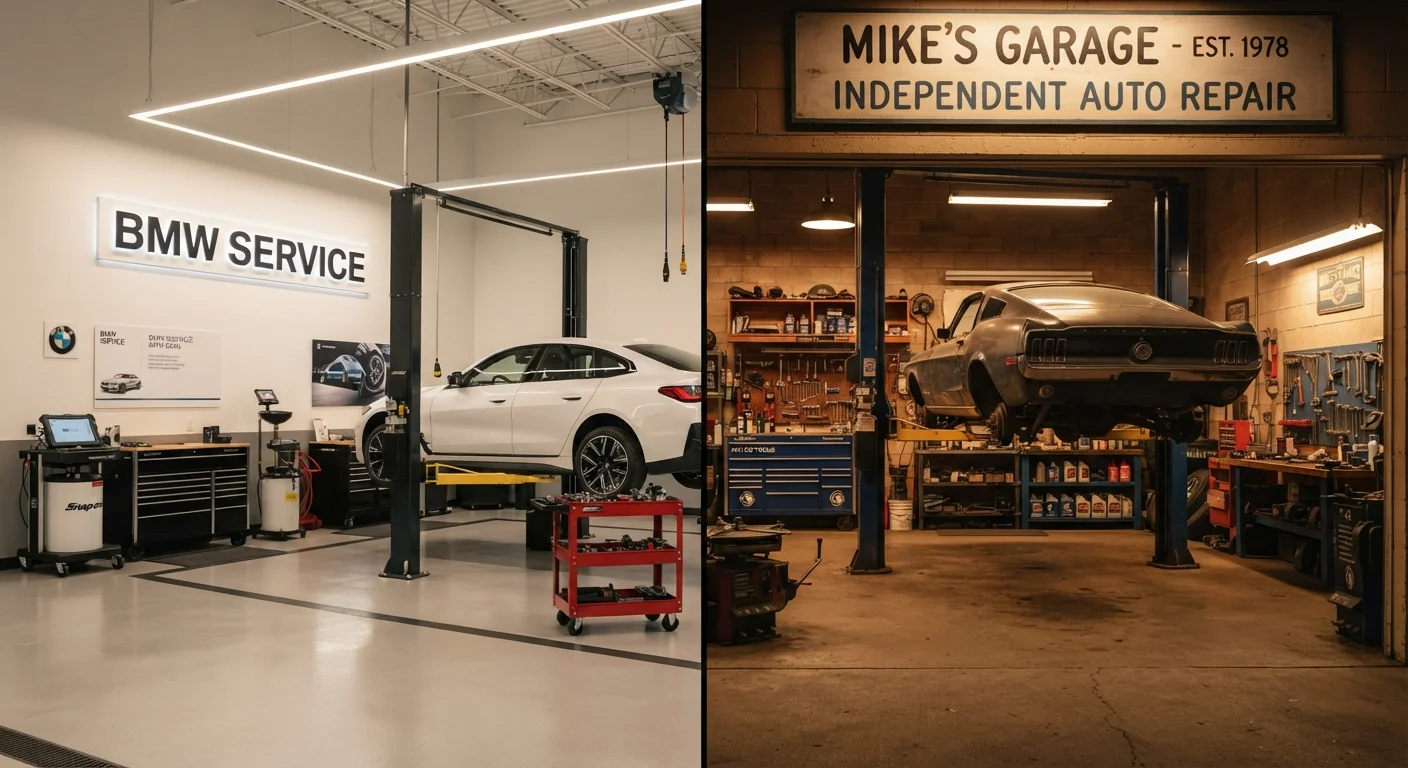
Photo credit: SyndicateExpert.com | Information At The Ready
In this article
Both options have genuine strengths and real drawbacks. Here's a balanced comparison of cost, expertise, warranty implications, and convenience.
Key Takeaways
- Dealership service centers carry brand-specific expertise and factory parts, but typically charge more per hour.
- Independent mechanics often offer lower labor rates and more flexible service, but quality varies widely by shop.
- Active factory warranties don't require dealership service - but you must document maintenance carefully.
- The right choice depends on your vehicle's age, warranty status, repair complexity, and your relationship with the shop.
- Getting a written estimate before approving any repair applies at both types of service providers.
Why This Decision Matters More Than Most Drivers Realize
Over the life of a vehicle, maintenance and repair costs add up to thousands of dollars. Where you spend that money - and on whose labor - shapes both your budget and your car's long-term reliability. Yet most drivers make this choice by default: they go to the dealership because the car is new, or they find an independent shop nearby and stick with it out of habit.
Making a more deliberate choice starts with understanding what each option actually offers - and where each falls short. For a broader look at how ownership costs stack up from the start, see our breakdown of new vs. used vehicle costs.
| Criterion | Dealership Service Center | Independent Mechanic | |
|---|---|---|---|
| Labor Cost | Dealership Service Center | Typically higher per hour | Often lower per hour |
| Brand-Specific Expertise | Dealership Service Center | Factory-trained technicians | Varies by shop and mechanic |
| Warranty & Recall Work | Dealership Service Center | Authorized, covered at no charge | Not authorized for warranty repairs |
| Parts Used | Dealership Service Center | OEM parts standard | OEM, aftermarket, or remanufactured |
| Diagnostic Tools | Dealership Service Center | Proprietary manufacturer tools | General and aftermarket scan tools |
| Personal Relationship | Dealership Service Center | Service advisor intermediary | Often direct access to technician |
| Quality Consistency | Dealership Service Center | More standardized across locations | Highly variable by shop |
What Dealerships Do Well
Dealership service centers employ technicians trained specifically on the vehicles their brand sells. For complex diagnostics - particularly on newer vehicles with sophisticated software, driver-assistance systems, or proprietary modules - that specialization matters. Technicians have access to manufacturer scan tools, updated technical service bulletins (TSBs), and OEM (original equipment manufacturer) parts that are built to factory specifications.
Dealerships are also the only authorized locations to perform warranty repairs and recall work at no charge to the customer. If your vehicle is within its factory bumper-to-bumper or powertrain warranty window, the dealership is the appropriate first stop for covered repairs. Some dealers also offer loaner vehicles and extended service hours that independent shops can't match.
The drawbacks are real, however. Dealership labor rates are consistently higher than the independent shop average, often by a significant margin. Service advisors - the staff who write up your repair order - are sometimes compensated based on upsells, which can create pressure to approve additional services. Always ask for a detailed written estimate before authorizing any work.
What Independent Mechanics Offer
A well-established independent mechanic can match dealership quality for a wide range of services - oil changes, brake work, suspension repairs, timing belts, and most engine work - at meaningfully lower labor rates. Many independent technicians hold ASE (Automotive Service Excellence) certifications, a nationally recognized credential that signals demonstrated competence across repair categories.
Independent shops also tend to offer a more direct relationship with the person actually working on your car. That transparency can help you understand what's being done and why. For ongoing maintenance decisions, see our companion article on which maintenance intervals are critical and which are less urgent.
The quality of independent shops, however, is far from uniform. Unlike dealerships operating under a manufacturer's standards, independent garages vary considerably in equipment, training, and business practices. Before committing, check verified online reviews, confirm any relevant certifications, and ask whether the shop provides a written warranty on parts and labor.
The Warranty Question: A Common Misconception
Many drivers believe that having their car serviced at an independent shop during the factory warranty period will void that warranty. This concern is largely unfounded under federal law. The Magnuson-Moss Warranty Act generally prohibits manufacturers from voiding a warranty solely because the owner used an independent mechanic, provided the service was performed correctly and appropriate parts were used.
What does matter is documentation. Keep all service receipts - dates, mileage, services performed, and parts installed. If a warranty claim arises, the manufacturer may ask for maintenance records. A complete paper trail from any reputable shop should satisfy that requirement.
Keep Every Service Receipt
Whether you use a dealership or an independent shop, maintain a physical or digital folder of all service records - date, mileage, services performed, and parts installed. This documentation protects your warranty rights, strengthens your position when trading in or selling, and helps any new mechanic understand your vehicle's history quickly.
The exception: certain specialized services, like software calibrations or repairs involving sealed systems, may genuinely require dealer-level tools or authorization. When in doubt, ask the independent shop directly whether they have the equipment and access to perform the specific job correctly.
How to Decide: A Practical Framework
Rather than picking one type of shop permanently, most drivers do well with a situational approach. Consider dealership service when your vehicle is under factory warranty, when a recall notice arrives, or when a diagnostic problem is complex and model-specific. Independent mechanics are typically the stronger choice for routine maintenance on vehicles past their warranty, for clearly defined repairs with known costs, and when a trusted long-term shop relationship already exists.
Regardless of where you go, several practices apply universally: always request a written estimate, ask what parts will be used (OEM, aftermarket, or remanufactured), and understand what warranty the shop provides on its own work. These habits protect you at both a dealership and an independent garage. As you think through your total cost of ownership, our Car Ownership Basics hub covers the full range of decisions every owner should understand.

Author
Cars & Driving Editorial Team
Cars & Driving Editorial Team is the collective byline for our editorial team and contributor network. Articles published under this byline or an editorial pen name are researched, written, and reviewed according to our editorial standards for clarity, consistency, and independence before publication.
View all articles →