
Buying New vs. Used: What the Numbers Actually Say
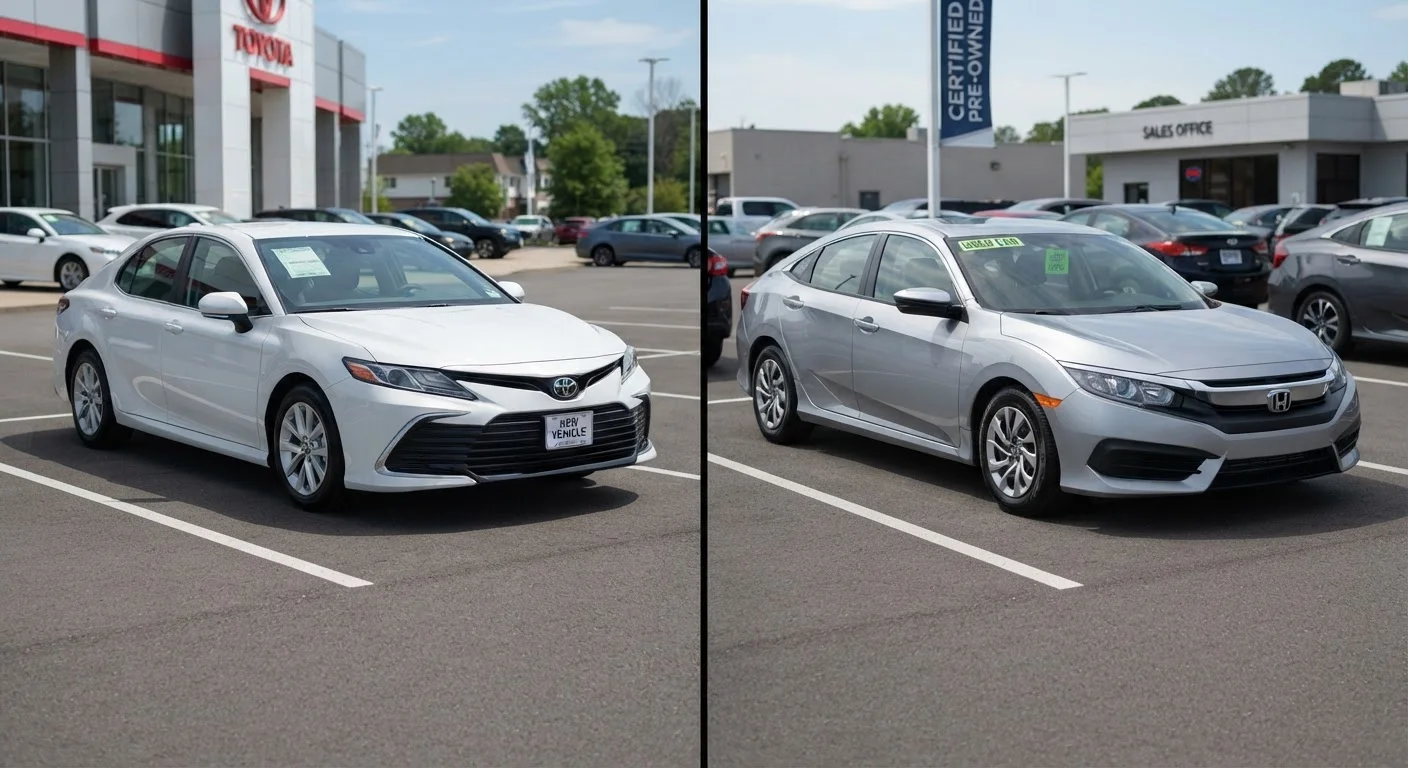
Photo credit: SyndicateExpert.com | Information At The Ready
In this article
Depreciation, warranties, financing rates, and maintenance costs — a clear-eyed look at the financial trade-offs between new and used cars.
Key Takeaways
- New cars can lose 15-25% of their value in the first year alone due to depreciation.
- Used cars typically carry higher interest rates on auto loans than new vehicles.
- Certified pre-owned programs offer a middle ground with inspections and limited warranty coverage.
- Maintenance costs on used cars tend to rise with mileage, especially past 60,000-100,000 miles.
- Total cost of ownership - not just sticker price - is the most accurate way to compare both options.
The Depreciation Reality Every Buyer Should Understand
Depreciation - the decline in a vehicle's market value over time - is the single largest cost most car owners never see itemized on a statement. New vehicles are particularly vulnerable to it. Industry data consistently shows that new cars can lose roughly 15-25% of their value within the first twelve months of ownership, and roughly 50% or more within five years, depending on make, model, and market conditions.
This means a buyer who purchases a $38,000 new vehicle and sells it three years later may recover far less than they expect. The driver who instead buys that same model at three years old effectively lets someone else absorb that initial loss. For a deeper look at how this mechanism works, see how a car's value changes over time.
Used cars are not immune to depreciation - they continue losing value - but the steepest part of the curve has already passed. This is why two-to-three-year-old vehicles are often cited as a value-conscious entry point: you get a relatively modern vehicle without paying for the new-car premium that evaporates the moment it leaves the lot.
| Criterion | Buying New | Buying Used |
|---|---|---|
| Depreciation exposure | High - steepest loss in year one | Lower - curve already flattened |
| Typical financing rate | Lower; promotional rates available | Generally higher from lenders |
| Warranty coverage | Full manufacturer warranty | None (unless CPO or add-on) |
| Purchase price | Higher sticker price | Lower upfront cost |
| Maintenance predictability | High in early years | Varies with mileage and history |
| Insurance cost | Typically higher premiums | Often lower premiums |
| Technology & safety features | Latest available | Depends on model year |
| Vehicle history transparency | None needed - zero prior use | Requires verification (Carfax, etc.) |
Financing Rates, Insurance, and the Costs You Don't See at First
Purchase price is only the opening number. Financing rates matter significantly, and they tend to favor new-car buyers. Automakers frequently offer promotional interest rates - sometimes as low as 0% for well-qualified borrowers - on new models. Used-car loans, by contrast, typically carry higher rates from lenders reflecting greater uncertainty about vehicle condition and residual value.
Insurance costs also shift between new and used. New vehicles generally cost more to insure because their replacement value is higher. A used car with a lower market value may carry lower comprehensive and collision premiums, though this varies by vehicle type, driver history, and insurer. Registration fees in many states are also tied to vehicle value and model year, meaning new cars often cost more to register annually in the first few years.
Maintenance is another variable that shifts over the ownership arc. New cars often come with complimentary maintenance for a defined period. Used vehicles - especially those beyond 60,000-100,000 miles - are more likely to need wear items like timing belts, water pumps, or brake components that add up. For a complete picture of all ownership cost categories, see our guide to the true cost of owning a car in America.
~20%
Average first-year new-car depreciation
Industry estimates consistently place new-vehicle depreciation in the 15-25% range within the first twelve months, though this varies by brand and model.
1-2%+
Typical used vs. new loan rate premium
Used-car auto loan rates have historically run higher than new-car rates from the same lenders, reflecting vehicle age and condition risk.
~50%
Value lost by year five on average
Many mainstream vehicles retain only around half their original purchase price after five years, according to widely cited automotive valuation analyses.
Warranties, Certified Pre-Owned, and Managing Risk
Warranty coverage is often the most emotionally weighted factor in the new-vs.-used decision. A new vehicle's bumper-to-bumper warranty - typically three years or 36,000 miles for most mainstream brands, with powertrain coverage extending further - provides a defined window of low financial risk for unexpected repairs.
Used vehicles sold as-is carry no such protection unless the buyer separately purchases a service contract. It's worth understanding what those contracts actually cover before committing; extended warranties on used cars often contain exclusions that buyers discover only at claim time.
Certified pre-owned (CPO) programs occupy a middle ground. Offered by manufacturers through franchised dealers, CPO vehicles must pass multi-point inspections and come with manufacturer-backed limited warranties - typically extending powertrain coverage and sometimes adding roadside assistance. CPO vehicles cost more than comparable non-certified used cars but less than new, and they bring a degree of scrutiny that a private-party sale does not. Whether the CPO premium is worth it depends on the specific coverage terms and the vehicle's mileage and condition.
If you're weighing financing structures more broadly, understanding how leasing compares to financing can also help frame the full range of options before you commit.
This article is for general informational and educational purposes. It does not constitute financial or legal advice. Readers should consult qualified professionals when making significant financial decisions.

Author
Cars & Driving Editorial Team
Cars & Driving Editorial Team is the collective byline for our editorial team and contributor network. Articles published under this byline or an editorial pen name are researched, written, and reviewed according to our editorial standards for clarity, consistency, and independence before publication.
View all articles →