
What Happens to a Car's Value Over Time
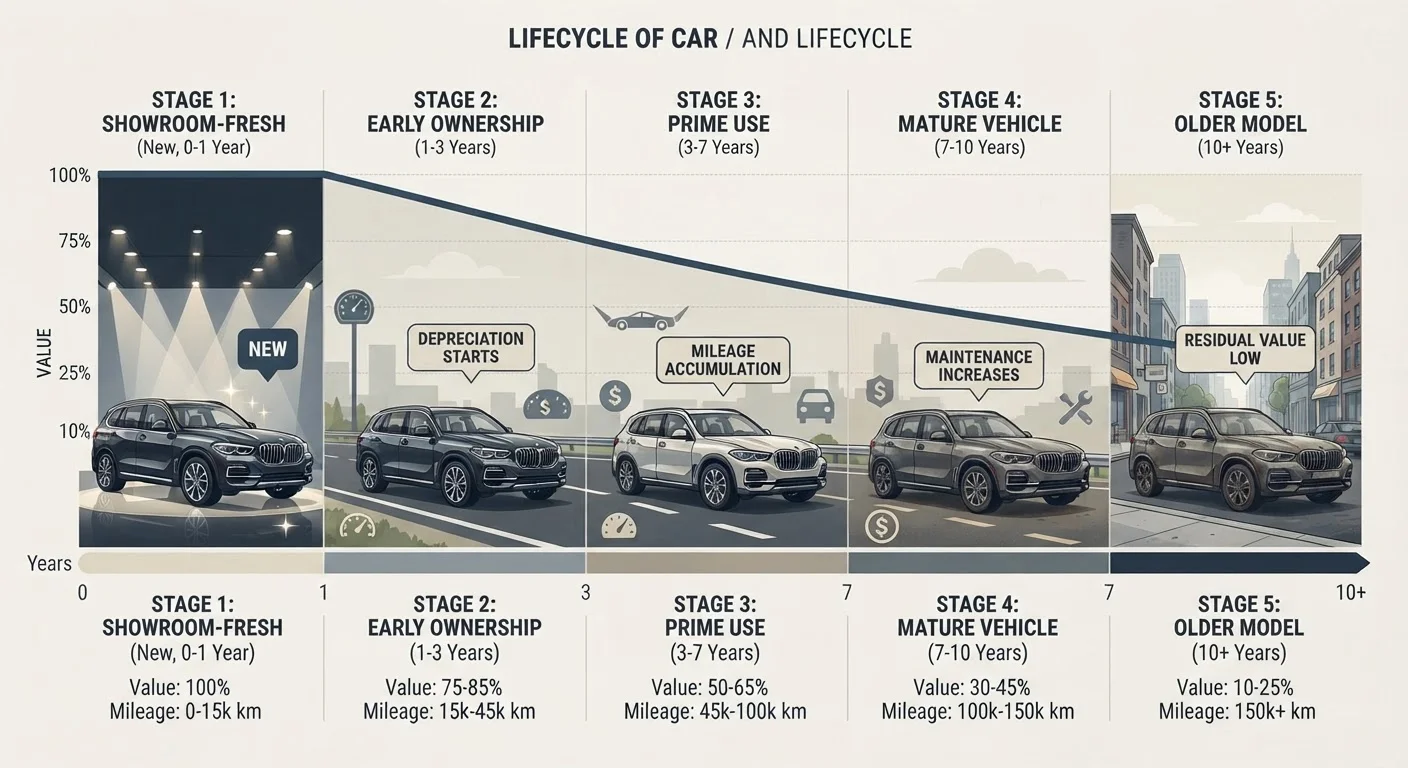
Photo credit: SyndicateExpert.com | Information At The Ready
In this article
Depreciation is the single biggest hidden cost of car ownership. Learn how it works and what affects how quickly a vehicle loses value.
Key Takeaways
- New cars typically lose 15–25% of their value in the first year alone.
- Depreciation slows significantly after the first three years of ownership.
- Mileage, condition, brand reputation, and market demand all influence how fast a car loses value.
- Understanding depreciation helps owners make smarter decisions about when to buy, sell, or trade in.
- Buying a lightly used car can transfer the steepest depreciation hit to the original owner.
Why Depreciation Is the Cost Nobody Talks About
When most people budget for a car, they think about the monthly payment, insurance, and gas. What rarely comes up is depreciation — yet it typically costs more than all routine maintenance combined. Understanding it is essential to understanding what a car actually costs you. For a fuller picture, see our complete breakdown of car ownership costs.
Depreciation isn't a bill you pay — it's value you lose. The difference between what you paid for a vehicle and what you'd get selling it today is money that's simply gone. For a new car purchased at $35,000, losing 20% in year one means $7,000 in lost value before you've had a single oil change.
“Depreciation is the largest single cost of vehicle ownership for most people — it just doesn't feel like a cost because you never write a check for it.”
— Cars & Driving Editorial Team, Automotive ownership cost analysis
The Depreciation Curve: How Value Drops Over Time
Depreciation doesn't happen at a steady rate. It front-loads dramatically, with the sharpest loss occurring in the first one to three years of ownership. Here's a general picture of how the curve typically looks:
- Year 1: A new vehicle can lose 15–25% of its purchase price.
- Years 2–3: Value continues to fall, with many vehicles losing 30–40% of original price by end of year three.
- Years 4–5: The rate slows. Annual value loss is smaller, though cumulative depreciation is still significant.
- Years 6–10+: Depreciation flattens further. The car is reaching a more stable market value, barring major mechanical problems.
This curve is why buying a car that's two to three years old — rather than brand new — can shift the steepest part of the depreciation hit onto the original owner. Our article on buying new vs. used walks through exactly how this trade-off plays out financially.
~20%
Average new-car value lost in year one
Industry valuation data consistently shows new vehicles lose roughly 15–25% of their value within the first 12 months of ownership.
~50%
Value lost by end of year five
Many new vehicles retain only about half their original purchase price after five years, depending on make, model, and usage conditions.
$0.15–$0.25
Depreciation cost per dollar spent on a new car, year one
For every dollar paid for a new vehicle, owners may effectively 'spend' 15–25 cents in lost value during the first year alone.
What Drives How Fast a Car Loses Value
Not all vehicles depreciate at the same rate. Several factors push a car's value down faster or help it hold steady:
- Mileage
- Higher mileage signals more wear on mechanical components. Most valuation guidelines use annual mileage benchmarks — exceeding them reduces resale value noticeably.
- Condition
- Dents, worn interiors, and deferred maintenance all lower what a buyer will pay. A well-maintained vehicle commands a meaningful premium over a neglected one with the same age and miles.
- Brand and model reputation
- Vehicles from brands known for reliability and low ownership costs tend to hold value longer. Market perception matters as much as mechanical reality.
- Supply and demand
- When a particular model is in high demand and short supply, depreciation slows. Conversely, oversupply or a shift in consumer preferences can accelerate value loss.
- Fuel type and technology shifts
- Changing fuel prices or a broad shift toward alternative powertrains can affect how much buyers want certain vehicle types — influencing residual values accordingly.
What This Means for Owners: Practical Implications
Depreciation shapes several real decisions during your ownership experience:
Trade-in timing matters. The steepest value loss has already happened by year three or four. If you're thinking of trading in, understanding where you sit on the depreciation curve — and whether you still owe more than the car is worth — is critical. Our guide on what to consider before trading in covers the details owners often miss.
Maintenance protects residual value. Keeping service records, addressing cosmetic issues, and staying current on scheduled maintenance all help support a higher resale price. Small investments in upkeep can return meaningfully at resale time. See smarter habits for managing car costs for practical approaches.
Negative equity is a real risk. If you financed a new vehicle with a small down payment and a long loan term, you may owe more than the car is worth for the first several years. This matters most if you need to sell or trade before the loan is paid down sufficiently.
Depreciation is one of several interconnected concepts covered in our complete guide to car ownership in America — a useful starting point for anyone looking to get a clearer picture of the full financial picture of owning a vehicle.
Frequently Asked Questions

Author
Cars & Driving Editorial Team
Cars & Driving Editorial Team is the collective byline for our editorial team and contributor network. Articles published under this byline or an editorial pen name are researched, written, and reviewed according to our editorial standards for clarity, consistency, and independence before publication.
View all articles →