
Why Your Car Insurance Premium Is Higher Than Your Neighbor's
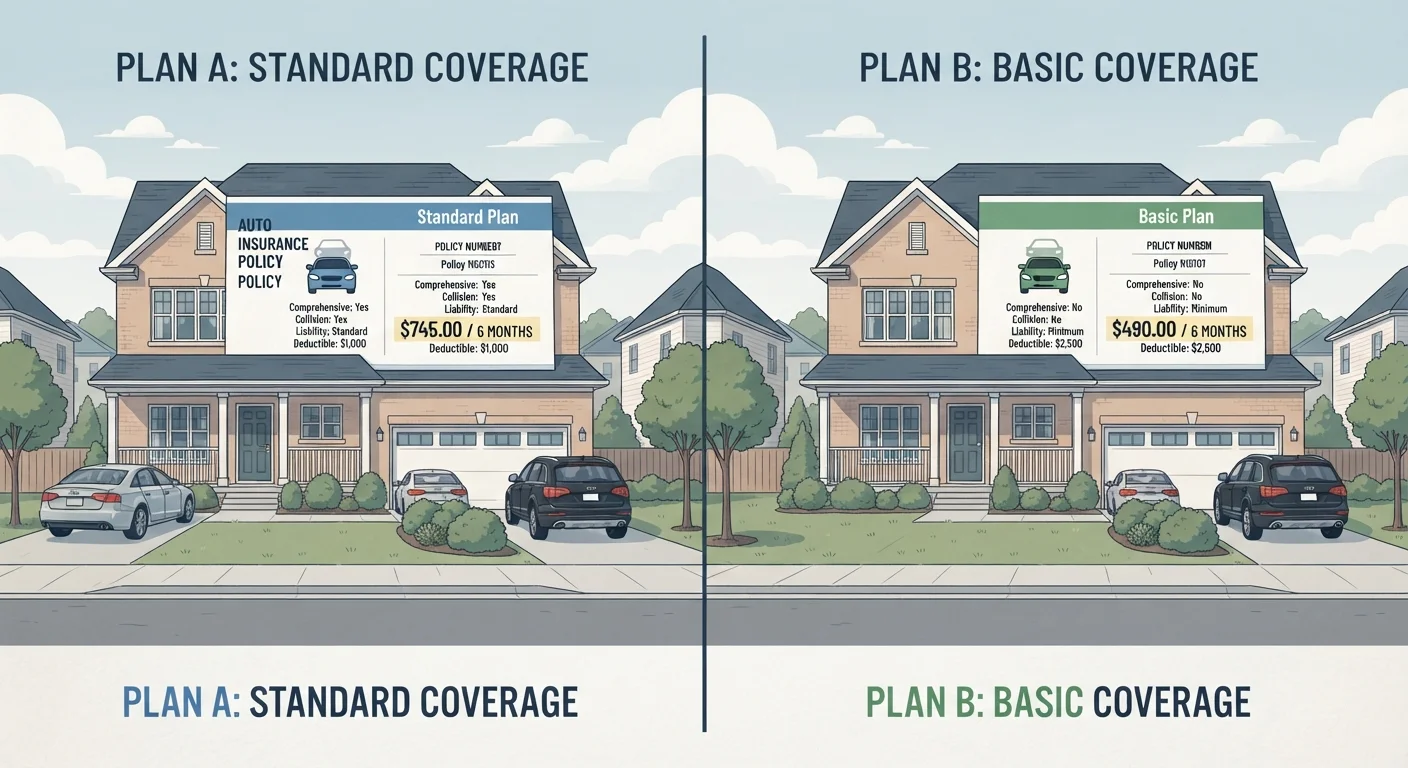
Photo credit: SyndicateExpert.com | Information At The Ready
In this article
Age, ZIP code, credit history, and driving record all factor in. Understand the forces behind your auto insurance rate.
Key Takeaways
- Auto insurance premiums are individualized risk assessments, not arbitrary prices.
- Your ZIP code, driving record, vehicle type, and credit history all influence your rate.
- Factors outside your direct control — like local claim frequency — still affect what you pay.
- State law determines which rating factors insurers are allowed to use.
- Understanding the factors behind your rate helps you make smarter coverage decisions.
The Hidden Math Behind Your Rate
When your neighbor mentions a premium that's noticeably lower than yours, it can feel arbitrary — even unfair. In reality, auto insurers use a detailed, data-driven process to price each policy individually. They're estimating the probability that you'll file a claim, and how expensive that claim will be. The result is a rate that's unique to your specific combination of risk factors.
Understanding which factors carry the most weight — and why — is the first step toward making sense of your bill. It also helps when comparing coverage options or deciding whether to adjust your deductible. For a deeper look at what different coverage types actually protect, see our guide to decoding coverage types.
~$2,000+
Average annual U.S. auto insurance premium
According to the National Association of Insurance Commissioners, the average expenditure on auto insurance has risen steadily in recent years, driven partly by rising repair and medical costs.
3–5 years
How long most violations stay on your record
Most states keep moving violations and at-fault accidents on a driver's motor vehicle record for three to five years, directly affecting insurance pricing during that window.
Varies by state
States restricting credit-based insurance scoring
A handful of states — including California, Hawaii, and Massachusetts — prohibit or significantly limit the use of credit history in auto insurance pricing.
The Major Rating Factors Insurers Use
Driving Record
Your history behind the wheel is one of the most heavily weighted variables. At-fault accidents, moving violations, and serious offenses like DUIs signal elevated risk to an insurer. Most incidents remain on your motor vehicle record for three to five years, depending on the state and severity.
Where You Live
Your ZIP code matters more than most drivers realize. Insurers look at local accident rates, vehicle theft statistics, weather-related claim frequency, and even traffic density. A driver living in a densely populated urban area typically pays more than someone in a rural county — even with an identical driving record and vehicle. State laws also play a major role in shaping ownership costs, including which minimum coverage levels you're legally required to carry.
Your Vehicle
The make, model, age, and safety profile of your car all factor in. Vehicles with higher repair costs, a history of theft, or powerful engines tend to generate higher premiums. Vehicles with strong crash-test ratings and widely available parts generally cost less to insure.
Credit-Based Insurance Score
In states where it's permitted, insurers use a credit-based insurance score — derived from your credit history — as a statistical predictor of claim likelihood. This is distinct from the credit score a lender uses, but it draws on similar data. Several states, including California, Hawaii, and Massachusetts, restrict or prohibit its use entirely.
Age and Driving Experience
Teen and young adult drivers pay significantly higher premiums because statistical claim rates are highest in this age group. Rates typically decrease as drivers accumulate a clean record through their mid-20s and beyond. Older drivers may see rates increase again in later years, depending on insurer models and state rules.
Factors That Might Surprise You
Beyond the obvious, several less-discussed variables can quietly push your premium higher.
- Annual mileage: The more miles you drive, the more exposure you have to potential accidents. Insurers often ask for an annual mileage estimate and rate accordingly.
- Marital status: In states where it's allowed as a rating factor, married drivers statistically file fewer claims than single drivers and may receive slightly lower rates.
- Coverage history gaps: If you've gone without insurance — even briefly — insurers may view this as a risk indicator and charge more.
- How you use your vehicle: A car used for business deliveries or rideshare driving carries different exposure than one used only for commuting. Misrepresenting usage can affect both your rate and your coverage.
It's also worth recognizing that some widely held assumptions about insurance don't hold up. For example, the belief that any minor claim you file will automatically spike your rate — or that minimum state coverage is always adequate — can lead to costly decisions. Our article on car ownership myths that cost Americans money addresses several of these misconceptions directly.
What You Can — and Can't — Control
Some premium factors are fixed: your age, where you live, and your driving history up to this point can't be immediately changed. But others are within reach over time.
Maintaining a clean driving record is the single most reliable way to keep rates stable. Improving your credit score — where insurers are permitted to use it — can also make a meaningful difference at renewal. Choosing a vehicle that balances your needs with lower insurance risk is worth factoring into any car purchase decision.
A higher deductible — the amount you pay out of pocket before coverage kicks in — generally lowers your premium, though it also means more financial exposure in a claim. This is a trade-off worth thinking through carefully, ideally with guidance from a licensed insurance professional who can assess your specific situation.
This article is for general informational purposes only and does not constitute insurance, financial, or legal advice. Coverage options, rating factors, and state regulations vary. Consult a licensed insurance professional for guidance tailored to your circumstances.
Frequently Asked Questions

Author
Cars & Driving Editorial Team
Cars & Driving Editorial Team is the collective byline for our editorial team and contributor network. Articles published under this byline or an editorial pen name are researched, written, and reviewed according to our editorial standards for clarity, consistency, and independence before publication.
View all articles →