
Teen Drivers and Their Parents: Navigating the Supervised Practice Period
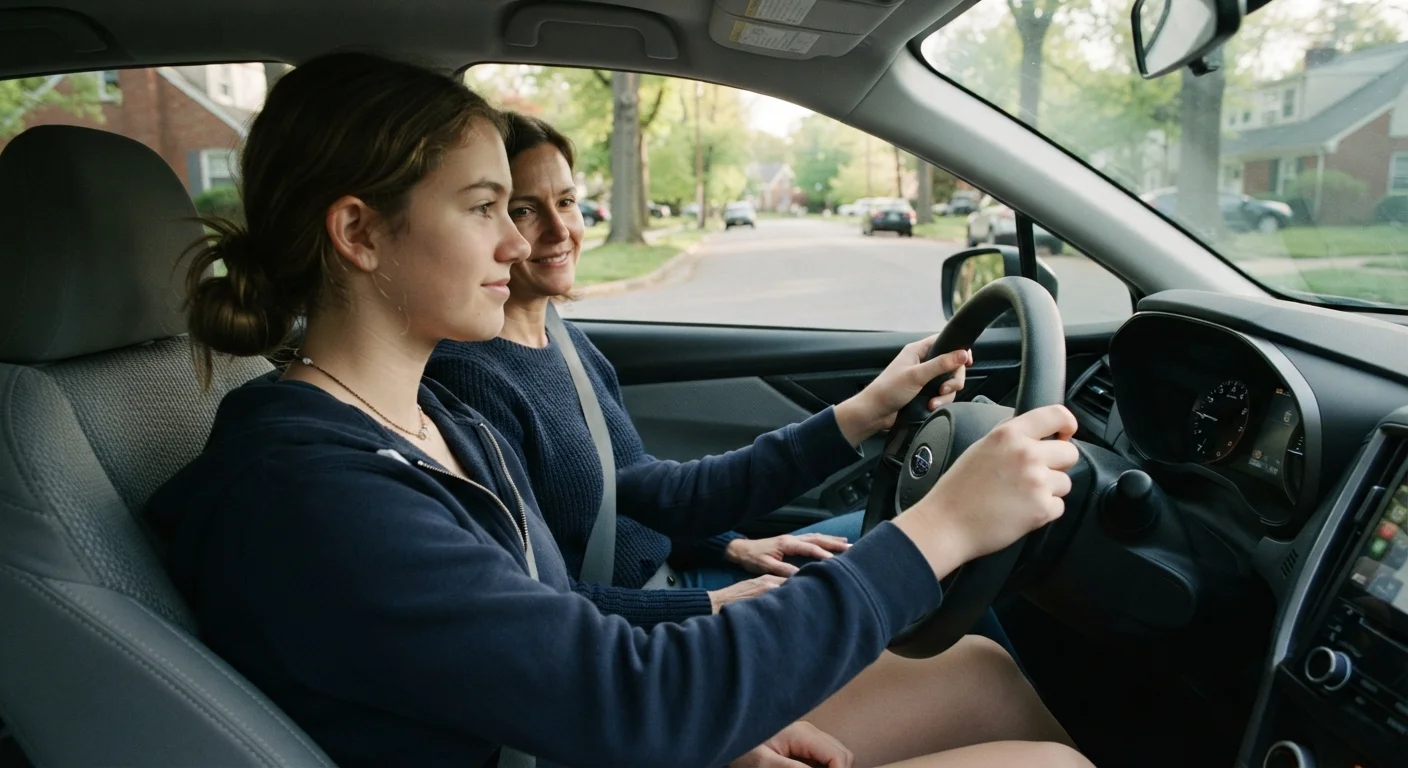
Photo credit: SyndicateExpert.com | Information At The Ready
In this article
The learner's permit stage matters more than most families realize. A practical guide to making supervised driving practice effective and safe.
Key Takeaways
- Most states require 40–60 logged hours of supervised practice before a teen can test for a full license.
- Varying practice conditions — weather, traffic, and time of day — builds more durable skills than repetition on familiar routes.
- The supervising adult sets the emotional tone; calm, structured coaching consistently outperforms reactive criticism.
- Distraction, not inexperience alone, is the leading factor in teen crash statistics.
- A written driving agreement between parent and teen reduces ambiguity and reinforces shared expectations.
Why the Supervised Stage Is Worth Taking Seriously
The learner's permit period often gets treated as a formality — a box to check before the licensing test. In practice, it's the most consequential window a new driver has. The patterns established during supervised practice, including how a teen scans intersections, whether they use mirrors routinely, and how they respond to unexpected situations, tend to persist long after solo driving begins.
Teen drivers are statistically over-represented in crash data not simply because they lack experience, but because they are still developing the perceptual and decision-making habits that experienced drivers rely on. Those habits are built through varied, intentional practice — not hours alone. As teens progress, understanding how to care for a vehicle is also part of responsible ownership; our car ownership basics guide is a useful introduction to that side of driving life.
Distraction Is the Defining Risk
Research consistently identifies distraction — particularly from mobile phones — as the leading contributing factor in crashes involving teen drivers. During supervised practice, the phone should be physically out of reach, not simply silenced. Establishing this habit now, before solo driving begins, is far more effective than trying to instill it after the fact.
What to Cover — And in What Order
Effective supervised practice follows a progression rather than a random accumulation of hours. The steps below outline a logical sequence, but the pace should be guided by the teen's comfort and demonstrated competence rather than a fixed calendar.
What you will need
Review your state's GDL requirements together
Graduated Driver Licensing (GDL) laws vary by state, but most require between 40 and 60 hours of supervised practice — with a portion of those hours completed at night. Sit down with your teen and the official state DMV handbook before the first session. Confirm the total hours required, any nighttime minimums, passenger restrictions during the permit stage, and what documentation you'll need at the licensing test. Treating the legal framework as a shared starting point — not a parental lecture — gets the supervised period off on better footing.
Start in genuinely low-pressure environments
Empty parking lots, quiet residential streets, and industrial parks on weekends give new drivers the bandwidth to focus on vehicle control without traffic demands competing for their attention. Spend the first several sessions covering the fundamentals: smooth acceleration and braking, lane position, basic turns, and mirror use. The goal is to build a physical foundation before adding complexity — not to rush toward highway driving.
Deliberately vary conditions as skills build
Once the basics feel stable, introduce progressively more demanding environments: busier arterials, highway merging, parallel parking, and driving after dark. Rotate through different neighborhoods, not just familiar ones. Each unfamiliar route requires the teen to read signs, anticipate intersections, and make real decisions rather than following a memorized path. Don't neglect pre-trip habits — our pre-trip safety checklist is worth running through at the start of early sessions so it becomes automatic.
Coach, don't react
Your tone during practice has a disproportionate effect on whether the teen is learning or just enduring the session. Sharp corrections or audible alarm during minor errors typically causes the driver to tense up, which worsens performance. Instead, use a calm, observational style: state what you noticed, explain why it matters, and describe what to do differently next time. Save strong verbal cues for genuine safety moments. Between those moments, keep the atmosphere low-stakes.
Address distraction as a non-negotiable
Phone-related distraction is not a separate conversation to have later — it belongs in the very first practice session. Establish the rule that the phone is placed in a bag or glovebox before the car moves, not simply placed face-down. Model this yourself as the supervising adult every time you drive. Teens observe inconsistency quickly, and a rule the parent doesn't follow will struggle to hold once the teen drives solo.
Draft a parent-teen driving agreement
Before supervised hours are complete and the licensing test approaches, put shared expectations in writing. A clear agreement should cover: phone use, permitted passengers after licensing, nighttime restrictions (even beyond what the GDL mandates), the process if the car is damaged, and how driving privileges are maintained. Having this conversation while the teen is still in the permit stage — when driving is still a privilege being earned — tends to produce more genuine buy-in than introducing rules after a full license is in hand.
Use a Driving Log — Even If Your State Doesn't Require One
Logging each session by date, duration, location type, and conditions creates an honest picture of where your teen is confident and where gaps remain. It also gives both of you something concrete to discuss rather than relying on memory or feelings about how practice is going.
What Comes Next
When the required hours are complete and the licensing test is passed, the supervised stage ends — but the development of a safe driver doesn't. Most states apply additional restrictions during the intermediate (provisional) license stage, typically limiting nighttime driving and the number of teen passengers permitted. These restrictions exist because crash risk remains significantly elevated in the first year of independent driving.
Consider planning a few informal check-in drives after your teen has been driving independently for a month or two. Not as oversight, but as an opportunity to have a low-stakes conversation about any situations that felt uncertain. The transition from supervised to solo driving is exactly when good habits either solidify or begin to erode — and staying engaged without being controlling makes a real difference.

Author
Cars & Driving Editorial Team
Cars & Driving Editorial Team is the collective byline for our editorial team and contributor network. Articles published under this byline or an editorial pen name are researched, written, and reviewed according to our editorial standards for clarity, consistency, and independence before publication.
View all articles →