
Two-Second Rule vs. Three-Second Rule: Finding the Right Following Distance
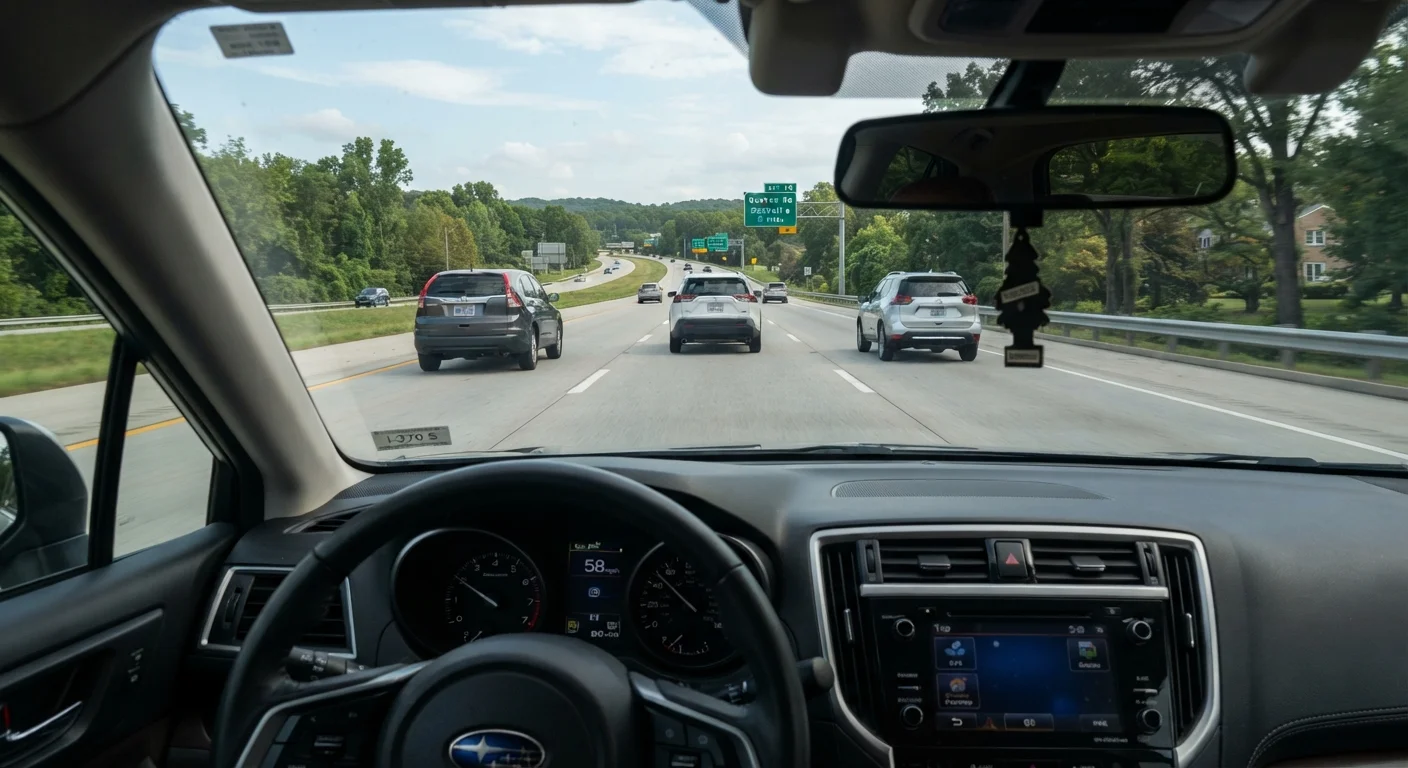
Photo credit: SyndicateExpert.com | Information At The Ready
In this article
You've heard the two-second rule, but is it enough? Here's how following distance guidelines differ by speed, weather, and vehicle type.
Key Takeaways
- The two-second rule is a minimum baseline, not a universal safety guarantee in all conditions.
- The three-second rule provides more stopping room and is recommended by many safety organizations.
- Rain, fog, heavy loads, and high speeds all call for following distances well beyond three seconds.
- Reaction time alone averages 1.5 seconds, leaving almost no buffer under the two-second rule at higher speeds.
- Both rules are time-based methods that automatically scale with vehicle speed — a key advantage over fixed-distance rules.
How Both Rules Work — and Why They're Time-Based
Both the two-second and three-second rules are time-gap methods for gauging following distance. Rather than estimating a fixed number of feet — which is nearly impossible to judge reliably at speed — drivers pick a stationary reference point (a road sign, a bridge, a shadow) and count the seconds between when the vehicle ahead passes it and when they reach the same point.
If you reach the marker before your count is up, you're too close. This time-based approach is effective because it automatically adjusts for speed: at 30 mph, two seconds equals about 88 feet; at 65 mph, it's closer to 190 feet. The math scales with you.
For a deeper look at how speed affects stopping distances, see what your speedometer numbers really mean for safety.
| Criterion | Two-Second Rule | Three-Second Rule |
|---|---|---|
| Gap at 65 mph | ~190 feet | ~285 feet |
| Reaction time covered | Minimal margin beyond ~1.5s reaction | ~1.5s extra beyond reaction time |
| Ideal conditions | Dry road, clear visibility, alert driver | Wet, icy, low-visibility, or heavy vehicle |
| Recommended by | Traditional driver's ed curriculum | Many state manuals and safety organizations |
| Ease of use | Easy to apply | Equally easy, slightly more conservative |
| Scalability with speed | Yes — scales automatically | Yes — scales automatically |
The Case for the Two-Second Rule
The two-second rule has been the standard taught in American driver's education for decades. It's simple to apply, easy to remember under pressure, and — in clear, dry, daytime conditions at moderate speeds — it provides a workable minimum buffer.
The limitation is that word: minimum. Human reaction time averages roughly 1.5 seconds for an alert driver. That leaves only half a second for braking to begin before your two seconds are up — and that assumes your brakes are in excellent condition, the road is dry, and you're fully attentive. Any one of those factors degrading even slightly erodes the margin considerably.
The two-second rule is still a valid habit for steady, low-risk highway driving. The problem arises when drivers treat it as a universal standard rather than a floor.
When Three Seconds Makes a Measurable Difference
The three-second rule adds approximately 50% more buffer at any given speed. That additional second translates directly into more feet of stopping room — roughly 88 to 95 extra feet at typical highway speeds. In braking terms, that's a significant margin.
Safety researchers and many state driver's manuals recommend three seconds as a general baseline, reserving the two-second guideline only for ideal conditions. In practice, the three-second rule is particularly important when:
- Road surfaces are wet or icy — braking distances can double or triple on slippery roads.
- Visibility is reduced — fog, heavy rain, or glare mean hazards appear later in your field of view.
- You're driving a larger or heavier vehicle — physics demands more distance to shed speed.
- Traffic is unpredictable — construction zones, city traffic, or unfamiliar roads call for more reaction room.
Being mindful of following distance connects directly to broader right-of-way habits on the road. Understanding right-of-way rules helps drivers anticipate stops before they become emergencies.
Choosing Your Following Distance in Real Conditions
Neither rule is a ceiling — they're starting points. In heavy rain or snow, four to six seconds is a reasonable minimum. At night on unfamiliar rural roads, more space means more time to react to unexpected hazards like deer, debris, or sharp curves.
A practical way to think about it: if something felt tense or close after a stop, increase your gap on the next stretch. Driving should never feel like a near-miss experience.
One final note: maintaining proper following distance also reduces your stress behind the wheel. When you're not riding close to the vehicle ahead, you're not constantly anticipating their brake lights — and that reduced mental load contributes to calmer, more consistent driving overall.
1.5 sec
Average driver reaction time
The Federal Highway Administration cites approximately 1.5 seconds as a typical perception-reaction time for alert drivers — nearly the full span of the two-second rule.
~40%
Of crashes involving rear-end collisions
The National Highway Traffic Safety Administration (NHTSA) has consistently reported that rear-end collisions represent roughly 40% of all police-reported crashes in the United States.
2–3x
Stopping distance increase on wet roads
Wet pavement can require two to three times more stopping distance than dry pavement, according to general driver safety education resources and traffic engineering research.

Author
Cars & Driving Editorial Team
Cars & Driving Editorial Team is the collective byline for our editorial team and contributor network. Articles published under this byline or an editorial pen name are researched, written, and reviewed according to our editorial standards for clarity, consistency, and independence before publication.
View all articles →