
Anxiety vs. Stress: Two Overlapping Experiences That Need Different Responses
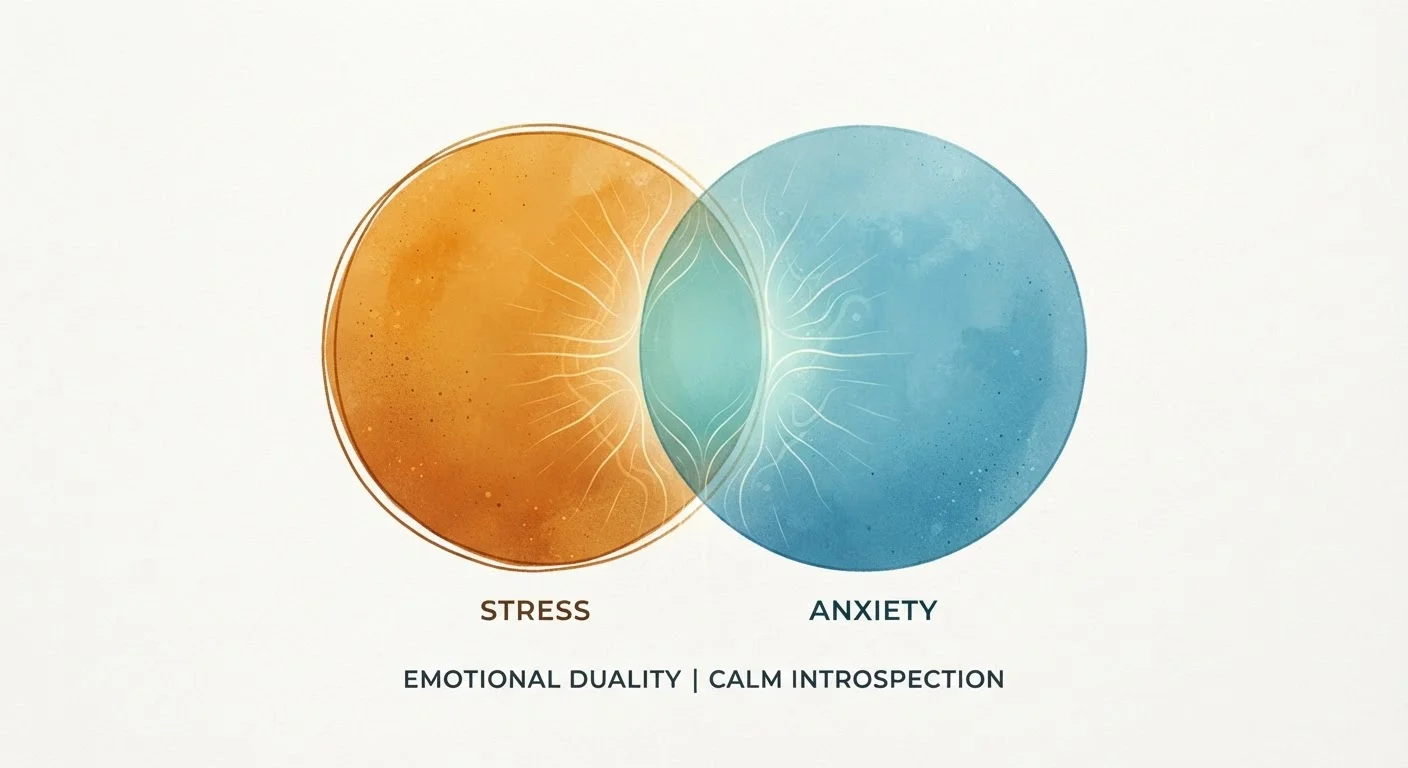
Photo credit: SyndicateExpert.com | Information At The Ready
In this article
Stress and anxiety feel similar but have distinct causes and patterns. Understanding the difference can guide how you respond to each.
Key Takeaways
- Stress typically has a clear external cause; anxiety often persists without one.
- Both share physical symptoms, making them easy to confuse without closer examination.
- Stress usually resolves when the triggering situation changes; anxiety may not.
- Different root causes call for different coping strategies and support approaches.
- Persistent or impairing anxiety warrants professional evaluation — it is not just "bad stress."
- Building awareness of which experience you're having is the first step toward effective self-care.
Why the Distinction Matters
Stress and anxiety are two of the most commonly used words in conversations about mental health, and for good reason — they share overlapping physical sensations, emotional weight, and everyday familiarity. But treating them as interchangeable can mean applying the wrong tools and prolonging discomfort when targeted support would actually help.
Knowing which experience you're dealing with isn't about labeling yourself. It's about understanding what's driving how you feel so you can respond more effectively. And for some people, what begins as stress can evolve into anxiety — making awareness even more valuable over time.
This article is for general informational purposes only and is not a substitute for professional medical or mental health advice. If you are experiencing distressing symptoms, please consult a qualified healthcare provider.
Defining Stress: A Response to Identifiable Pressure
Stress is the body and mind's reaction to an external demand or challenge. A looming work deadline, a difficult conversation, financial pressure, or a health scare can all trigger the classic stress response — elevated heart rate, muscle tension, shortened attention span, and a sense of urgency. These symptoms are adaptive; they evolved to help us mobilize and respond.
The key feature of stress is that it has a recognizable source. Most people under stress can point to what's causing it. And critically, when that source resolves — the deadline passes, the conflict is addressed — the stress response typically winds down.
That said, prolonged stress without relief is another matter. Chronic stress has well-documented effects on the brain, hormones, and immune system, and it doesn't simply disappear on its own. When stress becomes the baseline rather than the exception, additional support is worth seeking.
| Criterion | Stress | Anxiety |
|---|---|---|
| Primary cause | Identifiable external trigger | Internal worry, often without clear trigger |
| Duration | Typically resolves when trigger passes | Can persist regardless of circumstances |
| Thought pattern | Focused on current demands | Often anticipatory, looping, or hypothetical |
| Physical symptoms | Tension, fatigue, irritability | Similar, plus frequent restlessness and hypervigilance |
| Primary management approach | Address source, build recovery habits | Cognitive-behavioral strategies, professional support |
| When to seek help | When stress is chronic or unrelenting | When worry is persistent or impairing daily life |
Defining Anxiety: When Worry Becomes Untethered
Anxiety shares many of stress's physical signatures — tension, restlessness, difficulty concentrating, disrupted sleep — but its defining characteristic is that it persists beyond or independent of a clear external cause. Someone experiencing anxiety may feel dread or worry even in the absence of an immediate threat, or their concern may be disproportionate to the actual situation.
Anxiety can also be anticipatory: worry about events that may never happen, or that are far in the future. It tends to loop — the same worries returning repeatedly despite reassurance or evidence to the contrary. For some people, this reflects an anxiety disorder, a clinically recognized condition that affects millions of Americans and responds well to professional treatment.
It's worth noting that anxiety isn't weakness or excessive sensitivity. It reflects real neurobiological patterns, and recognizing it as such is important for reducing stigma. If anxiety is interfering with daily functioning or relationships, that's a signal to reach out to a mental health professional. Social anxiety, for example, can create a painful gap between wanting connection and being able to pursue it.
Different Causes, Different Responses
Because stress and anxiety have different origins, they benefit from different approaches — though there's meaningful overlap in general wellness practices.
For stress:
- Address the source directly where possible — problem-solving, delegating tasks, or setting clearer limits on demands
- Build recovery time — sleep, movement, and social connection buffer the physiological toll of stress
- Practice present-moment grounding — techniques like slow diaphragmatic breathing activate the parasympathetic nervous system and calm the stress response
For anxiety:
- Cognitive restructuring — examining the evidence for and against worry-driven thoughts, a core element of cognitive-behavioral therapy (CBT)
- Gradual exposure — carefully and safely approaching feared situations rather than avoiding them, which tends to maintain anxiety over time
- Professional support — anxiety disorders are among the most treatable mental health conditions; therapy and, where appropriate, medication can make a significant difference
Evidence-informed mental health protection strategies can support both experiences, especially during periods of prolonged pressure.
Stress and Anxiety Can Co-Exist
Many people experience both simultaneously — a stressful situation triggers anxiety that then outlasts the original event. Identifying which pattern is dominant at any given time can help you apply the most useful response. When in doubt, speaking with a mental health professional offers the clearest picture and the most personalized guidance.

Author
Health & Wellness Editorial Team
Health & Wellness Editorial Team is the collective byline for our editorial team and contributor network. Articles published under this byline or an editorial pen name are researched, written, and reviewed according to our editorial standards for clarity, consistency, and independence before publication.
View all articles →