
How Socialization Differs Across Popular Pet Birds
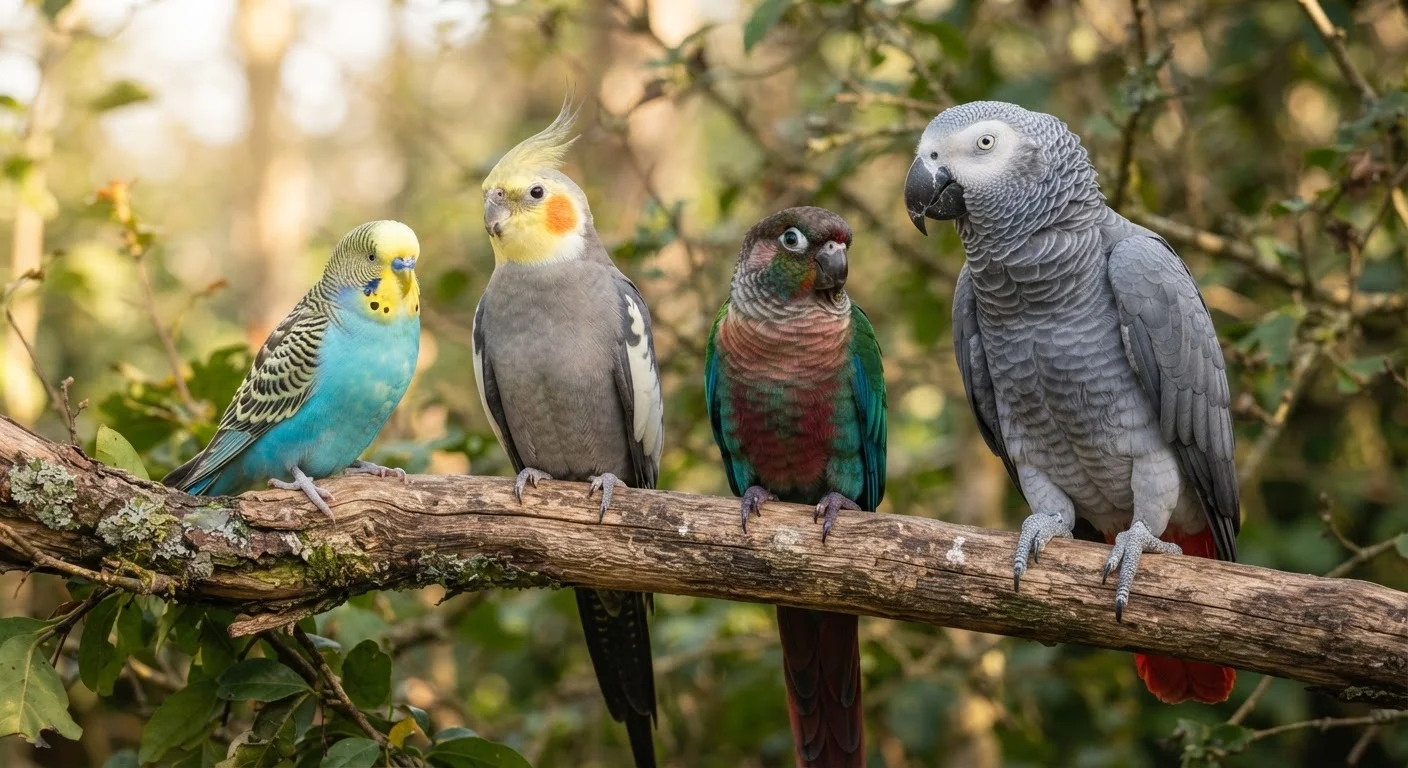
Photo credit: SyndicateExpert.com | Information At The Ready
In this article
Budgies, cockatiels, conures, and parrots each have distinct social needs. Understanding species-specific behavior helps owners build a better bond.
Key Takeaways
- Budgies thrive with a companion bird and require less direct human interaction than other species.
- Cockatiels are affectionate and moderately social, making them well-suited for attentive families.
- Conures are highly energetic and demand significant daily human engagement to stay mentally healthy.
- Large parrots like African greys and macaws have complex emotional needs that require experienced ownership.
- Mismatching a bird's social needs to your lifestyle is a leading cause of feather-destructive behavior and stress.
Why Social Needs Vary So Widely Among Pet Birds
Birds are not a monolithic category of pet. The behavioral and social tendencies of a budgerigar differ from those of a sun conure as dramatically as a Chihuahua differs from a Siberian Husky. These differences stem from each species' natural flock dynamics, cognitive complexity, and ecological niche — factors that carry directly into how they behave in a home setting.
Understanding species-specific socialization isn't just an enrichment concern; it's a welfare issue. Birds whose social needs go unmet frequently develop stress-related behaviors including feather plucking, excessive screaming, or aggression. If you've ever noticed your bird's plumage looking off, feather abnormalities can sometimes signal social stress or underlying illness — making it worth a closer look at both behavior and environment.
Budgies: Independent but Flock-Oriented
Budgerigars (parakeets) are among the most popular pet birds in the United States, and for good reason — they're manageable in size, relatively quiet, and affordable to house. In the wild, budgies live in large, fluid flocks and maintain near-constant contact with flock mates. This background makes them naturally oriented toward other budgies rather than humans.
A single budgie can bond well with a human caretaker who spends several hours nearby each day, but most avian behaviorists note that budgies generally fare better in pairs. They communicate through soft chatter and mutual preening, which a single bird cannot do with a human companion in the same way. For owners who work long hours, keeping a compatible pair is often a more humane arrangement than expecting a lone budgie to self-entertain.
| Budgies | Cockatiels | Conures | Large Parrots | |
|---|---|---|---|---|
| Daily interaction needed | 1–2 hrs (pair OK) | 1–2 hrs hands-on | 2+ hrs direct | 3+ hrs, highly varied |
| Bonds primarily with | Other budgies | Human family | One key person | One or two people |
| Noise level | Low to moderate | Moderate | High | High to very high |
| Cognitive complexity | Moderate | Moderate | Moderate–high | Very high |
| Suitable for beginners | Yes | Yes | With research | Generally no |
| Lifespan (approximate) | 7–15 years | 15–25 years | 15–30 years | 30–80 years |
Cockatiels: The Affectionate Middle Ground
Cockatiels occupy a sweet spot in the pet bird spectrum. They are social enough to seek out human interaction and gentle enough to handle calmly — yet they don't demand the intensity of engagement that larger parrots require. In flock settings, cockatiels form bonded pairs and small family groups, which translates to a genuine desire for companionship at home.
Most cockatiels enjoy head scratches, sitting near their owner, and mimicking household sounds. They benefit from at least one to two hours of out-of-cage interaction daily and tolerate a calm household well. Unlike conures, they are not typically high-volume birds, which makes them compatible with apartment living. However, a cockatiel left entirely alone for extended stretches may develop a pattern of repetitive calling or crest-lowering that signals distress.
Conures: High Energy, High Demand
Conures — encompassing species such as green cheek, sun, and jenday — are spirited, vocal, and intensely social. They bond closely with human caregivers and can become deeply attached to one person in particular. This devotion is rewarding, but it comes with a significant commitment: conures that don't receive adequate daily interaction often become loud, nippy, or destructive.
Sun conures in particular are known for a penetrating contact call that they use in the wild to locate flock members. In a home setting, this translates to loud vocalizations when the bird feels isolated. Prospective conure owners should realistically plan for two or more hours of direct engagement per day, along with plenty of foraging toys and puzzle feeders to occupy the bird during independent time.
Rotate Enrichment to Reduce Dependence
For highly social species like conures, building in structured independent play time from an early age helps prevent separation anxiety. Rotate foraging toys weekly to maintain novelty, and avoid reinforcing contact calls by rushing back into the room every time your bird vocalizes. Consistent, calm interaction is more beneficial than reactive attention.
Large Parrots: Complex Bonds, Long Commitments
African greys, macaws, cockatoos, and amazon parrots represent the most cognitively sophisticated companion birds available. Their social needs are correspondingly complex. African greys, for instance, are highly sensitive to routine changes and may form an exclusive bond with one household member, requiring careful socialization with multiple people from an early age.
Macaws and cockatoos are among the most physically and emotionally demanding birds in captivity. Cockatoos, in particular, are sometimes described by avian welfare researchers as having social needs that approach those of a toddler — craving near-constant reassurance and interaction. These birds can live 50 to 80 years, meaning adopting one is genuinely a lifelong commitment. Inexperienced owners are frequently unprepared for this, contributing to high rates of large parrot relinquishment to rescues and sanctuaries.
If you are considering a large parrot, spending time with the species at a reputable rescue or avian sanctuary before committing is strongly advisable.

Author
Pets & Animals Editorial Team
Pets & Animals Editorial Team is the collective byline for our editorial team and contributor network. Articles published under this byline or an editorial pen name are researched, written, and reviewed according to our editorial standards for clarity, consistency, and independence before publication.
View all articles →