
Why Your Bird's Feathers Look Wrong — and When to Be Concerned
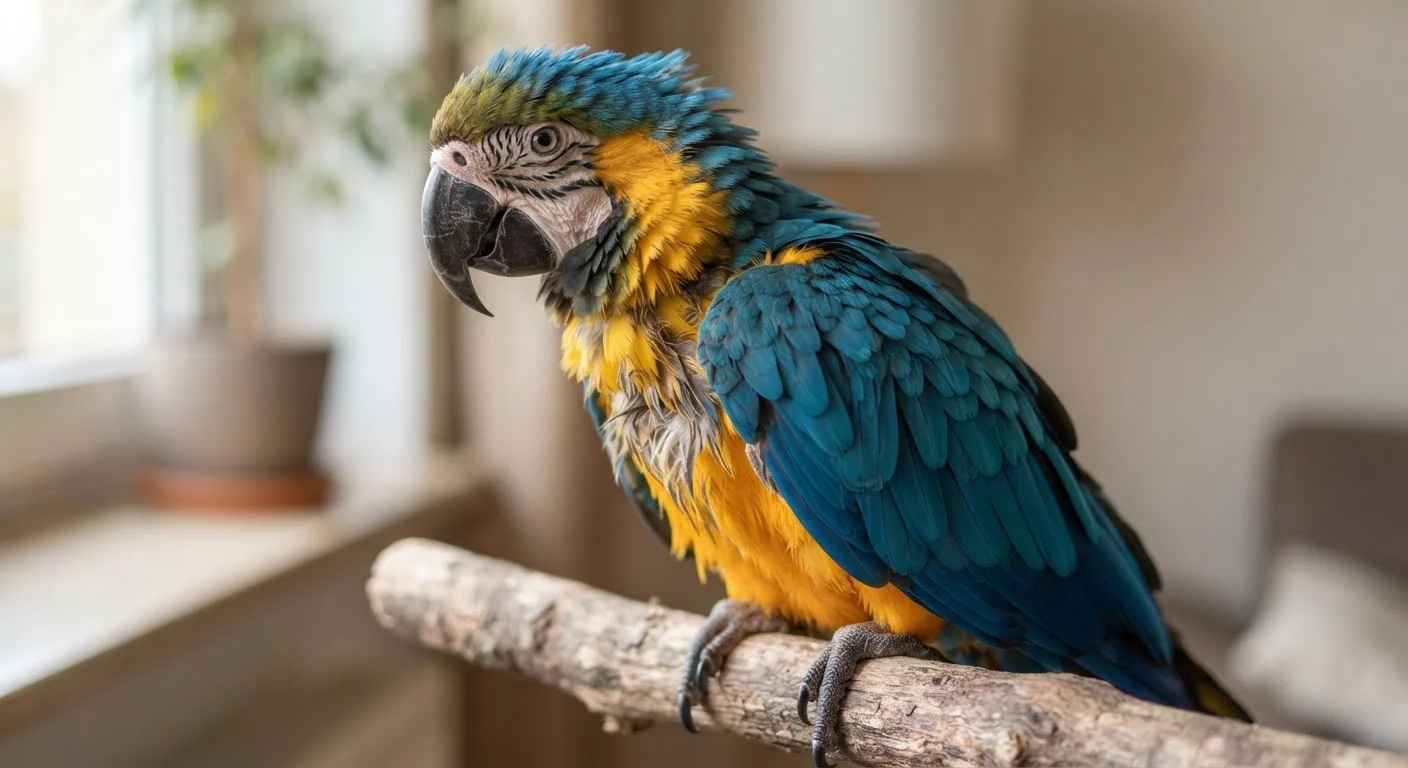
Photo credit: SyndicateExpert.com | Information At The Ready
In this article
Ruffled, missing, or discolored feathers can signal molt, stress, or illness. Learn how to tell the difference and when a vet visit is warranted.
Key Takeaways
- Feather changes during molt are normal, but prolonged or patchy loss often signals something more serious.
- Stress, poor nutrition, and environmental factors are among the most common — and most correctable — causes of feather problems.
- Feather-destructive behavior (plucking or chewing) is distinct from molt and always warrants veterinary attention.
- Color changes in feathers, especially in younger birds, can indicate nutritional deficiencies or underlying illness.
- Many feather issues are reversible when identified early and addressed with proper husbandry or veterinary care.
Understanding What Normal Feathers Look Like
Healthy bird feathers are smooth, symmetrical, and tightly structured. They lie flat against the body in natural patterns that vary by species, with vibrant coloration and a slight sheen. Occasional ruffling — especially during preening or right after bathing — is completely normal behavior. What matters is whether feather irregularities are temporary and localized, or persistent and spreading.
Molt, the natural shedding and regrowth cycle, occurs at least once a year in most companion birds. During molt, you may notice pinfeathers (new shafts covered in a protective keratin sheath) emerging, patchy appearance in transition areas, or an uptick in loose feathers on cage floors. This is normal and not a cause for concern in an otherwise active, eating, and social bird.
Owners who are new to bird keeping often struggle to distinguish normal molt from the early signs of a problem. For a broader look at how new bird owners can set realistic expectations, see what the first few weeks with a pet bird really look like.
Common Mistakes Owners Make When Feathers Look Wrong
Misreading feather changes — either dismissing them or overreacting — can delay appropriate care or create unnecessary stress. Below are the most frequent missteps bird owners make.
Assuming all feather changes are part of a normal molt and waiting indefinitely for them to resolve.
Why it happens: Molt is well-known among bird owners, and it's a natural first explanation. Many owners default to it rather than investigating further, especially if the bird seems otherwise active.
Ignoring nutritional deficiencies as a potential cause of poor feather quality.
Why it happens: Seed-heavy diets are still common in many households, and owners may not realize how much nutrition is missing from an all-seed diet until physical symptoms appear.
Overlooking environmental stressors that degrade feather condition over time.
Why it happens: Factors like low humidity, inadequate lighting, cigarette smoke, and household chemicals are easy to normalize — owners live with them daily and may not connect them to their bird's feathers.
Misidentifying feather-destructive behavior as over-preening or a cosmetic issue.
Why it happens: Preening is a normal, healthy behavior, and owners may not recognize when it crosses into self-damaging territory, especially if it happens when the bird is alone.
Treating feather problems at home with over-the-counter sprays or supplements without a diagnosis.
Why it happens: Bird care products are widely available, and owners naturally want to act quickly when something looks wrong. Self-treatment feels proactive.
When to See an Avian Veterinarian
~1–2×/year
Typical molt frequency in companion parrots
Most healthy companion parrots undergo one to two molt cycles annually, though timing and intensity vary by species and environment.
Up to 70%
Of feather disorder cases linked to husbandry factors
Avian veterinary literature consistently identifies diet, humidity, lighting, and social environment as primary contributors to feather condition problems in captive birds.
Certain feather changes should prompt a vet visit without delay. These include feathers that appear blood-soaked or have damaged shafts near the skin, sudden bald patches not associated with a known molt cycle, and any evidence of the bird biting or pulling out its own feathers. Stress bars — thin horizontal lines across the feather shaft — can indicate periods of nutritional or environmental stress and are worth discussing with a vet if they appear frequently.
Feather-related symptoms rarely exist in isolation. A bird with feather problems may also display subtle behavioral shifts long before the plumage changes become obvious. This is why attentive daily observation matters — the same principle applies across many small pet species, as outlined in our guide on signs of illness in small pets that are easy to miss.
Avian veterinarians — not general small-animal vets — have the specialized training to diagnose feather disorders accurately. Conditions like psittacine beak and feather disease (PBFD), bacterial or fungal infections, and endocrine disorders all require proper diagnostic workup. Delaying that evaluation in hopes the feathers will resolve on their own can allow treatable conditions to progress.
This article is for general informational and educational purposes only. It is not a substitute for professional veterinary advice, diagnosis, or treatment. Always consult a qualified avian veterinarian regarding your bird's specific health needs.

Author
Pets & Animals Editorial Team
Pets & Animals Editorial Team is the collective byline for our editorial team and contributor network. Articles published under this byline or an editorial pen name are researched, written, and reviewed according to our editorial standards for clarity, consistency, and independence before publication.
View all articles →