
Why Travelers Keep Getting Southeast Asia Wrong
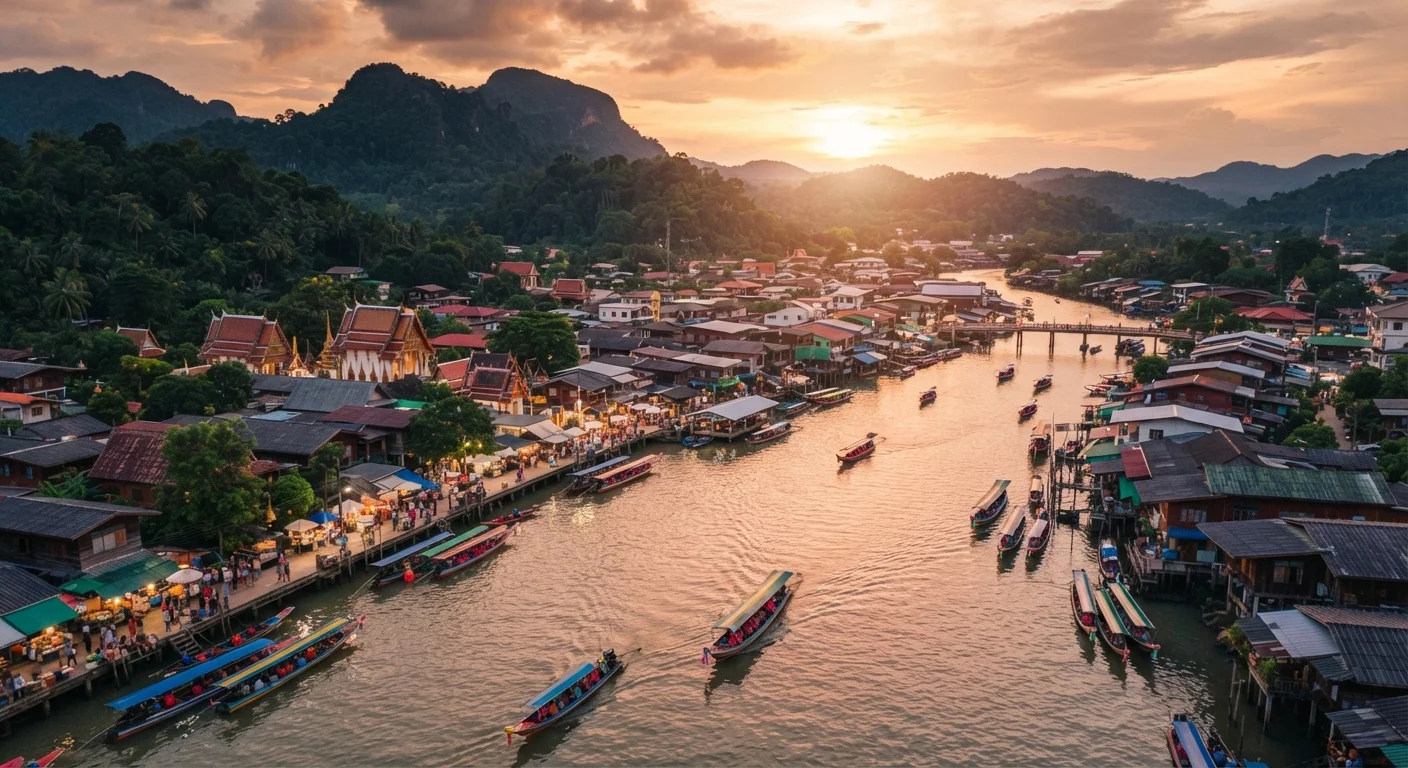
Photo credit: SyndicateExpert.com | Information At The Ready
Is it really cheap everywhere? Is it safe to travel solo? Common assumptions about Southeast Asia, examined honestly.
Key Takeaways
- Southeast Asia is not uniformly cheap — costs vary dramatically by country, city, and travel style.
- Solo travel in the region is genuinely viable, but safety awareness and planning still matter.
- Many areas are accessible year-round, though monsoon seasons affect different countries at different times.
- English is widely spoken in tourist areas, but assuming fluency everywhere creates real friction.
- Street food is generally safe when vendors are busy and food is freshly cooked, not inherently risky.
The Assumptions Travelers Carry In
Southeast Asia occupies an almost mythological place in American travel imagination — a place of jaw-dropping scenery, impossibly cheap noodle bowls, and effortless adventure. Some of that reputation is earned. Much of it, though, arrives pre-packaged with assumptions that lead to real planning failures, avoidable frustrations, and missed experiences.
The myths below aren't obscure or academic. They're the exact misconceptions that show up in travel forums, friend-group text threads, and even some travel content. Getting them right doesn't dampen the excitement of a Southeast Asia trip — it sharpens it.
Myth
Southeast Asia is cheap for everyone, no matter how they travel.
Fact
Budget travel is absolutely possible, but costs vary enormously by country, city, and lifestyle — some destinations rival Western European prices.
The "$30-a-day paradise" narrative has a real foundation, but it flattens enormous nuance. A guesthouse meal in rural Laos and a rooftop cocktail in Singapore cost incomparably different amounts. Singapore is one of the most expensive cities in the world. Bangkok, Bali, and Ho Chi Minh City all have thriving luxury markets where daily spending can easily match New York. Even in genuinely affordable destinations, costs for activities, visa fees, internal flights, and tourist-zone restaurants add up fast. Build a realistic budget using a complete budget framework that accounts for the expenses travelers most commonly underestimate.
Myth
Southeast Asia is too dangerous for solo travelers, especially women.
Fact
Millions of solo travelers — including women — move through the region safely each year, though awareness and preparation remain genuinely important.
Solo travel in Southeast Asia is not reckless — it's common and, with reasonable precautions, very manageable. Destinations like Chiang Mai, Hanoi, and Luang Prabang have well-established solo traveler infrastructure. That said, dismissing safety entirely is equally naive. Petty theft, scams targeting tourists, and unreliable nighttime transport are real considerations in specific areas. First-time solo travelers benefit from researching neighborhood safety, keeping digital copies of documents, and having offline maps downloaded before arrival. The goal is informed confidence, not unfounded fear or unfounded bravado.
Myth
You can visit any Southeast Asian country at any time of year.
Fact
Monsoon patterns shift dramatically across the region and can make specific destinations genuinely difficult to enjoy during certain months.
Southeast Asia does not experience a single unified rainy season. Myanmar's prime travel window (roughly November through February) barely overlaps with the Mekong Delta's driest stretch. The Philippines archipelago is so geographically spread that rain can be hammering one island while another basks in sun. Flooding, road closures, and canceled boat services are real possibilities during peak monsoon, not just inconveniences. Research by specific country and region — not just "Southeast Asia" — before locking in dates.
[warning_callout]Myth
Street food is a health risk travelers should avoid.
Fact
Street food eaten from high-turnover, freshly cooked stalls is widely considered safe and is a cornerstone of the region's culinary culture.
The instinct to avoid street food is understandable but largely misplaced when applied broadly. Food safety correlates more with freshness and cooking temperature than with whether the kitchen has four walls. A stall that serves hundreds of bowls of noodle soup a day at rolling boil is generally lower risk than lukewarm buffet food sitting out in an air-conditioned restaurant. Practical signals: look for high foot traffic, food cooked to order, and visible turnover. Avoid raw garnishes rinsed in tap water if your stomach is still adjusting. Street food is not something to avoid — it's one of the most rewarding ways to understand these cultures.
Myth
English is spoken everywhere, so language barriers are not a real concern.
Fact
English is common in tourist hubs but drops off sharply in rural areas, smaller towns, and local markets — and assuming otherwise leads to real friction.
In Bangkok's backpacker district or Bali's Seminyak, navigating in English is easy. Step outside those corridors and the picture changes. In rural Cambodia, northern Laos, or Myanmar's inland towns, translation apps and a handful of locally learned phrases matter. Beyond practicality, making a minimal effort with local language — even just greetings — signals respect that's genuinely appreciated. Download an offline translation app before you land, keep a pocket phrasebook handy, and don't mistake tourist-zone ease for universal accessibility.
Myth
One trip covers 'Southeast Asia' — it's a single, similar place.
Fact
Southeast Asia spans eleven countries with radically different cultures, religions, governments, currencies, and travel experiences.
Treating Southeast Asia as a monolith is one of the most limiting mistakes a traveler can make. Buddhist Laos, Muslim-majority Malaysia and Indonesia, Catholic-influenced Philippines, and communist-governed Vietnam all offer profoundly different social norms, dress expectations, legal environments, and experiences. Rushing through five countries in two weeks often yields a superficial impression of each. Slowing down — even spending a full week in one region — produces far richer travel. Building your itinerary from scratch with country-specific research is time well spent.
Planning Smarter Before You Go
The single most useful shift an American traveler can make before visiting Southeast Asia is moving from regional thinking to country-specific research. Each destination has its own visa process (some require advance applications; others offer arrivals on arrival or e-visas), its own health entry considerations, and its own financial norms. Always verify current entry requirements through official government sources — both your destination country's embassy and the U.S. State Department's travel advisory page.
Verify Entry Requirements Before You Book
Visa rules, vaccination requirements, and entry conditions across Southeast Asia change with little notice. Always check the official embassy or consulate website for your destination country — and your own country's government travel advisory — before finalizing any plans. Do not rely solely on travel blogs or forum posts for entry information.
For practical financial preparation, protecting your money and cards abroad is especially important in a region where ATM fees, currency exchange traps, and card skimming vary by country. And when assembling your overall travel budget, remember that the costs most travelers forget — travel insurance, visa fees, internal transportation, and activity entrance fees — are precisely where Southeast Asia budgets tend to unravel. See why travel budgets fall apart for a systematic fix.
Southeast Asia genuinely rewards the curious and the prepared. Arrive with honest expectations, real research, and a willingness to be surprised, and the region will more than deliver.

Author
Travel & Trips Editorial Team
Travel & Trips Editorial Team is the collective byline for our editorial team and contributor network. Articles published under this byline or an editorial pen name are researched, written, and reviewed according to our editorial standards for clarity, consistency, and independence before publication.
View all articles →