
Airport Security Lanes Decoded: TSA PreCheck, CLEAR, and Global Entry
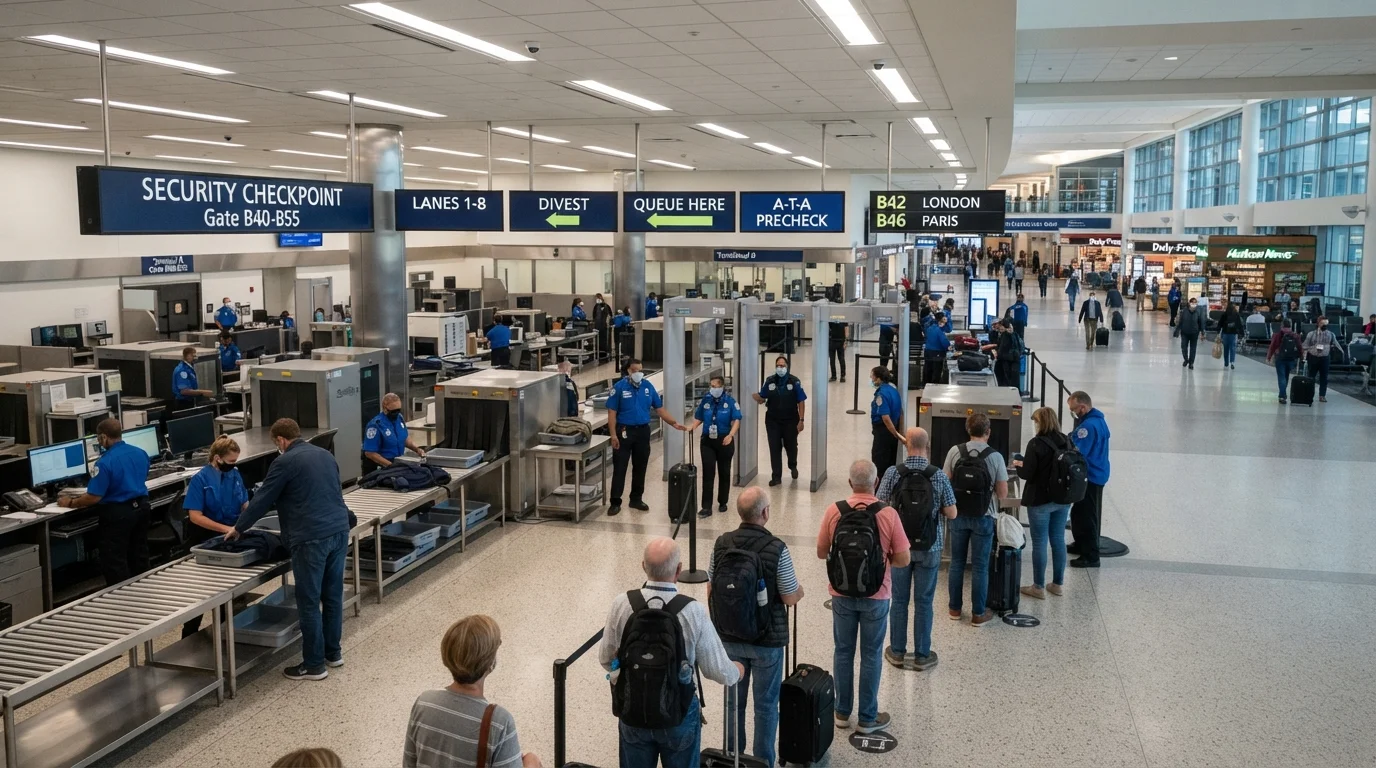
Photo credit: SyndicateExpert.com | Information At The Ready
In this article
TSA PreCheck, CLEAR, and Global Entry all promise faster airport screening — here's what each program actually does and who benefits most from each.
Key Takeaways
- TSA PreCheck speeds up domestic screening by letting you keep shoes, belts, and laptops in your bag.
- CLEAR replaces ID verification with biometrics but still requires standard or PreCheck screening afterward.
- Global Entry is a CBP program granting expedited customs re-entry for international travelers, with PreCheck included.
- Combining CLEAR with PreCheck delivers the fastest overall airport experience for frequent flyers.
- Each program requires a separate application, background check, and fee — eligibility varies.
Why Three Programs Exist — and Why It Matters
Airport security in the United States involves two distinct friction points: identity verification (proving you are who your boarding pass says you are) and physical screening (scanning your body and bags). The three major programs — TSA PreCheck, CLEAR, and Global Entry — each address a different slice of that process, which is why understanding what they actually do is more useful than simply chasing whichever line looks shortest.
Administered by separate agencies, they can also be layered, and knowing how they interact is where the real time savings live. Before your next trip, it's worth reviewing the full pre-trip checklist to make sure your enrollment documents and Known Traveler Number are ready to go.
TSA PreCheck: Faster Physical Screening
TSA PreCheck is a Transportation Security Administration program that allows approved travelers to use dedicated screening lanes at participating domestic airports. The practical difference is meaningful: you keep your shoes, belt, and light jacket on, your laptop stays in its bag, and liquids do not need to come out. Screening is simply quicker and less disruptive.
Enrollment requires an online application, an in-person appointment at an enrollment center, a fingerprint-based background check, and a fee paid directly to TSA or an authorized enrollment provider. Once approved, members receive a KTN to add to flight bookings. Membership is valid for five years before renewal is required.
PreCheck works at more than 200 US airports and with most major domestic and international airlines operating US flights, though availability can vary by terminal and airline. It covers domestic flights and the outbound security checkpoint on international departures — it does not affect what happens when you land abroad or return to the US.
Add Your KTN to Every Booking
Your Known Traveler Number only works if it's attached to your airline reservation — it is not pulled automatically from your passport or ID. Enter it in your frequent flyer profile so it populates new bookings by default, and verify it appears on your boarding pass before heading to the airport. A missing KTN is the single most common reason PreCheck-enrolled travelers end up in the standard lane.
CLEAR: Biometric Identity Verification
CLEAR is a privately operated service that replaces the document-check step of airport security with biometric verification — iris scans or fingerprints — to confirm your identity and link it to your boarding pass. A CLEAR ambassador escorts you to the front of the ID verification queue.
Here is the critical detail many travelers miss: CLEAR only handles identity verification. After the CLEAR pod, you still proceed to a standard TSA screening lane — or a PreCheck lane if you have that credential. CLEAR alone does not let you keep your shoes on or skip the X-ray belt. That is why CLEAR is most powerful when paired with TSA PreCheck: CLEAR gets you past the ID line instantly, and PreCheck makes the physical screening fast.
CLEAR operates at a smaller footprint of airports than PreCheck and carries an annual membership fee. It is worth confirming that your home airport participates before enrolling. The service accepts adults and children, with children under a certain age able to use CLEAR alongside an enrolled adult member — check CLEAR's current terms for age specifics, as these can change.
Global Entry: Expedited US Customs Re-Entry
Global Entry is administered by US Customs and Border Protection (CBP), and it solves a completely different problem than the other two programs: the customs and immigration line you face when returning to the United States from an international trip. Approved members use automated kiosks at participating international airports to scan their passport or fingerprints, answer customs declaration questions, and receive a receipt that lets them bypass the standard officer interview queue.
Global Entry membership includes TSA PreCheck as a bundled benefit — arguably making it the higher-value option for international travelers, since you get two programs for a single application and fee. The application process is more rigorous than PreCheck alone: it includes a background check and a mandatory in-person interview with a CBP officer, either at an enrollment center or at the airport upon returning from an international trip (a conditional approval route).
Not every foreign airport has Global Entry kiosks, and the program does not cover all countries. For travelers navigating complex international itineraries, understanding entry requirements at each destination remains essential — the guide to reading entry requirements accurately is a practical companion resource. And once you're moving through international airports, protecting your finances is equally important — see smart strategies for keeping your money secure abroad.
| TSA PreCheck | CLEAR | Global Entry | |
|---|---|---|---|
| Administered by | TSA (federal) | Private company | CBP (federal) |
| What it speeds up | Physical screening | Identity/ID check only | US customs re-entry |
| PreCheck included | Yes (is PreCheck) | No | Yes (bundled) |
| In-person interview required | No | No | Yes |
| Validity period | 5 years | 1 year (annual renewal) | 5 years |
| Works internationally | Outbound screening only | Select US airports only | US customs kiosks abroad |
| Best paired with | CLEAR or Global Entry | TSA PreCheck | CLEAR (optional upgrade) |
Choosing the Right Combination for Your Travel Style
For travelers who fly domestically a handful of times a year, TSA PreCheck alone typically delivers the most value for the investment. For those who cross international borders regularly, Global Entry makes the most sense as the starting point — PreCheck arrives with it, and you solve the customs bottleneck too.
Adding CLEAR on top of either program is worth considering if you frequently depart from CLEAR-enabled airports and regularly encounter long ID-check lines. It is less compelling at smaller regional airports where standard lines move quickly regardless.
One thing all three programs share: none of them guarantee a frictionless experience every single time. TSA can designate any traveler for additional screening at any checkpoint, PreCheck lanes can be unavailable on specific flights or airlines, and CLEAR kiosks occasionally go offline. These programs reduce friction significantly — they do not eliminate it entirely.
Before your next trip, ensure your Known Traveler Number is saved correctly in every airline booking, and double-check that the airports on your itinerary participate in the programs you rely on. A missed entry in your profile is one of the most common reasons travelers with PreCheck still end up in the standard lane. For a full pre-departure rundown, the layover planning guide is also worth a read if connections are in your itinerary.

Author
Travel & Trips Editorial Team
Travel & Trips Editorial Team is the collective byline for our editorial team and contributor network. Articles published under this byline or an editorial pen name are researched, written, and reviewed according to our editorial standards for clarity, consistency, and independence before publication.
View all articles →