
Carry-On Only: Packing a Full Week Into a Single Bag
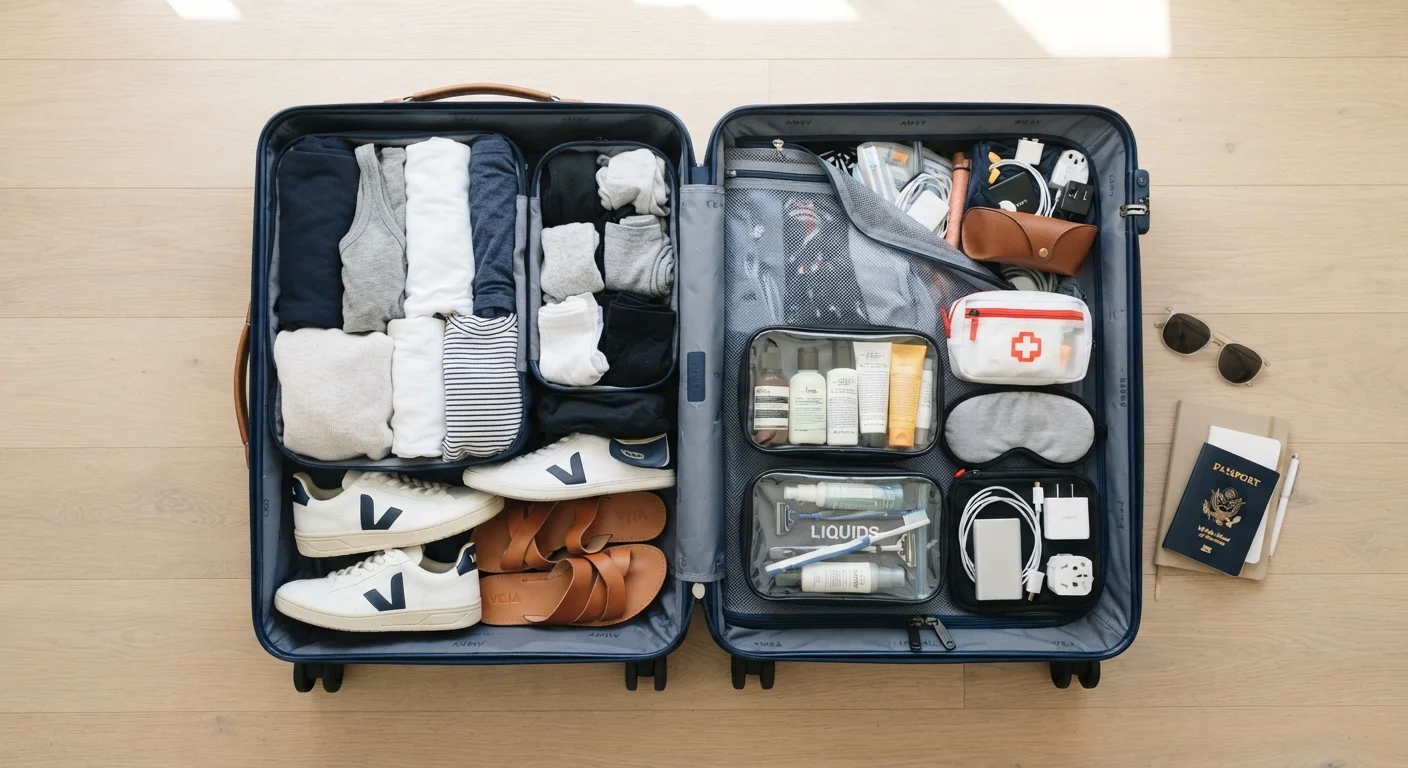
Photo credit: SyndicateExpert.com | Information At The Ready
In this article
Skip checked luggage fees and baggage carousels. A practical approach to fitting a week's worth of clothes and gear into carry-on dimensions.
Key Takeaways
- Most airlines allow carry-on bags up to 22×14×9 inches, but dimensions vary — always verify before packing.
- A capsule wardrobe of mix-and-match pieces dramatically reduces clothing volume without sacrificing outfit options.
- Rolling clothes and using packing cubes can increase usable space by up to 30% compared to flat folding.
- Decanting toiletries into reusable travel-sized containers keeps your liquids bag TSA-compliant and lightweight.
- Wearing your bulkiest items on travel days frees up significant space inside the bag itself.
- A structured pre-trip audit — removing anything you'd pack 'just in case' — is the single most effective step.
Why Carry-On Only Changes Your Trip
Checking a bag costs time, money, and peace of mind. Baggage fees on domestic US flights can run $35–$45 per leg, and international itineraries often cost more. Beyond the expense, a checked bag ties you to carousels, creates anxiety about lost luggage, and slows down arrivals and departures. Going carry-on only means you step off the plane and walk straight to your next adventure.
The real surprise is how rarely a full week requires more than a single well-packed bag. Most overpacking comes from fear — the "just in case" instinct that adds a third pair of shoes or a redundant outfit. Replacing that instinct with a deliberate system is what separates chronic over-packers from effortless travelers. Pair this guide with the core packing principles that hold across any destination for an even stronger foundation.
What you will need
What You Need Before You Start
Before touching a single piece of clothing, gather the right tools and set yourself up for success. A structured approach to the packing process itself — not just the contents — is what makes carry-on living sustainable across a full week. Make sure you're also running through the pre-trip checklist so nothing critical slips through the cracks.
Carry-On Bag
Your primary container — hardshell or softshell, sized to your airline's published carry-on dimensions.
Packing Cubes (set of 3–4)
Compress and categorize clothing so every cubic inch of the bag is used efficiently.
1-Quart Clear Zip-Top Bag
Required by TSA for carrying liquids through US airport security checkpoints.
Reusable Travel-Sized Containers
Decant full-size toiletries into 3.4 oz or smaller containers to stay within liquid limits.
Luggage Scale
Verify your bag's weight before leaving home; some airlines apply weight limits to carry-ons.
Travel Laundry Soap Sheets
Allow mid-trip handwashing to extend your clothing options without extra packing space.
Packing Your Bag Step by Step
Follow these steps in order. Each builds on the last, and skipping ahead often means re-doing earlier work. The goal is an organized, accessible bag that passes airline scrutiny and keeps you comfortable every day of your trip.
Confirm Your Bag Meets Airline Requirements
Before packing a single item, look up your specific airline's carry-on size and weight policy on their official website. Standard US domestic sizing is typically 22×14×9 inches including handles and wheels, but international carriers and budget airlines often differ. Note whether your airline also restricts carry-on weight — some do.
Build a Capsule Wardrobe, Not a Full Closet
Choose a neutral color palette — navy, grey, black, white, or earth tones — so every top pairs with every bottom. A practical seven-day carry-on wardrobe typically looks like: 4 tops, 2 bottoms, 1 dress or versatile layer, 3 pairs of socks, 3 pairs of underwear (with planned laundry), 1 pair of walking shoes, and 1 lightweight jacket. Adjust for your specific activities and climate.
- Tops: prioritize wrinkle-resistant, quick-dry fabrics
- Bottoms: one casual, one smart — both should work across multiple occasions
- Shoes: limit to two pairs maximum; wear the bulkiest on travel days
Roll, Don't Fold
Roll each garment tightly from the hem up. Rolled clothes compress more than flat-folded ones, resist creasing, and let you see every item at a glance without disturbing the rest of the bag. T-shirts, trousers, and casual dresses roll especially well. Reserve flat folding only for structured blazers or dress shirts.
Load Packing Cubes by Category
Assign one cube per category: tops in one, bottoms in another, undergarments and socks in a third. Compression cubes with a double-zip system reduce volume further. Place the heaviest cubes flat against the bag's back panel (the side closest to your body when worn), lighter items toward the front zipper.
Pack Shoes Strategically
Place shoes sole-to-sole in a reusable shoe bag or shower cap to protect clothing from dirt. Tuck socks, chargers, or small accessories inside the shoes themselves to reclaim dead space. Position shoes at the bottom of the bag near the wheels so the weight doesn't shift onto softer items.
Assemble Your Toiletries Bag
Decant only what you'll actually use into 3.4 oz or smaller containers and consolidate into your TSA-compliant 1-quart zip bag. Solid alternatives — shampoo bars, solid deodorant, sunscreen sticks — skip the liquid limit entirely and weigh less. Store your toiletries bag near the top of your carry-on for quick, stress-free removal at security.
Do a Final Weight and Size Check
Zip the bag fully and use a luggage scale to weigh it if your airline has a carry-on weight limit. Lift the bag and walk around with it for 60 seconds — if it feels uncomfortable now, it will be worse after a long travel day. Remove the last item that feels non-essential. Your bag should close easily and sit comfortably on its wheels without tipping.
Staying Organized on the Road
Fitting everything in is only half the challenge — keeping it manageable over seven days matters just as much. Use the same packing cube zones every time you repack at a new hotel, so retrieval becomes automatic. Designate a single small pouch as your "daily carry" for items you'll need at security or on the plane: charger, lip balm, snacks, travel documents.
If laundry access is available mid-trip, even a single wash midweek gives you a meaningful buffer. Many hotels offer laundry bags, and travel laundry soap sheets pack flat and weigh almost nothing. For longer or more complex trips, your day-by-day itinerary can help you anticipate outfit needs more precisely, reducing guesswork at the packing stage.

Author
Travel & Trips Editorial Team
Travel & Trips Editorial Team is the collective byline for our editorial team and contributor network. Articles published under this byline or an editorial pen name are researched, written, and reviewed according to our editorial standards for clarity, consistency, and independence before publication.
View all articles →