
Packing for Every Type of Trip: Principles That Hold No Matter the Destination
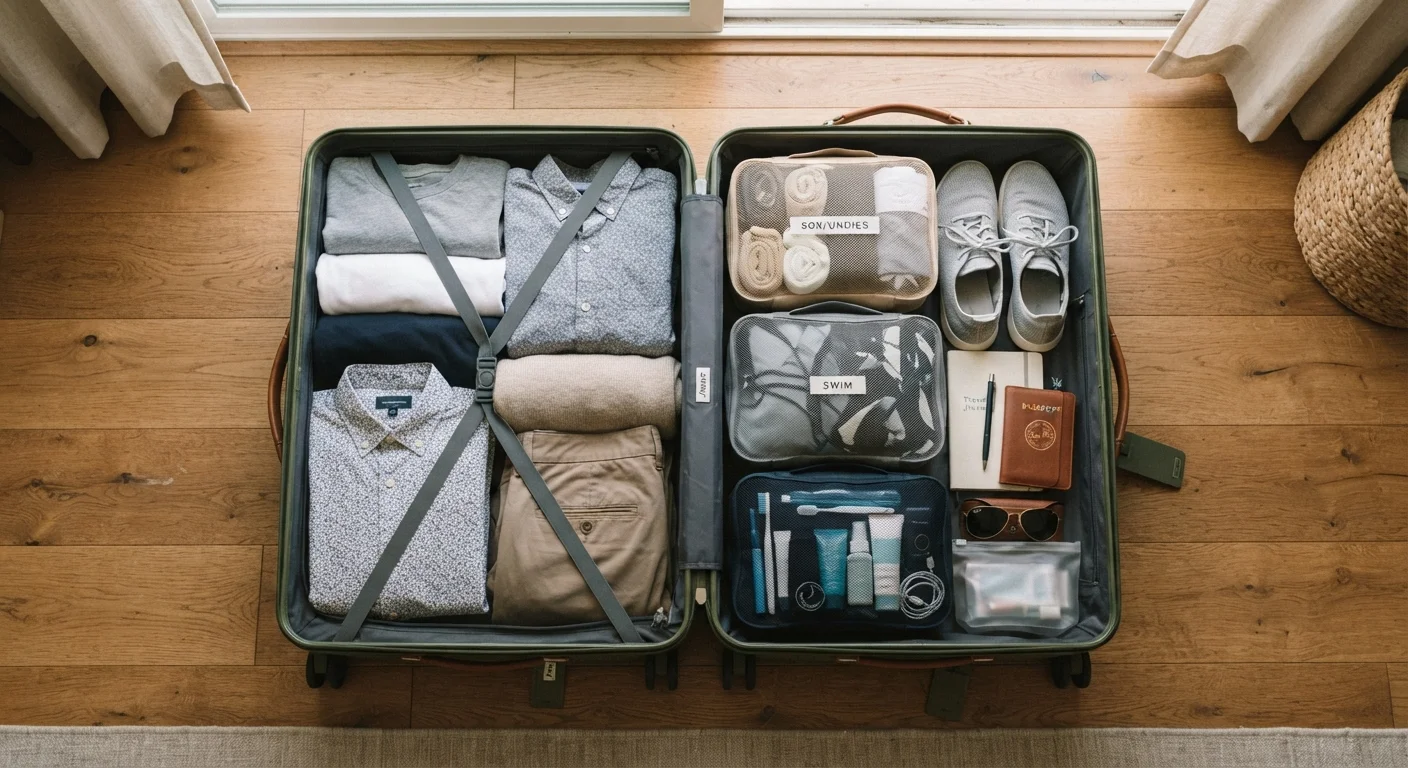
Photo credit: SyndicateExpert.com | Information At The Ready
In this article
Forget destination-specific lists. These core packing strategies reduce overpacking, protect valuables, and keep you prepared for the unexpected.
Key Takeaways
- Start with a packing framework, not a destination-specific list, to avoid reinventing the wheel every trip.
- Reducing bag weight protects your body, your budget, and your travel flexibility.
- Keeping valuables and documents accessible — not buried — is a critical safety habit.
- Layering and versatile clothing choices eliminate the need to pack outfit-by-outfit.
- A pre-pack checklist run-through prevents the most common last-minute forgotten items.
Why Destination-Agnostic Packing Works
Most travelers approach packing the same way every time: they imagine the trip, panic about what they might need, and throw too much into the bag. The result is a suitcase that weighs twice what it should and still somehow lacks the one thing they actually need on day three.
The smarter approach is building a packing framework — a set of principles that scales up or down whether you're spending four days in Phoenix or three weeks in Portugal. Skilled travelers don't start from scratch each time; they refine a system. As our Travel Tips hub covers across many angles, the difference between a stressful trip and a smooth one often comes down to decisions made before you leave home.
If you've ever wondered why overpacking consistently makes trips harder, the real costs go well beyond airline fees — including physical strain, reduced mobility, and lost flexibility at every stage of the journey.
Core Packing Principles That Travel With You
These practices hold true regardless of your destination, trip length, or travel style. Apply them consistently and packing becomes a confident, repeatable process rather than a guessing game.
Build around a clothing formula, not full outfits
Packing outfit-by-outfit leads to redundancy and bulk. A formula approach — a set number of tops, bottoms, and layers that mix and match — achieves far more combinations with fewer pieces. This is especially effective when you choose neutrals that coordinate naturally.
Use a packing list you refine after every trip
A living packing list — one you update with what you actually used and what stayed untouched — becomes more accurate over time. It removes decision fatigue and prevents repeat mistakes. Most veteran travelers have a version of this, even if informal.
Keep all critical documents and medications in your carry-on
Checked luggage can be delayed, misdirected, or lost. Anything you genuinely cannot replace mid-trip — passport, prescriptions, insurance cards — needs to stay on your person or in your personal bag. This is a non-negotiable safeguard.
Pack a compact emergency layer no matter the climate
Air conditioning, unexpected altitude, evening temperature drops, and sudden weather shifts catch travelers off guard in every kind of destination. A lightweight packable layer adds minimal weight but covers a wide range of situations.
Distribute weight and valuables across bags strategically
Concentrating all valuables or all heavy items in one bag creates both a safety and a physical burden. Spreading weight evenly reduces strain, and splitting valuables between bags limits total loss if one bag is lost or stolen.
Apply the one-week rule for trip length
Most travelers need roughly the same number of core clothing items for a one-week trip as a two-week trip — the difference is planning to do laundry once. Packing more than one week's worth of clothes almost always means overpacking for any duration.
Quick Actions to Improve Your Next Pack
You don't need to overhaul your entire packing approach in one go. Even one or two of these changes can meaningfully reduce friction on your next departure day — and stack up to real benefits over time.
For a broader review of everything to handle before leaving home — documents, health prep, finances, and home security — run through a thorough pre-trip checklist as a final step. And if you're coordinating bags and logistics across a group, group trip planning has its own layer of complexity worth addressing separately.

Author
Travel & Trips Editorial Team
Travel & Trips Editorial Team is the collective byline for our editorial team and contributor network. Articles published under this byline or an editorial pen name are researched, written, and reviewed according to our editorial standards for clarity, consistency, and independence before publication.
View all articles →