
Staying Healthy on Long-Haul Flights: What the Evidence Actually Supports
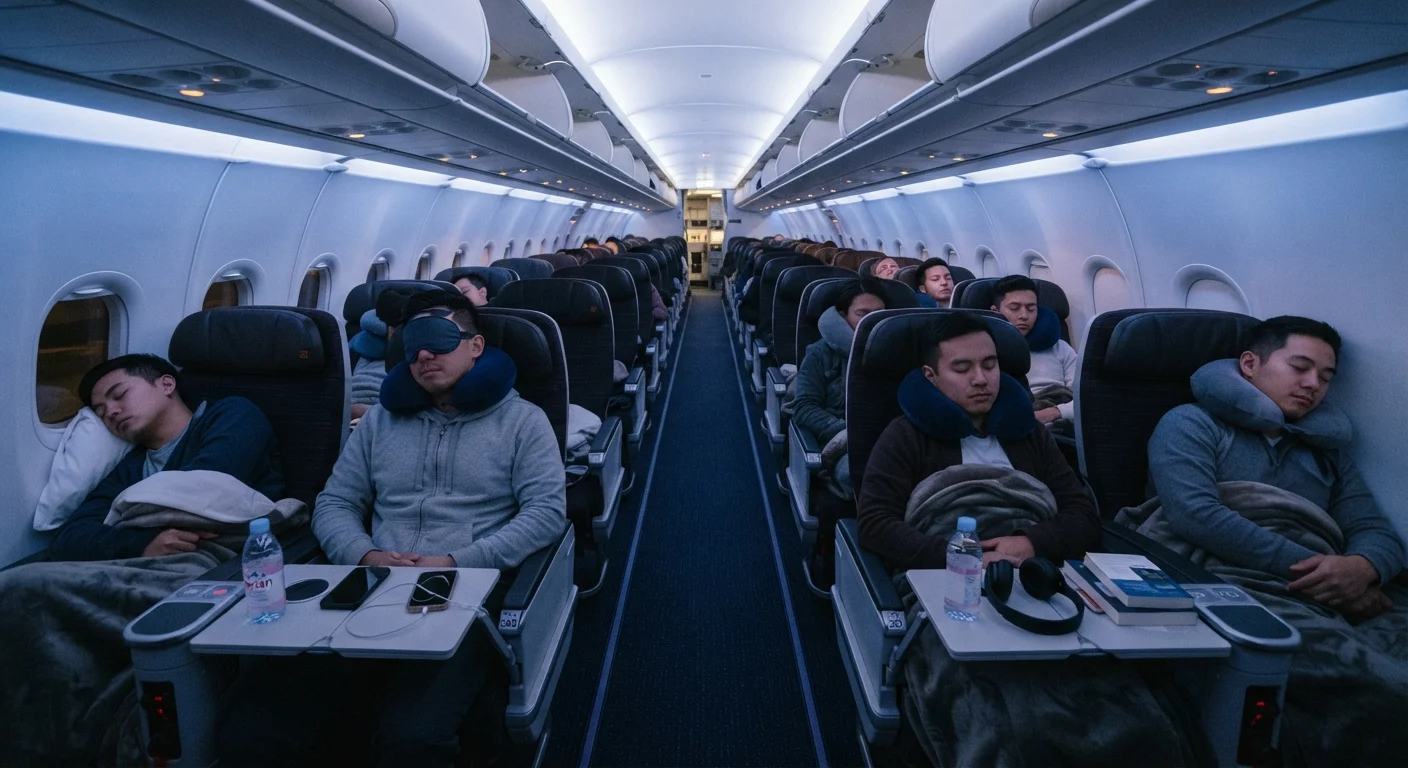
Photo credit: SyndicateExpert.com | Information At The Ready
In this article
Hydration, circulation, sleep, and hygiene on long flights — what research suggests actually helps and what's largely passenger folklore.
Key Takeaways
- Cabin air is drier than most desert environments, making proactive hydration genuinely important.
- Circulation exercises and periodic movement reduce deep vein thrombosis risk on flights over four hours.
- Light exposure and strategic sleep timing are among the best-supported tools for managing jet lag.
- Many popular in-flight remedies — like mega-dose vitamins — lack strong clinical backing.
- Simple hygiene habits can meaningfully lower your exposure to airborne and surface pathogens in the cabin.
Why Long-Haul Flights Stress the Body
Flying for eight, twelve, or sixteen hours places your body in conditions it wasn't designed for: low humidity, reduced atmospheric pressure, limited movement, disrupted sleep, and compressed time zones. Understanding what's actually happening physiologically helps you focus on interventions that matter rather than ones that just feel productive.
Cabin humidity typically hovers between 10% and 20% — considerably drier than the Mojave Desert on an average day. Cabin pressure is also equivalent to being at roughly 6,000–8,000 feet above sea level, which slightly reduces blood oxygen saturation. These two factors together explain much of the fatigue and sluggishness passengers feel on arrival. The good news is that both are addressable with straightforward habits.
Before you even board, a little preparation goes a long way. Our pre-trip checklist covers the health prep steps worth doing before any long journey.
Hydration: What the Evidence Actually Shows
Hydration is probably the most discussed — and most misunderstood — aspect of in-flight wellness. The research consistently supports drinking water regularly throughout a long flight, but not the often-cited "drink a liter per hour" folk advice. Overhydration carries its own risks. A more practical and evidence-aligned approach is drinking small amounts consistently rather than large quantities infrequently.
Alcohol and caffeine both have mild diuretic effects and can amplify dehydration in the already-dry cabin environment, so moderation during flight is reasonable. Caffeinated drinks also interfere with sleep onset, which compounds jet lag — a topic explored in detail in our piece on the jet lag myths keeping travelers suffering.
Nasal passages and eyes are especially vulnerable to cabin dryness. Saline nasal spray and lubricating eye drops are low-risk, widely recommended by travel medicine specialists for comfort on long flights — not because they prevent illness, but because dry mucous membranes are uncomfortable and may be slightly more susceptible to irritation.
10–20%
Typical relative humidity in airplane cabins
The World Health Organization notes that cabin humidity is often lower than desert environments, contributing to dryness of eyes, skin, and nasal passages.
6,000–8,000 ft
Equivalent cabin pressure altitude on most commercial flights
Aviation regulations permit cabin pressure equivalent to altitudes of up to 8,000 feet, which can mildly reduce blood oxygen saturation compared to sea level.
Circulation and Movement: The Risk Is Real
Deep vein thrombosis (DVT) — the formation of blood clots in the deep veins, typically in the legs — is a genuine, well-documented risk on long flights, particularly those over four hours. Research published in travel medicine literature consistently identifies prolonged immobility as a key contributing factor. The absolute risk for healthy travelers is low, but it rises with age, obesity, pregnancy, or a personal or family history of clotting disorders.
What actually helps? Regular movement is the most supported strategy. Standing and walking the aisle every one to two hours, performing calf raises and ankle circles while seated, and wearing graduated compression stockings (especially for higher-risk travelers) are all backed by evidence. Compression stockings have shown modest but consistent benefit in reducing leg swelling and DVT risk in several controlled trials.
Avoid crossing your legs for extended periods, as this can restrict blood flow in the popliteal area behind the knee. Staying in a reclined seat for hours on end — though tempting — works against circulation. If you have specific health concerns, consult a healthcare professional before a long-haul flight, as individual risk factors vary considerably.
Sleep Strategy: Timing Matters More Than Duration
Sleeping on planes is notoriously difficult, yet getting some rest — aligned with your destination's time zone when possible — is one of the strongest levers for reducing jet lag. Sleep science suggests that trying to sleep during hours that correspond to nighttime at your destination is more effective than simply sleeping whenever you feel tired.
Light exposure is a powerful circadian signal. Avoiding bright screens and using an eye mask during your target sleep window helps, while exposing yourself to daylight on arrival can accelerate your body clock's adjustment. Melatonin, taken at low doses timed to your destination's night, has reasonable but not conclusive evidence supporting its use for jet lag — always discuss supplementation with a healthcare provider before use, especially if you take other medications.
What doesn't have strong support? Sleeping pills on overnight flights sound appealing but can leave you groggy on arrival, and some formulations have shown associations with increased DVT risk during immobility. This connects to the broader theme of questioning popular remedies — just as common nutrition myths persist despite the evidence, so do many in-flight health assumptions.
Hygiene, Immunity, and the Folklore Around Supplements
Airplane cabins recirculate cabin air through HEPA filters that capture most airborne particles, including bacteria and many viruses. The bigger hygiene risk is often contact surfaces: tray tables, armrests, seatbelt buckles, and lavatory handles. Wiping down your immediate area with an antibacterial wipe and washing hands thoroughly before eating are genuinely effective habits supported by basic microbiology.
Vitamin C megadoses, zinc lozenges, and various herbal supplements are frequently marketed as immune boosters for travel. The evidence for most is mixed to weak. Vitamin C has some modest evidence for reducing cold duration in people under sustained physical stress, but not strong evidence for prevention in average healthy adults. Treating supplements as a reliable shield against illness on flights is largely unfounded — a reminder that separating fact from habit is useful in all areas of health.
For broader context on how the physical health fundamentals — sleep, movement, and hydration — underpin immune resilience, that lens is far more useful than any single supplement.
Drink small amounts of water consistently throughout the flight rather than large quantities at once.
Cabin humidity is extremely low, causing gradual fluid loss throughout a flight. Consistent small sips maintain hydration more effectively than periodic large intakes and avoid overhydration.
Perform seated leg exercises and walk the aisle at least once every two hours.
Prolonged immobility is the primary modifiable risk factor for in-flight DVT. Regular movement encourages venous blood return from the legs and reduces clot risk.
Align your sleep window on board to the nighttime of your destination's time zone.
Sleeping in sync with your destination's night rather than your departure city's schedule gives your circadian rhythm a head start on adjustment, reducing jet lag severity on arrival.
Wipe down your tray table, armrests, and seatbelt buckle with an antibacterial wipe before settling in.
High-contact surfaces in airplane cabins can carry pathogens between flights. HEPA filtration addresses airborne particles but not surface contamination.
Wear graduated compression stockings on flights lasting four hours or more.
Multiple controlled studies have found compression stockings reduce leg swelling and lower DVT risk in economy-class passengers, particularly during longer flights.
This article is for general informational purposes only and does not constitute medical advice. Consult a qualified healthcare professional before making any changes to your health routine, especially if you have existing conditions or are planning extended travel.

Author
Travel & Trips Editorial Team
Travel & Trips Editorial Team is the collective byline for our editorial team and contributor network. Articles published under this byline or an editorial pen name are researched, written, and reviewed according to our editorial standards for clarity, consistency, and independence before publication.
View all articles →