
Reading the Window Sticker: A Field Guide to Dealership Paperwork
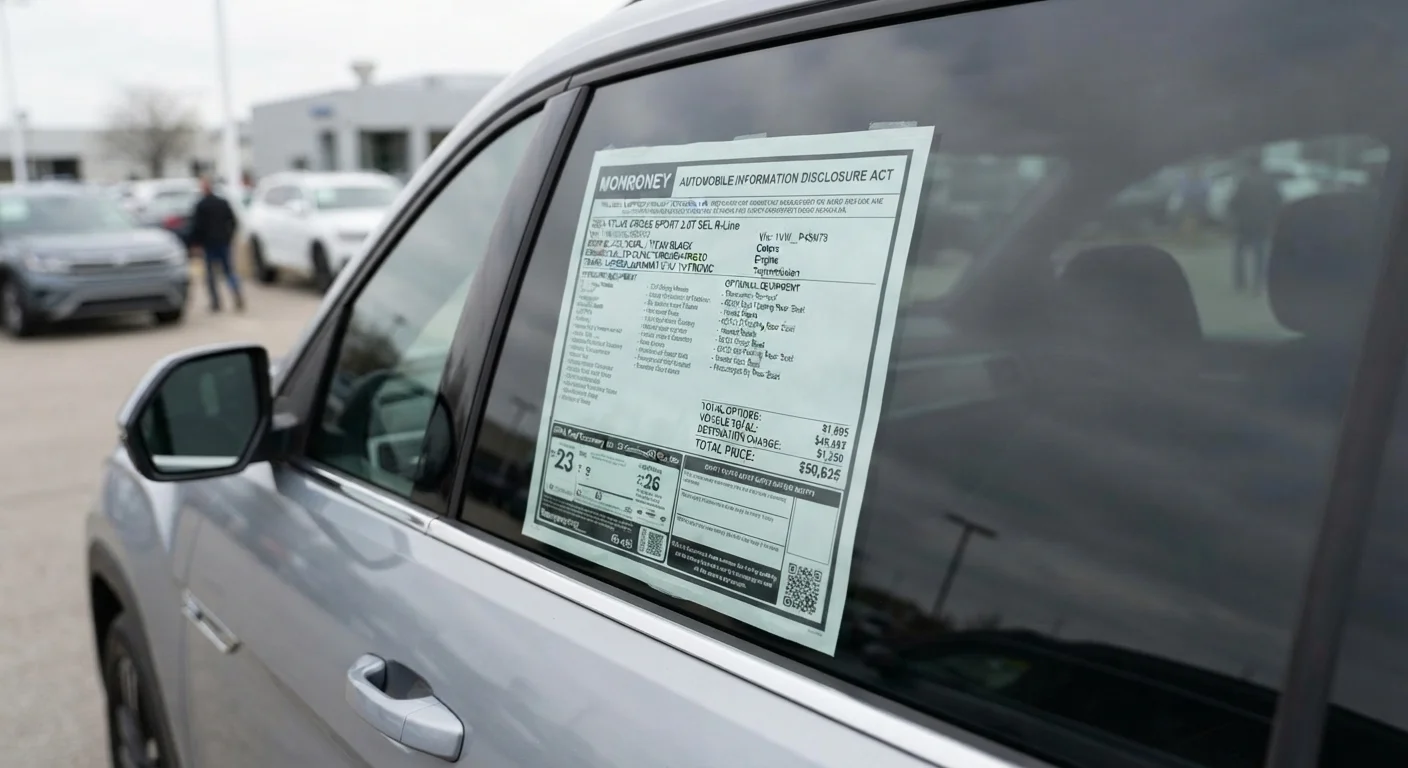
Photo credit: SyndicateExpert.com | Information At The Ready
In this article
Monroney labels, dealer add-ons, doc fees — understand every line on the paperwork before you sit down to sign anything.
What the Monroney Label Actually Tells You
The window sticker attached to every new car sold in the United States is formally called the Monroney label — named after the senator who mandated it in the Automobile Information Disclosure Act of 1958. Federal law requires dealers to keep it on the vehicle until the point of sale. It is not marketing material; it is a standardized disclosure document, and understanding its sections gives you a meaningful negotiating baseline.
The label is divided into several distinct areas:
- Vehicle description: Make, model, trim level, model year, and the Vehicle Identification Number (VIN) — the unique 17-character code that identifies your specific vehicle.
- Standard equipment: Features included at the base trim level, before any packages are added.
- Optional packages and accessories: Factory-installed upgrades with individual prices listed. Each line is negotiable to the extent that you choose a different trim or configuration — once the car is built, you cannot remove factory options.
- Fuel economy estimates: City, highway, and combined MPG figures from the EPA. These are estimates based on standardized lab tests and will vary with real-world driving habits.
- Manufacturer's Suggested Retail Price (MSRP): The total suggested price before taxes, fees, or dealer adjustments. The keyword is suggested — this is a starting point, not a fixed price.
Monroney Label
The federally mandated window sticker on every new vehicle sold in the U.S., disclosing MSRP, standard and optional equipment, and EPA fuel economy estimates. Dealers are required by law to display it until the vehicle is sold.
MSRP
Manufacturer's Suggested Retail Price — the price the automaker recommends for the vehicle, before taxes, fees, or dealer markups. It is a starting point for negotiation, not a fixed sales price.
Dealer Addendum
A secondary sticker added by the dealership, listing dealer-installed accessories or market adjustments beyond the factory Monroney label. Contents and pricing are set by the dealer and are typically negotiable.
Documentation Fee (Doc Fee)
A dealership charge for preparing title, registration, and financing paperwork. The amount varies by state and dealer; some states cap the fee by law.
VIN (Vehicle Identification Number)
A unique 17-character alphanumeric code assigned to every motor vehicle. It identifies the specific car's manufacturer, model, specifications, and production details.
Out-the-Door Price
The total amount a buyer will pay to drive the vehicle away, including vehicle price, dealer fees, taxes, and registration costs. Comparing out-the-door prices is the most accurate way to evaluate competing offers.
APR (Annual Percentage Rate)
The yearly cost of borrowing money, expressed as a percentage. For auto loans, APR includes the interest rate and may include certain fees, making it a more complete measure of loan cost than the interest rate alone.
For a broader look at the financial realities of vehicle ownership, see our complete starting point for car owners.
Dealer Add-Ons, Market Adjustments, and Doc Fees
Below the factory Monroney information, many dealerships attach a second sticker — sometimes called a dealer addendum. This is where buyers frequently overpay without realizing it. Unlike the federally standardized Monroney section, addendum content is set entirely by the dealership and is almost always negotiable or removable.
Common Dealer Add-Ons
- Paint sealant or fabric protection: Typically applied before you arrive on the lot and priced well above what comparable products cost at retail. These are among the most commonly questioned line items by consumer advocates.
- VIN etching: A theft-deterrent service where the VIN is etched into windows. Some dealers charge several hundred dollars; many auto insurers offer this as a free or low-cost service.
- Extended warranties or service contracts: These are separate financial products, not manufacturer warranties. Review the fine print carefully — what the fine print usually says about extended warranties is worth understanding before you commit.
- Market adjustment: An additional markup above MSRP, sometimes seen on high-demand vehicles. This is purely discretionary dealer pricing.
Documentation Fees
The documentation fee (doc fee) covers the dealer's cost of preparing title, registration, and financing paperwork. It is a legitimate charge, but the amount varies widely by state and dealership — from under $100 to several hundred dollars. Some states cap doc fees by law; others do not. Ask the out-of-door price (the total amount you will owe, including all fees and taxes) before negotiating individual line items.
If you are planning a trade-in, review what owners often overlook before trading in so the transaction is structured to your advantage.
Reading the Numbers Before You Sign
When you move from the lot to the finance office, the paperwork multiplies. The documents you will encounter include the buyer's order (the itemized purchase agreement), the retail installment sales contract (if financing), and disclosures for any add-on products. Here is how to approach each:
- Buyer's order: Verify every line against what was discussed. Check that the vehicle price matches the negotiated figure, that add-ons you declined are removed, and that the doc fee reflects what was quoted.
- Financing contract: Confirm the Annual Percentage Rate (APR), the loan term in months, the monthly payment, and the total amount financed. A lower monthly payment achieved by extending the loan term will nearly always mean paying more interest overall.
- Trade-in credit: If you traded a vehicle, the credit should appear as a deduction, not be buried in an adjusted vehicle price.
| Law requiring window stickers | Automobile Information Disclosure Act (1958) |
| VIN length | 17 characters |
| Fuel economy figures source | U.S. Environmental Protection Agency (EPA) |
| Doc fee variability | Under $100 to several hundred dollars, by state and dealer |
| Dealer addendum sticker | Not federally regulated; set entirely by the dealership |
| Key financing metric to verify | APR, loan term, and total amount financed |
One practical step: request a complete itemized quote — sometimes called a worksheet — before entering the finance office. Reviewing it with time to ask questions is far easier than parsing it under signing pressure.
Once you own the vehicle, the owner's manual becomes your most important document. See how to read your owner's manual maintenance schedule to understand what your car actually needs and when.
This article is for general informational purposes only. Specific fees, regulations, and disclosure requirements vary by state and change over time. Consult applicable state consumer protection resources and, where appropriate, a licensed professional before finalizing any vehicle purchase or financing agreement.

Author
Cars & Driving Editorial Team
Cars & Driving Editorial Team is the collective byline for our editorial team and contributor network. Articles published under this byline or an editorial pen name are researched, written, and reviewed according to our editorial standards for clarity, consistency, and independence before publication.
View all articles →