
Reading Your Owner's Manual: The Maintenance Schedule Section Explained
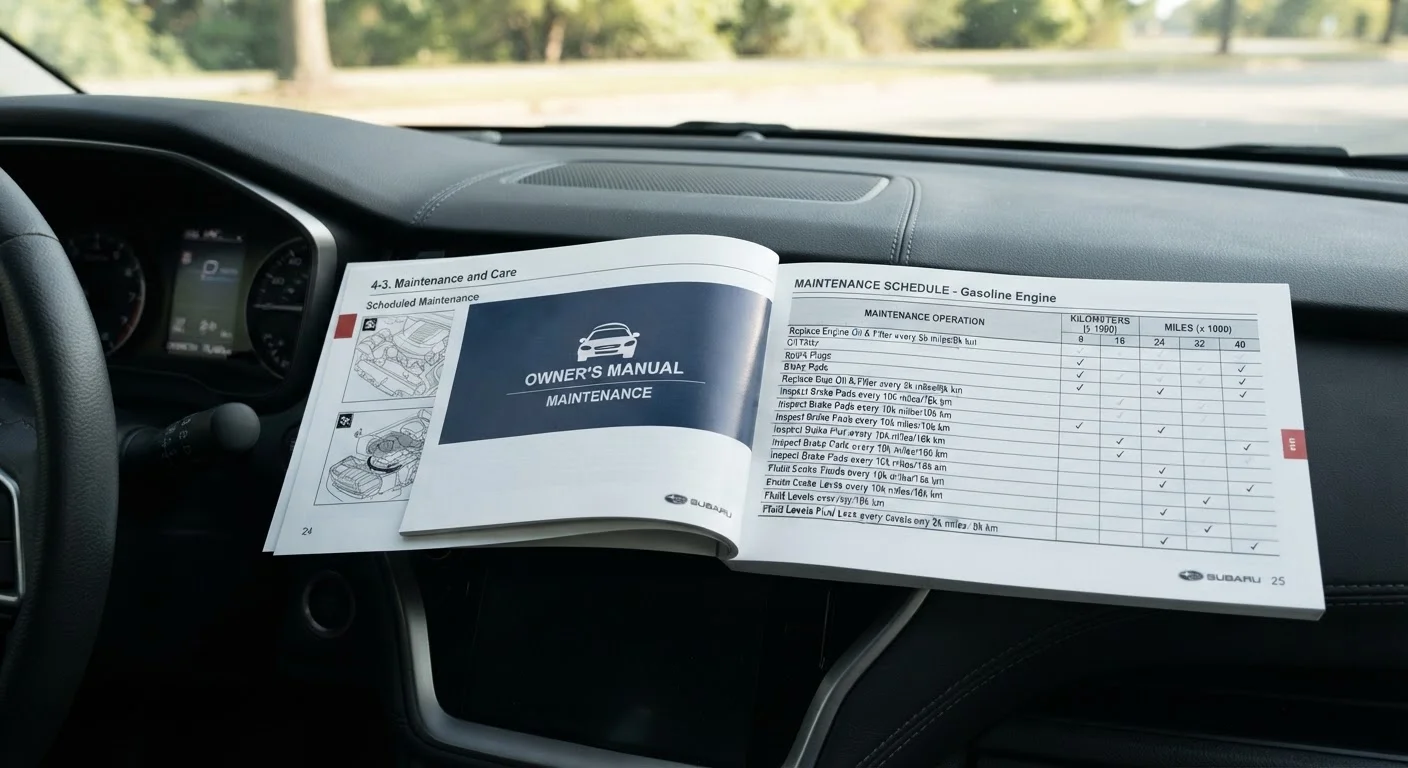
Photo credit: SyndicateExpert.com | Information At The Ready
In this article
Your owner's manual holds the most reliable maintenance timeline for your car. Here's how to read and use that schedule in everyday terms.
Key Takeaways
- Your owner's manual maintenance schedule is vehicle-specific and more accurate than generic mileage rules.
- Most schedules list service intervals by both mileage and elapsed time - whichever comes first applies.
- Severe-duty driving conditions require more frequent service than the standard schedule.
- Skipping scheduled maintenance can void warranty coverage and lead to costly repairs.
- A digital copy of your manual is usually available on the manufacturer's website if you've lost the original.
Why the Owner's Manual - Not a Generic Rule - Is Your Starting Point
Plenty of drivers rely on stickers from quick-lube shops or advice passed down from family. Those sources mean well, but they're not calibrated to your specific vehicle. A turbocharged engine, a hybrid drivetrain, and a naturally aspirated V6 all have different oil types, different change intervals, and different coolant specifications. The people who engineered your car documented exactly what it needs - and that documentation lives in your owner's manual.
The maintenance schedule isn't boilerplate. It reflects the tolerances of your engine, the capacity of your transmission, and the expected lifespan of your brake fluid under real operating conditions. For example, oil change intervals vary widely by vehicle - some modern engines specify 10,000-mile changes while others call for 5,000. Using the wrong interval in either direction costs you money unnecessarily or risks engine wear.
If your manual is missing, most manufacturers post searchable PDF versions on their official websites by year, make, and model. This is worth the five minutes it takes to retrieve.
How to Read the Schedule: Mileage, Time, and Conditions
Maintenance schedules are usually formatted as a table or checklist. Rows represent service items - oil change, tire rotation, air filter, spark plugs, brake fluid, cabin air filter, and so on. Columns represent mileage milestones or time intervals. A checkmark or bullet at the intersection tells you that service is due.
Two things to understand immediately:
- Dual triggers: Most items list both a mileage threshold and a time threshold (e.g., "every 7,500 miles or 12 months"). Whichever you hit first is when the service is due. This matters for low-mileage drivers - a car that sits mostly in the driveway still needs oil changes on schedule.
- Normal vs. severe conditions: Many manuals include two parallel schedules. "Normal" applies to steady highway driving in moderate climates. "Severe" applies if you regularly tow, drive in stop-and-go traffic, operate in extreme temperatures, or take many short trips. Most urban drivers are closer to the severe category than they realize.
Use Both Triggers - Mileage and Time
Don't wait until you hit the mileage number if you've already passed the time threshold. A car driven only 3,000 miles in a year still needs an oil change if the manual says every 12 months. Set a calendar reminder at the start of each year to review where you stand on both measures.
For a broader view of what each system in your vehicle actually needs, this end-to-end maintenance resource covers every major component and the consequences of neglect.
Common Items on the Schedule and What They Mean
Here's what you'll typically find listed - and why each entry matters:
- Engine oil and filter
- The most frequent item on any schedule. Fresh oil lubricates moving parts and carries heat away from the engine. Check the viscosity specification (e.g., 0W-20) listed in your manual - using the wrong grade affects fuel economy and engine protection.
- Tire rotation
- Tires wear unevenly based on their position. Rotating them on schedule extends their usable life. Understanding rotation schedules is a straightforward habit that pays off over thousands of miles.
- Air and cabin air filters
- The engine air filter protects the combustion system; the cabin air filter affects what you breathe inside the car. Both are easy to inspect and relatively inexpensive to replace.
- Brake fluid
- Brake fluid absorbs moisture over time, which lowers its boiling point and can compromise braking performance. Many drivers overlook this one entirely.
- Transmission fluid, coolant, spark plugs
- These are longer-interval items - some extending to 60,000 miles or beyond - but skipping them is expensive. A transmission failure from neglected fluid costs far more than the fluid change itself.
2 schedules
Typically found in modern owner's manuals
Most manufacturers publish both a normal and a severe-duty maintenance schedule to reflect different real-world driving conditions.
~33%
Drivers who skip or delay routine maintenance
Industry surveys have consistently found that a significant share of vehicles on the road are behind on at least one factory-scheduled service item.
5-10 min
Time to locate your manual online
Most manufacturers publish free, searchable PDF owner's manuals on their official websites by year, make, and model.
Keeping Records and Staying on Track
Reading the schedule is only useful if you act on it. Keep a simple log - a small notebook in the glove box works - noting the date, mileage, and service performed each time. This documentation protects you if a warranty dispute arises and gives any future buyer confidence in the vehicle's history.
If you're new to thinking about maintenance this systematically, this beginner's guide to car ownership explains the core concepts clearly before anything goes wrong. And if keeping maintenance costs predictable is a priority, habits for managing ongoing car costs can help you plan ahead rather than react to surprises.
Your owner's manual gives you the exact roadmap your car's engineers intended. Using it confidently is one of the most practical things you can do as a driver.
Frequently Asked Questions

Author
Cars & Driving Editorial Team
Cars & Driving Editorial Team is the collective byline for our editorial team and contributor network. Articles published under this byline or an editorial pen name are researched, written, and reviewed according to our editorial standards for clarity, consistency, and independence before publication.
View all articles →