
Your First Year Owning a Car: What to Have in Order
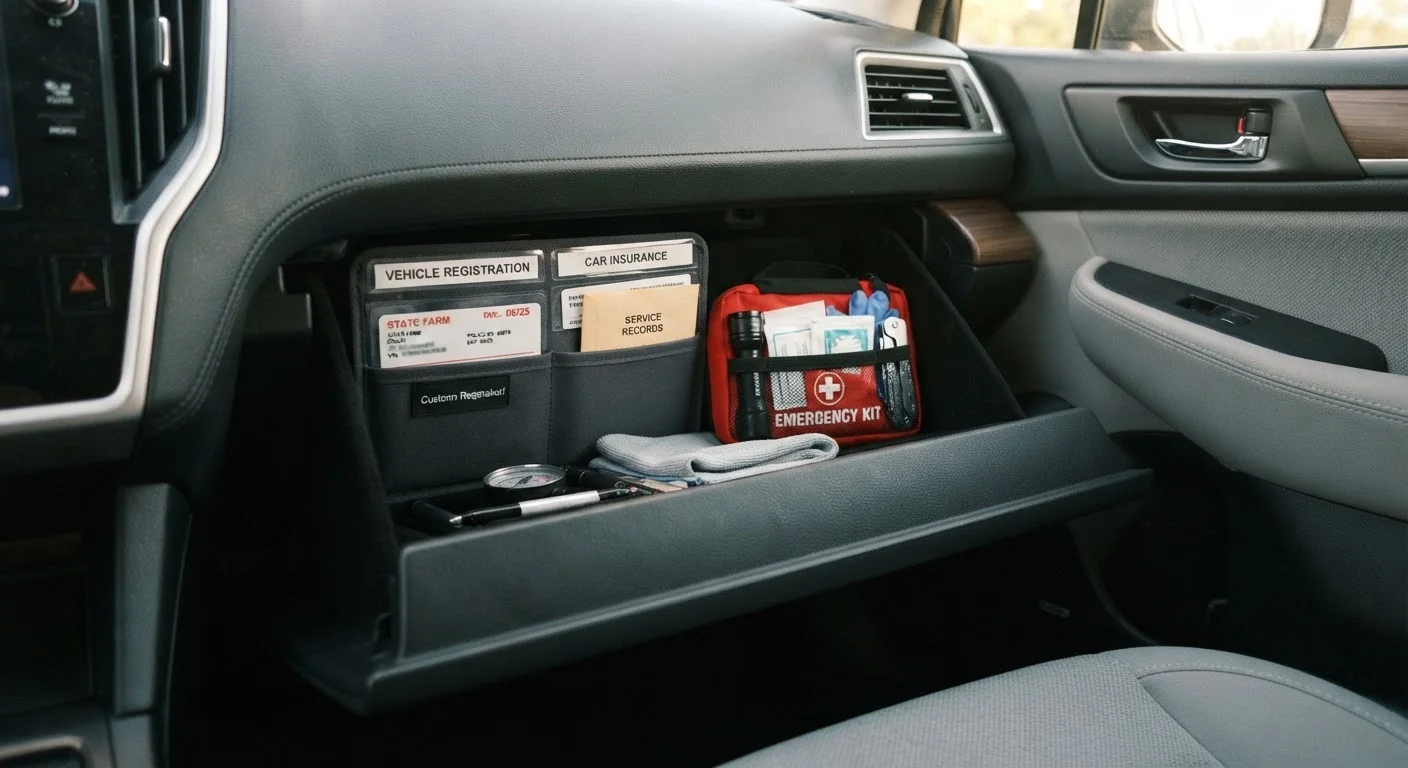
Photo credit: SyndicateExpert.com | Information At The Ready
In this article
Insurance cards, registration, emergency kit, service schedule — a practical checklist for getting your car ownership fundamentals right from day one.
Key Takeaways
- Carry proof of insurance and current registration in your vehicle at all times — you're legally required to in every U.S. state.
- Setting up a maintenance schedule in your first week prevents costly surprises down the road.
- An emergency kit, roadside assistance plan, and a basic understanding of your car's fluid levels are essential from day one.
- Budgeting for recurring ownership costs — not just your car payment — is what separates confident owners from stressed ones.
- Your glove compartment should be a functional document hub, not a junk drawer.
Why the First Year Sets the Pattern
The habits you build in the first twelve months of car ownership tend to stick. New owners who take the time to get organized early — documents in order, maintenance scheduled, emergency kit stocked — tend to avoid the expensive surprises that catch unprepared drivers off guard: a lapsed registration, a dead battery with no jumper cables, or a repair bill that could have been a simple fluid top-off.
This checklist is designed to help you cover the fundamentals across five areas: legal documents, insurance, maintenance, safety, and budget. For a deeper look at what to maintain and when, see our guide for first-time car owners — it explains the reasoning behind the service intervals you'll be tracking here.
Work through the checklist below in one sitting if you can. Most items take minutes to confirm; a few require a quick shopping trip or phone call. Together, they add up to a car ownership foundation you can build on with confidence.
Vehicle Owner's Manual
The authoritative source for your specific car's service intervals, fluid specifications, and warning light explanations.
Portable Jump Starter
Allows you to jump-start your own vehicle without needing another car present — a reliable alternative to traditional jumper cables.
Tire Pressure Gauge
Used to verify your tires are inflated to the PSI listed on the driver's door jamb sticker, which affects safety and fuel economy.
Maintenance Log (App or Notebook)
Tracks service history by date and mileage so you always know when your next oil change or inspection is due.
Digital Insurance Card
A downloadable proof-of-insurance document from your insurer's app, accepted by law enforcement in most U.S. states.
The Checklist: 22 Items to Confirm in Your First Year
The items below are grouped by category and tagged by priority: must items are non-negotiable, should items are strongly recommended, and nice-to-have items add meaningful protection or convenience when you're ready for them.
Documents & Legal Essentials
Insurance & Roadside Coverage
Maintenance Schedule & Records
Emergency & Safety Preparedness
Budgeting for Ownership Costs
Driving Without Insurance Is a Serious Legal Risk
Every U.S. state requires drivers to carry at minimum a basic level of liability insurance. Driving uninsured — even briefly between policy start dates — can result in fines, license suspension, or personal financial liability if you're involved in an accident. Verify your policy is active before you drive your car off the lot.
Don't Store Your Title in the Vehicle
Keeping your vehicle title inside the car is a security risk. If your car is stolen, the thief has documentation that can complicate your legal claim. Store the title securely at home — in a fireproof box or with other important documents.
Once you've worked through these fundamentals, the next step is building habits around ongoing costs. Our article on managing the ongoing cost of a car covers practical approaches to fuel tracking, timing major repairs, and staying ahead of expenses without being caught off guard.
For a broader view of what car ownership involves — from financing and depreciation to insurance structure — Understanding Car Ownership in America is a useful companion read that covers the full picture in one place.
Read Your Owner's Manual Before Anything Goes Wrong
Your owner's manual is the single most useful document that came with your car. It specifies the correct oil type, tire pressures, service intervals, and what every warning light means for your exact vehicle. Skipping it and relying on generic advice is one of the most common and costly mistakes new car owners make.

Author
Cars & Driving Editorial Team
Cars & Driving Editorial Team is the collective byline for our editorial team and contributor network. Articles published under this byline or an editorial pen name are researched, written, and reviewed according to our editorial standards for clarity, consistency, and independence before publication.
View all articles →