
Nutrition Labels, Ingredient Lists, and Health Claims: A Field Guide
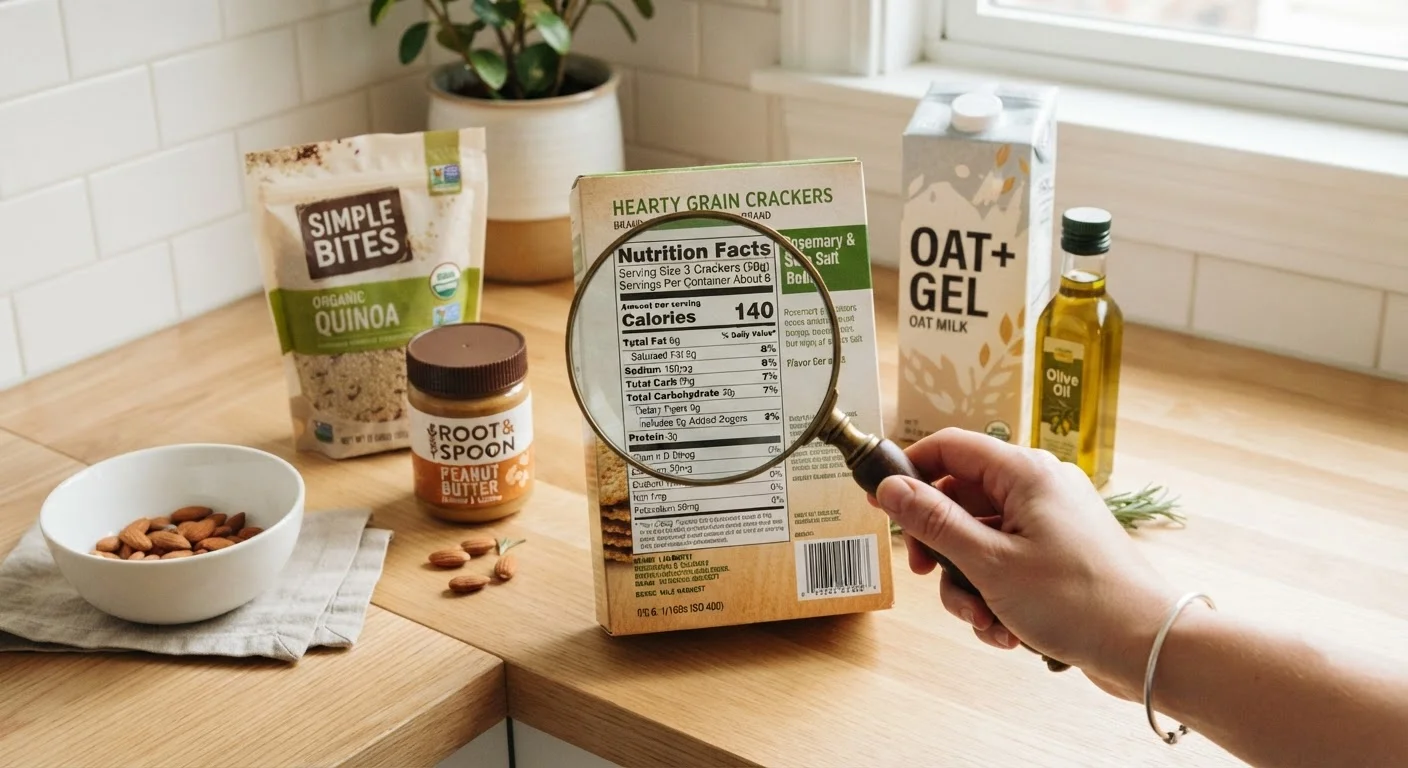
Photo credit: SyndicateExpert.com | Information At The Ready
In this article
Everything an everyday shopper needs to decode packaged food information — from % Daily Values to what 'natural' legally means.
Key Takeaways
- Serving size is the foundation of every number on the Nutrition Facts panel — always check it first.
- % Daily Values are based on a 2,000-calorie reference diet and are a rough guide, not a personal prescription.
- Ingredients are listed by weight in descending order; position reveals how much of something is actually in the product.
- FDA-regulated claims like "low sodium" have strict legal definitions; terms like "natural" largely do not.
- Front-of-package marketing is not regulated the same way as the Nutrition Facts panel — treat it with healthy skepticism.
The Nutrition Facts Panel: What Each Line Actually Means
The Nutrition Facts panel — updated by the FDA in 2016 to reflect current nutrition science — is the most standardized piece of information on any packaged food. Its format is legally mandated, which means you can compare products on an even playing field once you know how to read it.
Start with serving size. Every calorie count and nutrient value on the label refers to one serving, not the entire package. A bottle of juice that looks single-serving may list 2.5 servings inside. Multiplying the calories and sodium by 2.5 can reveal a very different picture than the front panel suggests.
Calories are displayed prominently. Below that, the panel separates nutrients into two groups: those most Americans consume in excess — saturated fat, sodium, and added sugars — and those many Americans fall short on, such as dietary fiber, vitamin D, calcium, iron, and potassium.
The updated label now distinguishes added sugars from total sugars. This matters because naturally occurring sugars in dairy or fruit behave differently metabolically than sugars added during processing. For context, the Dietary Guidelines for Americans recommend limiting added sugars to less than 10% of total daily calories.
For a deeper look at how these nutrients fit into an overall eating pattern, see what a balanced plate looks like across different diets.
Understanding % Daily Values
The % Daily Value (%DV) column translates raw nutrient amounts into a percentage of a standardized daily reference intake. The FDA uses a 2,000-calorie-per-day diet as the baseline — a figure chosen for calculation convenience, not because it matches every person's actual needs.
A practical rule of thumb: 5% DV or less is generally considered low for a nutrient; 20% DV or more is considered high. Use these thresholds to quickly scan whether a food is a meaningful source of a desired nutrient (fiber, calcium) or a significant contributor of one you may want to limit (saturated fat, sodium).
70%+
Americans who consume excess sodium daily
According to the CDC, most Americans consume more than the recommended 2,300 mg of sodium per day, largely from packaged and processed foods.
17 tsp
Average daily added sugar intake in the U.S.
The American Heart Association reports average American adults consume roughly 17 teaspoons of added sugar per day, well above recommended limits.
5% or less
%DV threshold considered 'low' for a nutrient
The FDA uses this benchmark on the Nutrition Facts panel to help consumers identify foods low in a given nutrient per serving.
Keep in mind that %DV is a tool for comparison and general awareness — not a personal dietary prescription. Someone managing blood pressure may need to pay closer attention to sodium %DV than someone without that concern. Always work with a healthcare provider or registered dietitian for guidance tailored to your specific health situation.
How to Read an Ingredient List
The ingredient list is governed by a straightforward rule: ingredients are listed in descending order by weight. Whatever appears first makes up the largest proportion of the product by weight. If enriched white flour is the first ingredient in a bread labeled "multigrain," wheat flour dominates — regardless of what the front of the package implies.
A few things worth scanning for:
- Added sugars under multiple names: Cane juice, dextrose, maltose, high-fructose corn syrup, agave nectar, and fruit juice concentrate are all forms of added sugar. When they appear across several positions in the list, their combined contribution may be higher than any single ingredient's position suggests.
- Refined vs. whole grains: Look for "whole" as the first word — "whole wheat flour" rather than "wheat flour" or "enriched wheat flour."
- Partially hydrogenated oils: These indicate trans fats. The FDA has largely phased them out, but checking is still good practice on older or imported products.
Short ingredient lists are not inherently healthier — minimally processed foods often have few ingredients, but some nutritious packaged foods have longer lists due to spices, vitamins, or legumes. Focus on what the ingredients are, not how many there are. If you're working on building a healthier kitchen, stocking a smarter pantry reduces how often you need to decipher labels in a hurry.
Health Claims: What the FDA Regulates and What It Doesn't
Not all label claims carry the same legal weight. The FDA regulates three categories of health-related claims on food packaging:
- Authorized Health Claims
- These describe a well-established relationship between a nutrient or food and a disease or health condition — for example, "Diets low in sodium may reduce the risk of high blood pressure." The FDA has reviewed the scientific evidence and authorized specific wording.
- Qualified Health Claims
- These are permitted when evidence is emerging but not conclusive. They must include qualifying language such as "Some evidence suggests..." or "FDA concludes that the evidence is limited and not conclusive."
- Structure/Function Claims
- These describe a nutrient's role in normal body function (e.g., "Calcium builds strong bones") and do not require FDA pre-approval. They are common and broad.
Structure/Function Claims Require No FDA Pre-Approval
Unlike authorized health claims, structure/function claims — such as "supports immune health" or "promotes digestive wellness" — do not undergo FDA review before appearing on a label. Manufacturers are responsible for ensuring these claims are truthful, but they are not vetted in advance. Treat them as general statements rather than medically substantiated facts.
Understanding this hierarchy helps you weigh marketing language against actual regulatory rigor. A claim stamped with an FDA-authorized seal has undergone more scrutiny than a general structure/function statement printed anywhere on the box.
Common Label Terms That Are Often Misunderstood
Front-of-package terms attract shoppers but often carry less regulatory weight than the Nutrition Facts panel. Here's what key terms actually mean under U.S. rules:
- "Natural": The FDA has not established a formal definition for "natural" on food labels beyond a general policy that it means nothing artificial or synthetic was added. It does not address farming practices, pesticide use, or nutritional quality.
- "Low sodium": This is a legally defined nutrient content claim. A food must contain 140 mg or less of sodium per serving to use this term.
- "Light" or "Lite": Can mean the product has one-third fewer calories or half the fat of the standard version — but only if those specific reductions are present. Always verify by comparing to the reference food.
- "Multigrain": Simply means the product contains more than one type of grain. It says nothing about whether those grains are whole or refined.
- "Made with whole grain": Even a small amount qualifies. Check the ingredient list to see where whole grains rank.
- "Organic": Regulated by the USDA, not the FDA. It refers to how ingredients were produced, not their nutritional profile.
When comparing two similar products, use the %DV for saturated fat and sodium as your fastest shortcut — small differences in those two nutrients tend to matter more than minor calorie gaps.
Saturated fat and sodium are the nutrients most Americans consistently overconsume, and their %DV numbers allow direct product comparisons without mental arithmetic.
If a front-of-package claim catches your eye, flip the product over and spend ten seconds confirming it against the Nutrition Facts panel before it influences your decision.
Front-of-package claims are marketing tools subject to less regulatory scrutiny than the standardized Nutrition Facts panel, which uses legally defined formats and values.
Putting It All Together at the Store
Decoding labels gets faster with practice. A practical sequence at the shelf: check the serving size first, scan calories and the two or three nutrients most relevant to your goals, glance at the ingredient list for the first few entries, and then consider front-of-package claims with appropriate skepticism.
You don't need to parse every line of every product at every shopping trip. Over time, familiarity with the foods you buy regularly means you only need to read carefully when trying something new or comparing similar products.
If you're just starting to build better eating habits and feel overwhelmed by conflicting nutrition information, getting started with healthier eating offers a grounded starting point that doesn't require a complete lifestyle overhaul.
Label literacy is one practical skill within a broader effort to eat well. It works best alongside an understanding of overall dietary patterns — how individual foods fit into meals, and how meals fit into a week of eating. No single number on a label tells the whole story.
This article is for general informational and educational purposes only and does not constitute medical or dietary advice. For guidance tailored to your individual health needs, consult a qualified healthcare provider or registered dietitian.

Author
Health & Wellness Editorial Team
Health & Wellness Editorial Team is the collective byline for our editorial team and contributor network. Articles published under this byline or an editorial pen name are researched, written, and reviewed according to our editorial standards for clarity, consistency, and independence before publication.
View all articles →