
Ultra-Processed Foods: What the Research Says and What It Doesn't
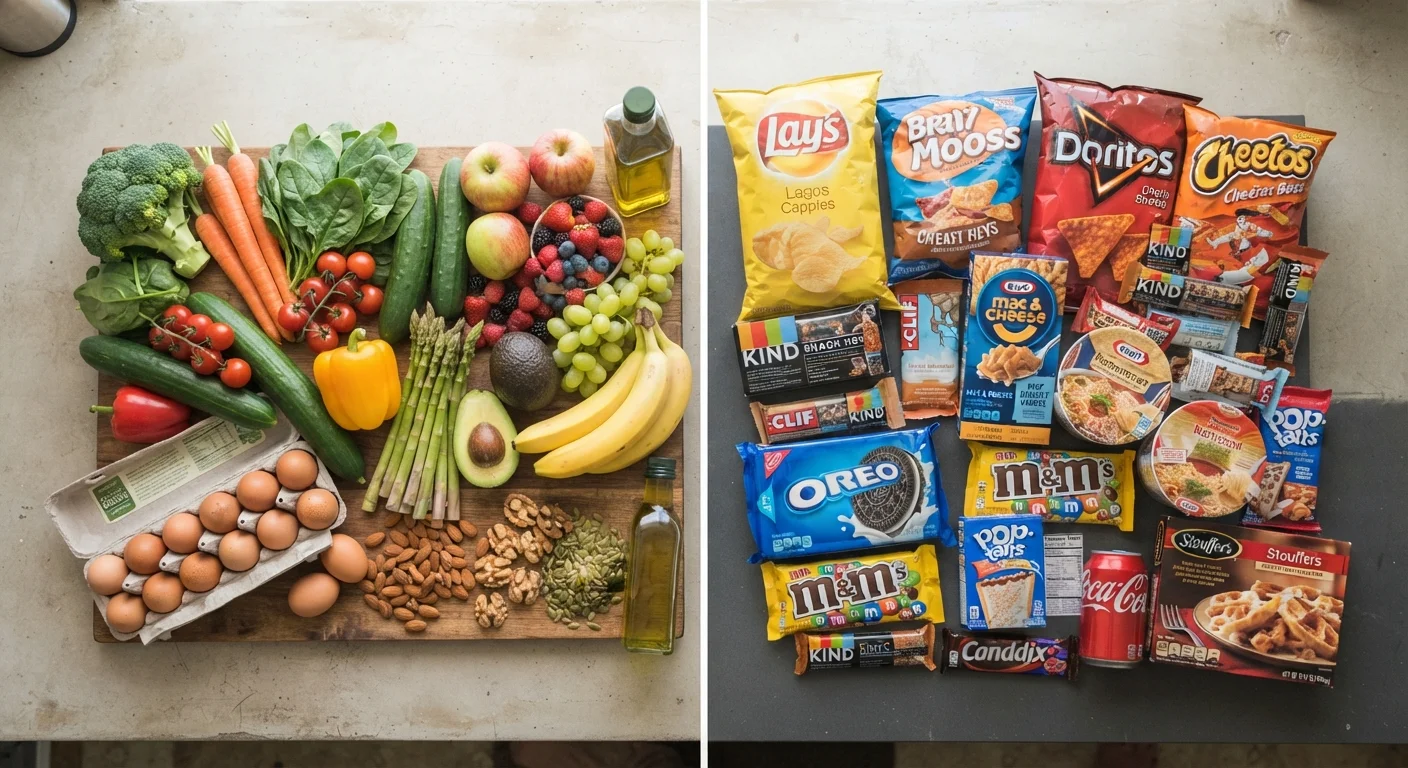
Photo credit: SyndicateExpert.com | Information At The Ready
In this article
Defining ultra-processed foods, reviewing the current evidence on health effects, and clarifying where scientific debate still exists.
Key Takeaways
- Ultra-processed foods are defined by the degree and type of industrial processing, not simply by having a nutrition label.
- Observational studies consistently link high ultra-processed food intake to increased risk of several chronic diseases.
- Causation has not been firmly established — confounding lifestyle factors complicate interpretation of the evidence.
- Not every packaged or convenient food qualifies as ultra-processed under the NOVA framework.
- Reducing ultra-processed food intake doesn't require perfection — gradual, sustainable shifts matter most.
- Always consult a qualified healthcare professional or registered dietitian for personalized nutrition guidance.
How the NOVA Classification Works
Most nutrition frameworks categorize food by nutrients: fat, carbohydrates, sodium. NOVA, developed by researchers at the University of São Paulo, takes a different approach — it categorizes food by what happens to it before it reaches your plate.
Under NOVA, Group 1 includes unprocessed or minimally processed foods: plain vegetables, eggs, fresh meat, milk. Group 2 covers culinary ingredients — olive oil, flour, salt — used in cooking. Group 3 contains processed foods made by adding salt, sugar, or oil to Group 1 items, like canned fish, cheese, or cured meats. Group 4, ultra-processed foods, is where industrial formulation dominates: these products are assembled largely from extracted components and additives rather than whole food ingredients.
Understanding this framework matters because much of the research on ultra-processed foods uses NOVA as its measuring tool. Critics of the system argue it can be imprecise — a plain whole-grain crispbread might share a classification with a frosted snack cake — but it remains the most widely used research framework for this line of inquiry. For a deeper look at what processing does to individual food components, see our article on what changes when grains are refined.
What the Research Consistently Shows
A substantial body of observational research — including large cohort studies conducted across Europe, Brazil, the United States, and elsewhere — has found associations between high ultra-processed food consumption and elevated risks of obesity, type 2 diabetes, cardiovascular disease, certain cancers, and depression. These findings have been remarkably consistent across different populations and study designs.
~57%
Share of U.S. adult calories from ultra-processed foods
A 2016 analysis published in BMJ Open, using NHANES data, estimated that ultra-processed foods accounted for more than half of daily caloric intake among U.S. adults.
32%
Higher all-cause mortality risk (high vs. low consumers)
A 2019 JAMA Internal Medicine study of U.S. adults found a 32% higher risk of all-cause mortality among those with the highest ultra-processed food intake compared to the lowest quartile, after adjusting for known confounders.
500 kcal/day
Extra calories consumed on ultra-processed diet
In a 2019 NIH randomized controlled trial (Hall et al., Cell Metabolism), participants on an ultra-processed diet consumed approximately 500 more calories per day than those on a minimally processed diet, despite being offered equal amounts of food.
One mechanism researchers frequently discuss is energy density and hyper-palatability: ultra-processed foods are engineered to be easy to eat quickly and in large amounts, potentially disrupting normal satiety signals. A landmark randomized controlled trial published in Cell Metabolism in 2019 found that participants assigned to an ultra-processed diet consumed significantly more calories and gained weight compared to those on a matched minimally processed diet — providing some of the first experimental evidence for a causal pathway, though the study was small and short-term.
Researchers have also proposed that specific additives — certain emulsifiers, artificial sweeteners, and colorings — may influence gut microbiome composition or inflammatory markers. This area remains active but preliminary.
Where the Science Is Still Uncertain
Honest science communication requires naming the limits. The vast majority of ultra-processed food research is observational, meaning it tracks what people eat and what health outcomes they experience — but it cannot rule out the possibility that other factors explain the connection. People with lower dietary quality in general may also be more likely to have less sleep, more stress, less physical activity, and less access to healthcare. Disentangling the food from the context is genuinely difficult.
“The evidence linking ultra-processed foods to poor health outcomes is accumulating rapidly, but we should be careful not to outpace the science. Associations are robust; mechanisms are still being worked out.”
— Kevin Hall, Senior Investigator, National Institute of Diabetes and Digestive and Kidney Diseases (NIDDK), NIH
There is also ongoing debate about whether the risks associated with ultra-processed foods stem from what these products contain (additives, excess sugar, refined starches), what they displace (whole foods with fiber, vitamins, and phytonutrients), or both. Some researchers argue that nutrient-based explanations are sufficient and that NOVA adds no independent predictive value beyond tracking, say, sugar or sodium intake. Others maintain that additive-specific mechanisms are real and distinct.
These are not minor quibbles — they matter for both policy and practical guidance. The prudent read of the evidence is that high consumption of ultra-processed foods is likely harmful, but the precise mechanisms and the magnitude of risk for specific products remain subjects of legitimate scientific debate. For a broader look at where nutrition science has overclaimed in the past, see our piece on persistent nutrition myths Americans still believe.
Practical Implications for Everyday Eating
None of this means you need to audit every item in your pantry or pursue a perfect diet. The evidence supports a pattern-based approach: diets characterized by more whole and minimally processed foods tend to be associated with better health outcomes across a wide range of research. That's a durable finding that doesn't depend on resolving every debate about additives.
Some practical starting points worth considering:
- Identify the ultra-processed foods you eat most frequently and ask whether a minimally processed alternative is realistic given your schedule and budget.
- Recognize that not all convenience foods are ultra-processed — canned beans, plain frozen vegetables, and low-sodium canned fish are minimally processed and nutritionally solid.
- Read ingredient lists rather than relying solely on front-of-package health claims. Our field guide to nutrition labels explains what to look for.
- If you're not sure where to start, healthier eating without overhauling your life offers grounded, low-pressure guidance.
This article provides general nutrition information and education only. It is not a substitute for personalized advice from a registered dietitian or qualified healthcare provider. Please consult a professional before making significant changes to your diet, especially if you have an existing health condition.
Frequently Asked Questions

Author
Health & Wellness Editorial Team
Health & Wellness Editorial Team is the collective byline for our editorial team and contributor network. Articles published under this byline or an editorial pen name are researched, written, and reviewed according to our editorial standards for clarity, consistency, and independence before publication.
View all articles →