
Whole Grains vs. Refined Grains: What Changes When You Refine a Grain
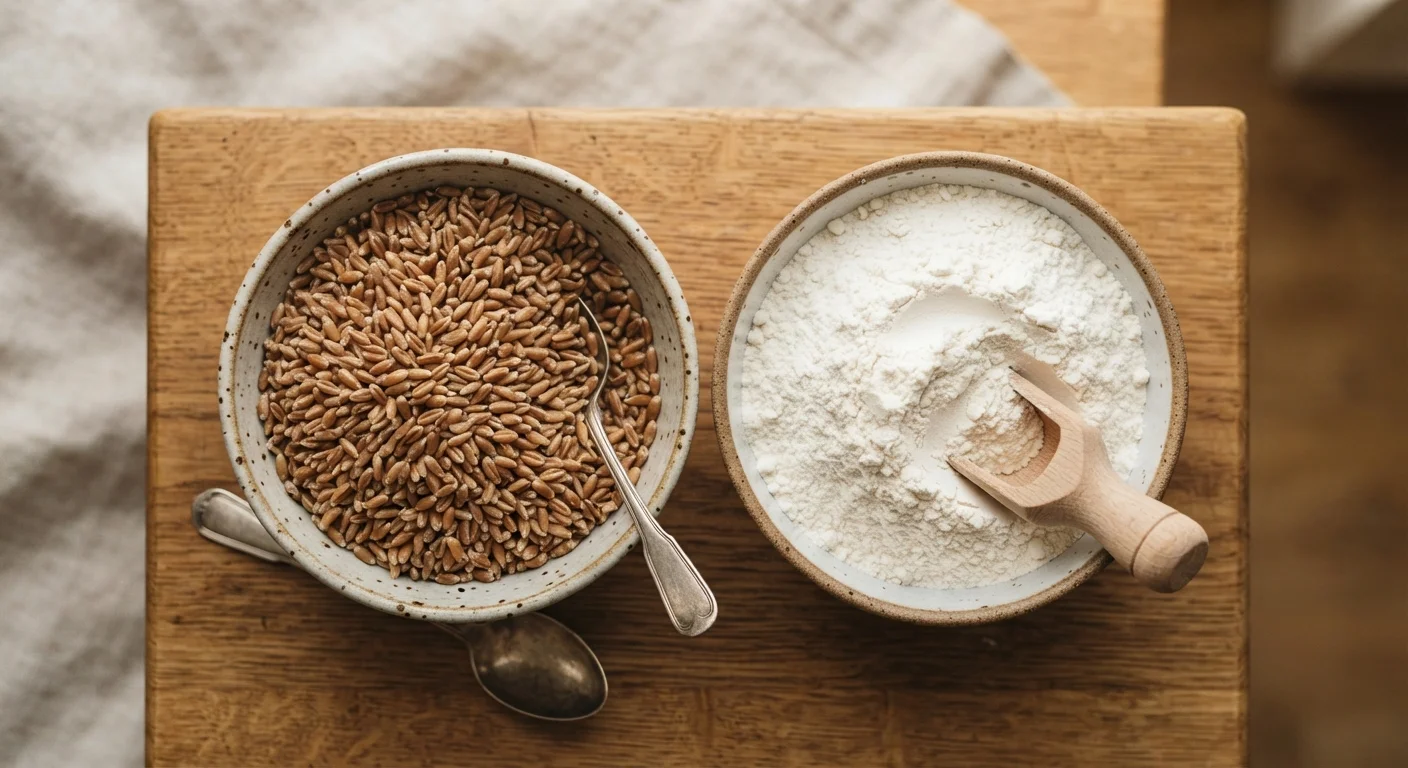
Photo credit: SyndicateExpert.com | Information At The Ready
In this article
Understand what's lost during grain processing, why it matters nutritionally, and when the difference is worth caring about.
Key Takeaways
- Refining removes the bran and germ, stripping out fiber, B vitamins, iron, and healthy fats.
- Enriched refined grains have some nutrients added back, but fiber is not restored.
- Whole grains are associated with lower risks of heart disease, type 2 diabetes, and digestive issues.
- Swapping even some refined grains for whole grains can deliver meaningful nutritional benefits.
- No single food choice determines overall diet quality — context and consistency matter most.
What Refining Actually Does to a Grain
Every grain kernel has three parts: the bran (the fibrous outer layer), the germ (the nutrient-dense embryo), and the endosperm (the starchy inner core). A whole grain retains all three in roughly their original proportions. A refined grain has had the bran and germ removed, leaving primarily the endosperm.
That milling step is largely about shelf life and texture. Removing the fat-containing germ prevents the oils from going rancid, which extends storage time and produces the soft, uniform texture Americans often prefer in bread and pasta. The trade-off is significant: with the bran and germ go most of the dietary fiber, B vitamins (thiamine, riboflavin, niacin, folate), vitamin E, iron, magnesium, and beneficial plant compounds.
To partially address this, the U.S. has required enrichment of refined grains since the 1940s — a process that adds back iron and four B vitamins. What enrichment does not restore is fiber, magnesium, vitamin E, or the dozens of phytochemicals present in the bran and germ. The result is a nutritionally leaner product than its whole grain counterpart, even after enrichment.
| Criterion | Whole Grains | Refined Grains |
|---|---|---|
| Parts retained | Bran, germ, and endosperm | Endosperm only |
| Fiber content | High | Low (not restored by enrichment) |
| B vitamins | Naturally present | Partially added back (enrichment) |
| Magnesium & Vitamin E | Present | Largely absent |
| Phytochemicals | Lignans, antioxidants present | Mostly removed |
| Shelf life | Shorter (oils in germ can go rancid) | Longer |
| Texture/palatability | Denser, chewier | Softer, more uniform |
| Glycemic response | Generally more moderate | Generally faster blood glucose rise |
The Nutritional Gap in Practice
The fiber difference is the most consequential gap. A slice of 100% whole wheat bread typically delivers around 2 grams of fiber, while a comparable white bread slice may provide less than 1 gram. Dietary fiber supports digestive regularity, feeds beneficial gut bacteria, helps moderate blood glucose response, and contributes to satiety — the feeling of fullness that helps with overall calorie balance.
< 10%
Americans meeting whole grain recommendations
Dietary Guidelines for Americans data consistently show that the vast majority of U.S. adults consume far fewer whole grains than recommended.
25–38 g
Recommended daily fiber intake for adults
The Dietary Guidelines for Americans recommend this range depending on age and sex, yet average U.S. adult intake is closer to 15 grams per day.
~20–30%
Cardiovascular disease risk reduction linked to whole grains
Multiple large prospective cohort studies, including those summarized in Harvard T.H. Chan School of Public Health reviews, associate regular whole grain intake with meaningfully lower heart disease risk.
Most Americans fall short of the recommended daily fiber intake (generally cited as 25–38 grams per day for adults by dietary guidelines). Shifting even a portion of daily grain servings from refined to whole grain is one of the more straightforward ways to close that gap without overhauling an entire eating pattern. See our practical guide to eating better without the overwhelm for realistic strategies.
Beyond fiber, whole grains contain compounds like lignans, phytic acid, and various antioxidants that researchers continue to study. The evidence linking regular whole grain consumption to reduced risk of cardiovascular disease and type 2 diabetes is among the more consistent findings in nutrition epidemiology, though individual diet patterns, genetics, and lifestyle factors all play a role.
Navigating Labels and Making Practical Choices
Food packaging can be misleading. Terms like multigrain, wheat bread, or made with whole grain do not guarantee that a product is primarily whole grain. The reliable indicator is the ingredient list: the first ingredient should read "whole wheat," "whole oats," "whole grain corn," or another grain with the word whole preceding it. Our guide to reading nutrition labels walks through how to interpret ingredient lists and daily value percentages without getting tripped up by marketing language.
It's also worth noting that not all refined grain foods are equal. Plain white rice and a heavily sweetened breakfast pastry are both refined-grain products, but they differ enormously in added sugars, sodium, and overall nutritional profile. The degree of processing matters — a topic explored in depth in our article on ultra-processed foods and what the research actually shows.
Practically speaking, a reasonable goal for most people is to make whole grains the default for staple foods — oatmeal, whole wheat bread, brown rice, whole grain pasta — while not treating the occasional refined grain as a dietary failure. Dietary patterns over weeks and months matter far more than any single food choice.
This article is for general informational and educational purposes only and does not constitute medical or nutritional advice. Individual dietary needs vary. Consult a qualified healthcare provider or registered dietitian for guidance specific to your health situation.

Author
Health & Wellness Editorial Team
Health & Wellness Editorial Team is the collective byline for our editorial team and contributor network. Articles published under this byline or an editorial pen name are researched, written, and reviewed according to our editorial standards for clarity, consistency, and independence before publication.
View all articles →