
Personal Budgeting: A Complete Guide From First Dollar to Long-Term Habit
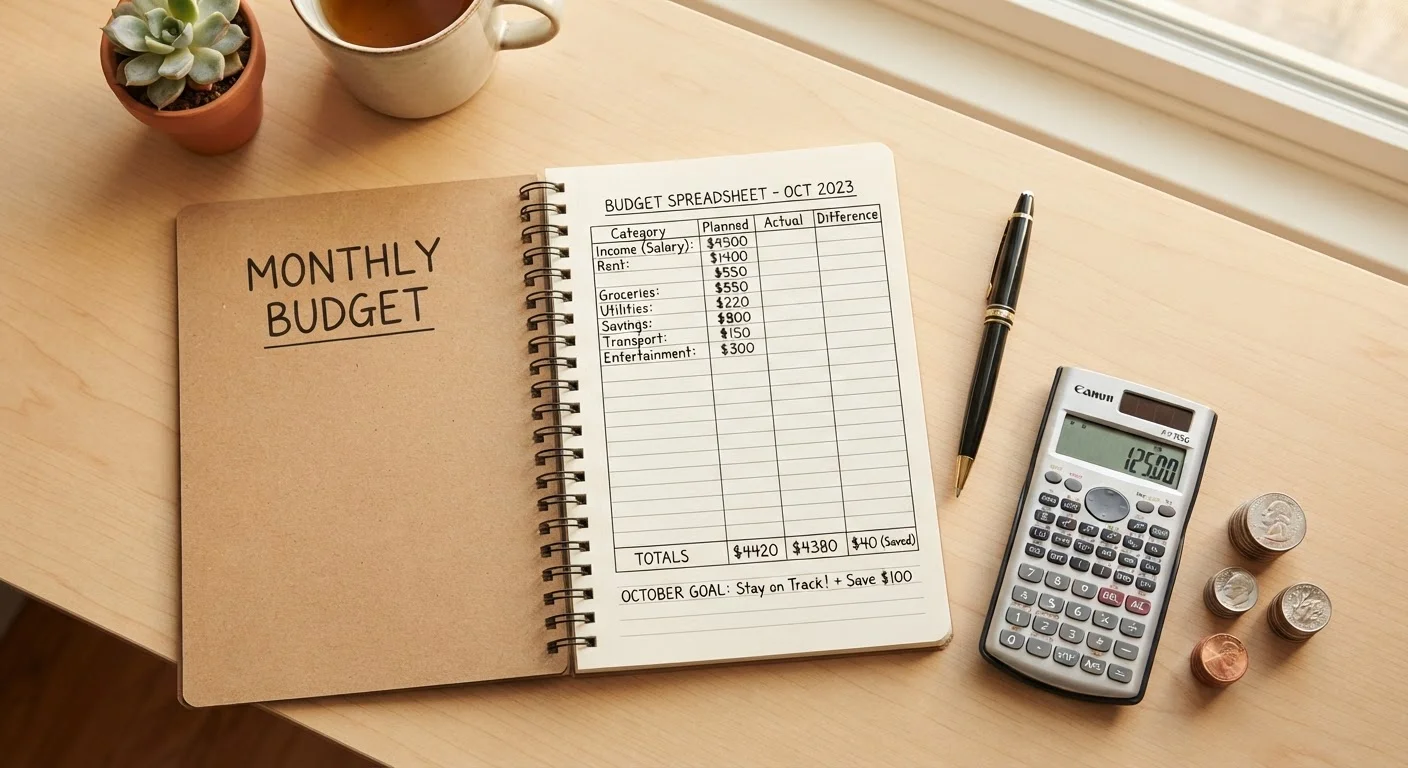
Photo credit: SyndicateExpert.com | Information At The Ready
In this article
Everything you need to understand, build, and maintain a personal budget — from choosing a method to adjusting for life changes over time.
Key Takeaways
- A budget works at any income level — the goal is awareness and intention, not perfection.
- Knowing your true take-home income and fixed expenses is the essential first step.
- Multiple proven methods exist; the best one is the one you'll actually stick with.
- Monthly reviews catch budget drift before it becomes a financial crisis.
- Budgeting is the foundation that makes saving and investing possible.
Why Budgeting Matters More Than Your Income Level
A common misconception is that budgeting is only for people who are struggling financially. In reality, a budget is simply a plan for your money — and plans benefit everyone, regardless of how much is coming in. Without one, even a comfortable income can disappear faster than expected, leaving little to show for it.
Research consistently finds that Americans who track their spending feel more in control of their finances and are better prepared for unexpected expenses. A budget doesn't restrict your life; it maps out what your money is doing so you can direct it toward what actually matters to you.
Before diving into mechanics, it helps to have a shared vocabulary. Our budgeting terms glossary defines the core concepts — like net income, discretionary spending, and fixed vs. variable expenses — that appear throughout this guide.
When calculating your income baseline, always use net pay — the amount that actually hits your bank account — not your gross salary. Budgeting from gross figures is one of the most common reasons first budgets fall apart immediately.
Taxes, retirement contributions, and benefit deductions can reduce a paycheck by 20–35%, making gross-based budgets structurally underfunded from day one.
Run a 'subscription audit' before finalizing your first budget. List every recurring charge — streaming, apps, memberships — and cancel any you haven't used in the last 60 days. Most households find $50–$150 in unused subscriptions on the first pass.
Recurring charges are easy to overlook because they're automatic, yet they reliably drain discretionary funds that could serve higher-priority goals.
Know Your Numbers Before You Build Anything
Every effective budget starts with two honest figures: what comes in and what goes out. Net income — your take-home pay after taxes and deductions — is your true starting point, not your gross salary. If your income varies month to month (freelance work, tips, seasonal employment), use a conservative average based on your lowest three to six recent months.
Next, list every spending category you can identify: housing, utilities, groceries, transportation, subscriptions, dining, healthcare, and debt payments. Pull three months of bank and credit card statements to see where money actually went, not where you think it went. Most people are surprised by at least one category.
Group these into two types: fixed expenses (rent, loan payments — amounts that don't change month to month) and variable expenses (groceries, gas, entertainment — amounts that fluctuate). This distinction matters because you can only trim variable expenses in the short term; fixed ones require bigger decisions to change.
33%
Americans with a detailed monthly budget
Gallup polling has consistently found that fewer than one in three Americans maintain a detailed household budget.
$1,400+
Average monthly discretionary spending per household
The U.S. Bureau of Labor Statistics Consumer Expenditure Survey reports significant discretionary outflows that many households don't consciously track.
3–6 months
Recommended emergency fund coverage
Financial planning professionals broadly recommend an emergency fund covering three to six months of essential expenses as a baseline cushion.
Choosing a Budgeting Method That Fits Your Life
No single budgeting approach works for everyone. Here are three widely used frameworks worth considering:
- 50/30/20 Rule: Allocate 50% of net income to needs, 30% to wants, and 20% to savings and debt repayment. Simple and flexible, though the percentages may need adjustment in high cost-of-living areas.
- Zero-Based Budgeting: Every dollar gets assigned a job until your income minus your planned expenses equals zero. More detailed and time-intensive, but highly effective for people who want granular control.
- Envelope Method (or Digital Equivalent): Divide cash — or virtual spending buckets — into labeled categories. When an envelope is empty, spending in that category stops for the month. Works well for people who tend to overspend in specific areas.
The method that produces results is the one you'll use consistently. If a complex spreadsheet feels like homework, a simpler approach will serve you better. Our guide on making a budget that lasts explores how to build in flexibility so your system survives real life.
Building Your First Budget Step by Step
With your income and expense data in hand and a method chosen, here's how to put it together:
- Set your income baseline. Use your actual net monthly take-home. For variable earners, use your conservative average.
- List all fixed expenses. Enter exact amounts: rent or mortgage, car payment, insurance premiums, minimum debt payments.
- Estimate variable expenses. Use your three-month average for groceries, utilities, fuel, and discretionary spending categories.
- Add savings as a line item. Treat savings like a bill — scheduled and non-negotiable — even if you start with a small amount.
- Check the math. If expenses exceed income, identify variable categories to reduce. If income exceeds expenses, decide deliberately where the surplus goes.
- Write it down or enter it somewhere you'll see it. A spreadsheet, a notebook, or a budgeting app all work. The format matters less than the habit of reviewing it.
Expect your first budget to be imperfect. The point of month one is to establish a baseline, not to nail every number.
Keeping the Budget Alive: Review and Adjust
A budget written once and never revisited is essentially a wish list. The real work — and the real payoff — comes from monthly check-ins. Set aside 15–20 minutes at the end of each month to compare what you planned against what actually happened.
Look for patterns: Are you consistently over in one category? That might mean the allocation was unrealistic, or it might reveal a spending habit worth addressing. Either way, adjust the budget rather than abandoning it.
Life also changes. A raise, a new expense, a move, or a shift in financial goals all warrant a budget revision. Treat the budget as a living document, not a fixed contract. The goal isn't to follow the budget perfectly — it's to make intentional decisions and course-correct quickly when you drift.
Financial stress and overall wellbeing are closely linked. If budgeting starts to feel overwhelming, pairing financial habit-building with broader self-care practices can help — a principle explored in our article on building a mental wellness routine.
Schedule Your Monthly Budget Review Like a Meeting
Pick a specific day — the last Saturday of the month, for example — and block 20 minutes on your calendar. Treating the review as a recurring appointment dramatically increases the likelihood you'll actually do it. Over time, these short sessions compound into a strong financial awareness habit.
Where Budgeting Leads: Saving, Debt, and Investing
A functioning budget doesn't just keep the lights on — it creates the margin you need to build financial stability. Once you know where every dollar goes, you can redirect surplus toward an emergency fund, accelerate debt repayment, or begin investing.
If you're starting from scratch with savings or working through debt, our ground-up guide to saving and debt covers the next logical steps. For those ready to explore how money can work for them over time, investing from zero offers a beginner-friendly introduction.
Think of budgeting as infrastructure. It doesn't generate wealth on its own, but without it, the moves that do generate wealth — consistent saving, strategic debt payoff, long-term investing — are much harder to sustain. Every financially confident person has some version of a budget working behind the scenes, whether or not they call it that.
The goal isn't a perfect spreadsheet. It's the habit of paying attention — and making choices that reflect what you actually value.
This article is for general informational and educational purposes only and does not constitute personalized financial advice. For guidance specific to your situation, consider consulting a qualified financial professional.

Author
Personal Finance Editorial Team
Personal Finance Editorial Team is the collective byline for our editorial team and contributor network. Articles published under this byline or an editorial pen name are researched, written, and reviewed according to our editorial standards for clarity, consistency, and independence before publication.
View all articles →