
Litter Box Setup Done Right
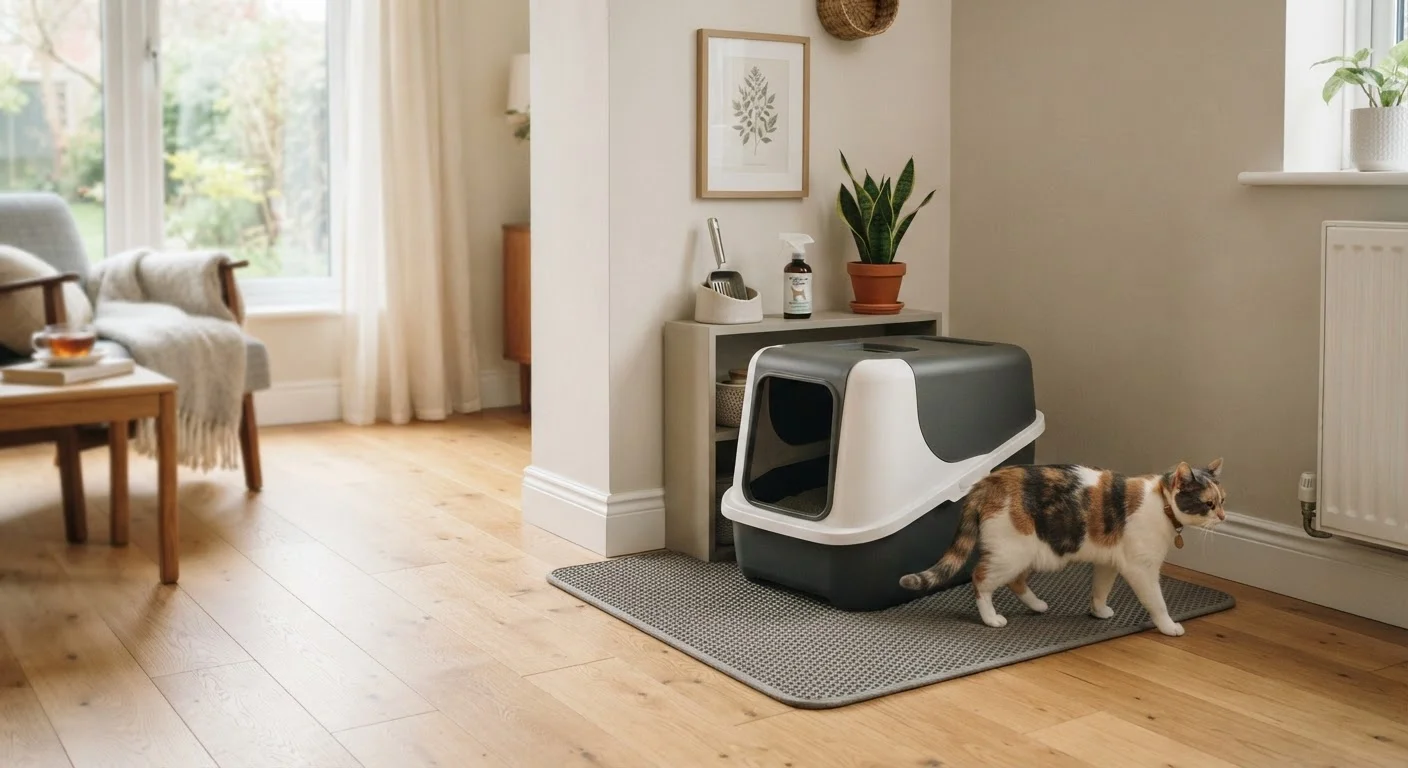
Photo credit: SyndicateExpert.com | Information At The Ready
In this article
Placement, depth, type, and cleaning frequency — the factors that determine whether your cat actually uses the box.
Key Takeaways
- Most cats need one litter box per cat plus one extra — underprovision is a common cause of avoidance.
- Box placement, litter depth, and cleanliness matter as much as the box type itself.
- Covered boxes and scented litters are often more comfortable for owners than for cats.
- Consistent scooping — at least once daily — is the single most impactful maintenance habit.
- Cats that suddenly stop using the box may signal a health issue worth discussing with a vet.
How Many Boxes and Where to Put Them
The standard veterinary recommendation is one litter box per cat, plus one additional box. A two-cat household should have three boxes at minimum. This isn't overcaution — cats are territorial, and a box monopolized by one cat can cause the other to eliminate elsewhere.
Placement is equally important. Boxes placed next to noisy appliances like washing machines or in heavily trafficked hallways create stress for cats. Choose low-traffic, quiet areas with more than one entry point so a cat can't be ambushed by another pet while using the box. Avoid placing boxes near food and water bowls; cats instinctively separate elimination sites from feeding areas.
For multi-story homes, at least one box on each floor reduces the chance a cat won't make it in time — particularly important for older or arthritic cats. If you've just brought a new cat home, start with boxes in quieter rooms and adjust placement based on where your cat gravitates naturally.
Choosing the Right Box and Litter
Box size matters more than most owners realize. A cat should be able to turn around fully and dig without touching the walls. A common guideline is that the box should be 1.5 times the length of the cat from nose to tail base. Many commercially sold boxes are too small for large adult cats.
Covered boxes appeal to owners seeking odor containment, but many cats find them confining and poorly ventilated. If your cat already uses a covered box without complaint, that's fine — but if you're troubleshooting avoidance, switching to an open box is one of the first adjustments worth making.
For litter type, unscented, clumping clay or silica litters are generally preferred by cats in studies observing feline choice behavior. Strong floral or chemical scents in scented litters can deter use. Aim for a litter depth of 2 to 3 inches — enough for satisfying digging without waste buried too deep to scoop effectively. Cats that consistently scratch the floor outside the box may prefer deeper litter.
Follow the n+1 rule for number of litter boxes in your home.
Having one more box than you have cats prevents territorial guarding and reduces the chance any single cat is excluded from access. It also provides a backup when one box becomes soiled between scoopings.
Choose an open, appropriately sized box over a covered one unless your cat has a clear preference.
Covered boxes trap odor inside the enclosure, which is unpleasant for the cat using it even if it seems convenient for owners. An open box also lets cats monitor their surroundings, reducing anxiety during a vulnerable moment.
Use unscented, clumping litter at a depth of 2 to 3 inches.
Cats show a consistent preference for unscented substrates in feline choice studies. Adequate depth supports natural digging behavior and makes waste easier to clump and remove cleanly.
Scoop every box at least once daily, and wash boxes with mild unscented soap every two to four weeks.
Cats' olfactory sensitivity means a dirty box becomes aversive much faster than owners typically expect. Regular washing removes bacteria and embedded odors that accumulate in plastic over time.
Place boxes away from feeding areas, loud appliances, and dead-end locations.
Cats instinctively avoid eliminating near food and water. Noise and entrapment risks at the box can create lasting negative associations that are difficult to reverse.
Cleaning Frequency and Full Litter Changes
Scooping at least once per day is the single most impactful habit you can build. Cats have a far more sensitive sense of smell than humans do, and a box that seems acceptable to you may be offensive enough to deter a cat from entering. Some cats — particularly those with fastidious temperaments — will refuse a box after a single use if it hasn't been scooped.
Beyond daily scooping, the entire litter should be emptied and the box washed with mild, unscented soap roughly every two to four weeks, depending on the number of cats. Avoid ammonia-based cleaners, which can leave residual odors that cats associate with soiling. Let the box dry fully before refilling with fresh litter.
Plastic litter boxes should be replaced entirely every one to two years. Scratches in plastic harbor bacteria and odors that thorough cleaning can't fully eliminate.
If your cat begins avoiding a box that was previously used reliably, it's worth reading our guide on why cats stop using the litter box — avoidance rarely happens without reason, and some causes are medical. In multi-cat homes, tensions at the litter box can also emerge when you introduce a second cat, so monitor box usage carefully during any transition period.

Author
Pets & Animals Editorial Team
Pets & Animals Editorial Team is the collective byline for our editorial team and contributor network. Articles published under this byline or an editorial pen name are researched, written, and reviewed according to our editorial standards for clarity, consistency, and independence before publication.
View all articles →