
Wet Food vs. Dry Food for Cats
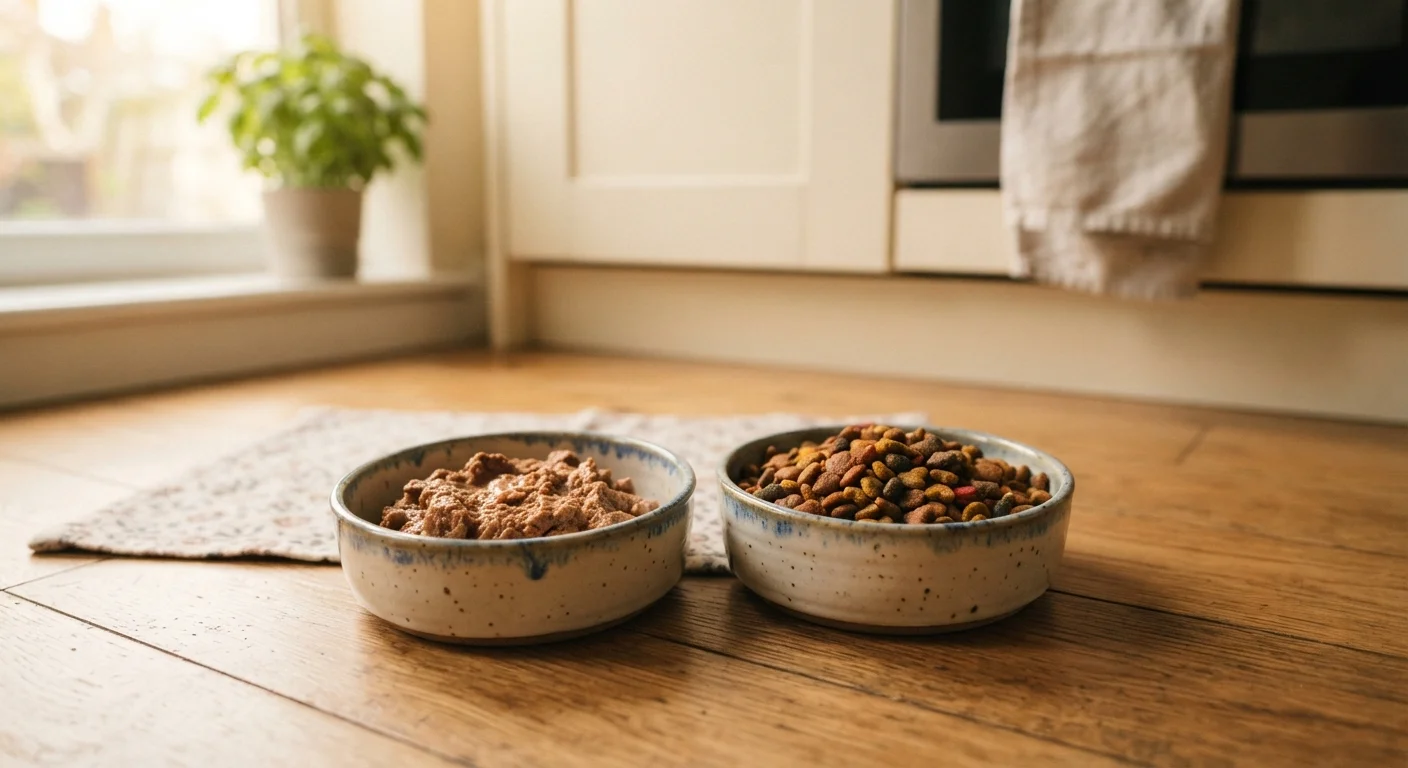
Photo credit: SyndicateExpert.com | Information At The Ready
In this article
Hydration, dental health, cost, and palatability — a balanced look at what each food format offers and where each falls short.
Key Takeaways
- Wet food provides significantly more moisture, supporting urinary and kidney health in cats.
- Dry food is more calorie-dense per ounce, making portion control especially important.
- Neither format is universally superior — many vets suggest combining both.
- Dental health claims for dry kibble are largely overstated; dental chews and brushing matter more.
- Cost per calorie is often comparable once moisture content is factored into wet food pricing.
- Always consult your veterinarian before making significant changes to your cat's diet.
The Core Difference: Moisture Content
The single most significant distinction between wet and dry cat food is water content. Wet food typically contains 75–80% moisture, while dry kibble contains only around 10%. This gap has real consequences for feline health.
Cats evolved as desert animals with a naturally low thirst drive — they're wired to obtain most of their water from prey. Domestic cats fed exclusively dry food often consume less total water than their bodies need, a deficit linked to increased risk of urinary tract issues and chronic kidney disease over time. Wet food helps bridge that gap passively, without requiring a cat to drink more.
That said, providing fresh water alongside any diet — or using a circulating water fountain — remains important regardless of food format. For a deeper look at what cats genuinely need from their diet, see our guide to feline nutritional needs.
| Criterion | Wet Cat Food | Dry Cat Food |
|---|---|---|
| Moisture content | 75–80% | ~10% |
| Urinary health support | Strong — passive hydration | Limited without added water intake |
| Dental health benefit | Minimal | Minimal (standard kibble) |
| Palatability | High — aroma-rich, soft | Moderate — texture preferred by some |
| Calorie density | Lower per ounce | Higher per ounce |
| Shelf life (opened) | 1–2 days refrigerated | Weeks at room temperature |
| Cost per feeding | Higher upfront | Lower upfront |
| Best feeding method | Scheduled meals | Scheduled or measured free-feed |
Dental Health, Palatability, and Weight Management
Dry food is often marketed as beneficial for dental health, but the evidence supporting this claim is limited. Standard kibble does little to clean below the gumline where plaque hardens into tartar. Veterinary dental diets — specifically formulated with larger kibble and special fibre matrices — are a different matter, but these are purpose-designed therapeutic foods, not ordinary dry cat food.
Palatability tends to favour wet food. Its stronger smell and softer texture make it more appealing to most cats, which is why it's often recommended for cats recovering from illness, undergoing dental procedures, or showing signs of reduced appetite.
Weight management is where dry food requires extra care. Kibble is calorie-dense, and free-feeding (leaving a bowl constantly topped up) is a common cause of feline obesity. Wet food's high water content creates physical volume with fewer calories per serving, which can help cats feel full without overeating. Measured portions — of either format — are the more important principle here.
75–80%
Moisture in typical wet cat food
Compared to roughly 10% in dry kibble, making wet food a meaningful source of daily fluid intake for cats.
~60%
Of cats fed dry-only diets that may be mildly dehydrated
Veterinary nutritionists have noted that cats on exclusively dry diets frequently consume less water than is considered optimal for urinary health.
2–3×
More total water intake from wet vs. dry feeding
Research in feline nutrition indicates cats on wet food diets tend to consume two to three times more total daily water than those on dry food alone.
Cost, Convenience, and the Case for Mixing
At face value, dry food appears much cheaper — a large bag costs a fraction of an equivalent number of wet cans. But once you account for moisture content, the cost-per-nutrient comparison narrows considerably. You're paying for water in wet food, yes, but you're also paying for a nutritional benefit your cat genuinely uses.
Dry food wins on convenience. A bowl of kibble stays fresh at room temperature for hours; wet food should be refrigerated after opening and discarded within a day or two once served. For busy owners or those with multiple cats on varying schedules, this practical edge matters.
Many veterinarians recommend a mixed feeding approach as a reasonable middle ground: wet food at least once daily for moisture and palatability, dry kibble available in measured amounts. This strategy suits most healthy adult cats well and reduces reliance on either format alone. If your cat's lifestyle factors into the decision, our comparison of indoor and outdoor cat life may add useful context.
This article is for general informational purposes only and does not constitute veterinary advice. Always consult a qualified veterinarian before making changes to your cat's diet, especially if your pet has a health condition.

Author
Pets & Animals Editorial Team
Pets & Animals Editorial Team is the collective byline for our editorial team and contributor network. Articles published under this byline or an editorial pen name are researched, written, and reviewed according to our editorial standards for clarity, consistency, and independence before publication.
View all articles →