
Handling and Enrichment for Reptiles: What Good Husbandry Looks Like in Practice
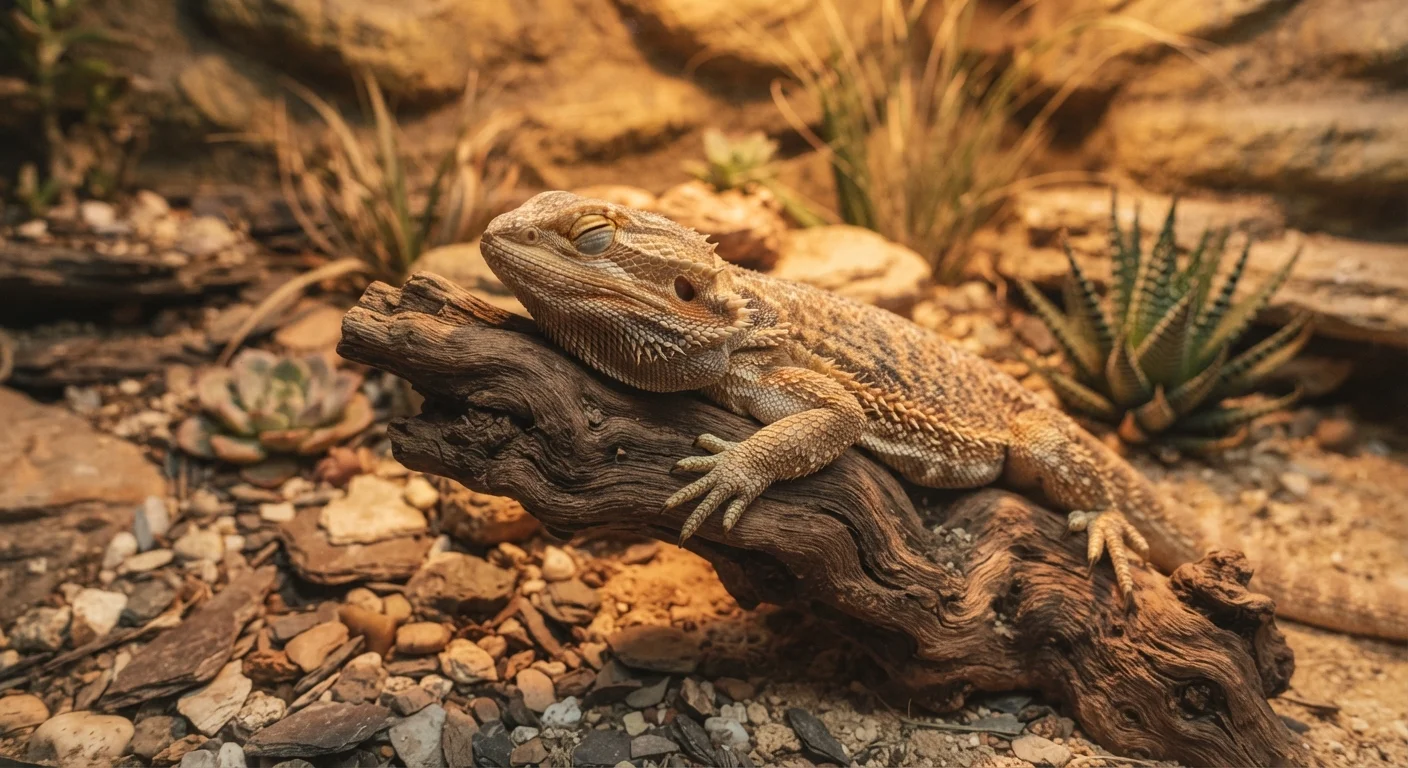
Photo credit: SyndicateExpert.com | Information At The Ready
In this article
Reptiles have specific physical and behavioral needs that go beyond a warm enclosure. Here's what responsible, enriching reptile care actually involves day to day.
Key Takeaways
- Reptiles are not passive pets — they have complex thermal, behavioral, and environmental needs that require active management.
- Enrichment for reptiles means providing opportunities to climb, hide, forage, and explore, not just decorative cage furniture.
- Handling frequency and technique matter: improper or excessive handling causes chronic stress that harms reptile health.
- Reading species-specific body language is essential to knowing when your reptile is comfortable versus stressed.
- Enclosure design, substrate choice, and temperature gradients are foundational to physical and psychological wellbeing.
Why Reptile Husbandry Goes Beyond a Heat Lamp
Reptiles are often marketed as low-maintenance pets, but experienced keepers and veterinary professionals know this framing is misleading. While reptiles may not demand walks or daily grooming, their needs for precise environmental conditions, behavioral stimulation, and species-appropriate interaction are substantial and often underestimated by new owners.
Good reptile husbandry begins with understanding that these animals evolved in complex, dynamic environments. A barren glass box with a single hide and a paper towel substrate meets none of that complexity. Whether you keep a ball python, a crested gecko, or a blue-tongued skink, the principles of sound husbandry follow a consistent framework: correct thermal environment, opportunity for natural behavior, appropriate social interaction (or absence of it), and regular health monitoring.
For a thorough foundation on enclosure setup and temperature management, our beginner's guide to reptile keeping covers the essentials of habitat construction and safe handling in detail.
Enrichment That Actually Meets Reptile Behavioral Needs
Reptile enrichment is not about making an enclosure look attractive to human eyes. It is about giving the animal functional opportunities to express instinct-driven behaviors. What this looks like in practice depends heavily on species, but several categories apply broadly.
Provide multiple hides at different temperature zones within the enclosure.
Reptiles thermoregulate behaviorally, moving between warm and cool areas throughout the day. Access to hides at both ends of the thermal gradient allows them to regulate body temperature while still feeling secure — removing this option forces a choice between comfort and safety.
Vary feeding presentation to encourage natural foraging behavior.
Presenting prey in the same location and manner repeatedly removes any behavioral challenge from the feeding process. For insectivores and omnivores especially, scattering feeders or using feeding tongs to simulate movement engages predatory instincts and supports psychological stimulation.
Incorporate climbing and structural complexity appropriate to the species.
Arboreal species like green tree pythons or crested geckos spend most of their lives elevated; denying vertical space causes physical underuse and stress. Even ground-dwelling species benefit from objects that break up open floor space and provide visual barriers.
Conduct supervised out-of-enclosure exploration sessions in a safe, controlled space.
Novel sensory environments — new textures, smells, and surfaces — provide cognitive stimulation that cannot be fully replicated inside the enclosure. These sessions also help the animal acclimate to human presence in a context that is more expansive and less threatening than being held.
Establish and maintain stable photoperiods using automatic timers.
Irregular lighting disrupts circadian rhythms and can interfere with appetite, reproductive cycles, and immune function. Timers remove the inconsistency introduced by owner schedules and ensure the animal experiences a predictable day-night cycle year-round.
Environmental complexity serves a dual purpose: it reduces stress by giving animals a sense of control over their surroundings, and it encourages physical activity that supports muscle tone, healthy digestion, and mental engagement. Stagnant enclosures with no variation can lead to what reptile behaviorists describe as learned helplessness — reduced activity and responsiveness that is sometimes mistaken for docility.
The Right Way to Handle a Reptile
Handling is one of the most misunderstood aspects of reptile care. Unlike mammals, most reptiles do not seek out social contact and do not experience handling as inherently rewarding. The goal is not to achieve affection but to build a tolerance for human interaction through careful, consistent, low-stress exposure.
Signs of stress during handling include a flattened body posture, dark coloration (in species capable of color change), rapid breathing, musking, defecation, biting, or frantic movement. Learning your individual animal's baseline behavior is the only reliable way to interpret these signals accurately. When in doubt, end the session early — a reptile that has a consistently positive experience during short sessions will tolerate longer ones over time.
For more on how species-specific lighting affects your reptile's stress tolerance and circadian rhythms, see our guide on heating and lighting for reptile enclosures.
Daily and Weekly Care Routines That Support Wellbeing
Consistent routines reduce stress for most reptiles, which are highly attuned to environmental predictability. Lighting cycles should mimic natural daylight patterns using timers. Feeding schedules should match species-appropriate intervals — daily for some insectivores, weekly or less for large constrictors.
Daily spot-cleaning of waste, monitoring of temperatures at both the warm and cool ends of the enclosure, and a quick visual health check — looking for clear eyes, normal posture, and regular movement — are the minimum daily tasks for responsible keepers. Weekly tasks typically include fuller substrate assessment, water dish sanitizing, and a more thorough behavioral observation.
Record-keeping is an underused but valuable practice. Logging feeding dates, shed cycles, weight (for snakes and larger lizards), and any behavioral changes creates a baseline that makes it far easier to detect health issues early. Many reptile health problems, including parasitic infections, respiratory illness, and metabolic bone disease, are gradual in onset and benefit enormously from early intervention.
This article provides general husbandry information for educational purposes only. For health concerns specific to your reptile, consult a veterinarian experienced with exotic or reptile medicine.

Author
Pets & Animals Editorial Team
Pets & Animals Editorial Team is the collective byline for our editorial team and contributor network. Articles published under this byline or an editorial pen name are researched, written, and reviewed according to our editorial standards for clarity, consistency, and independence before publication.
View all articles →