
Saltwater vs. Freshwater Aquariums: Understanding the Real Differences
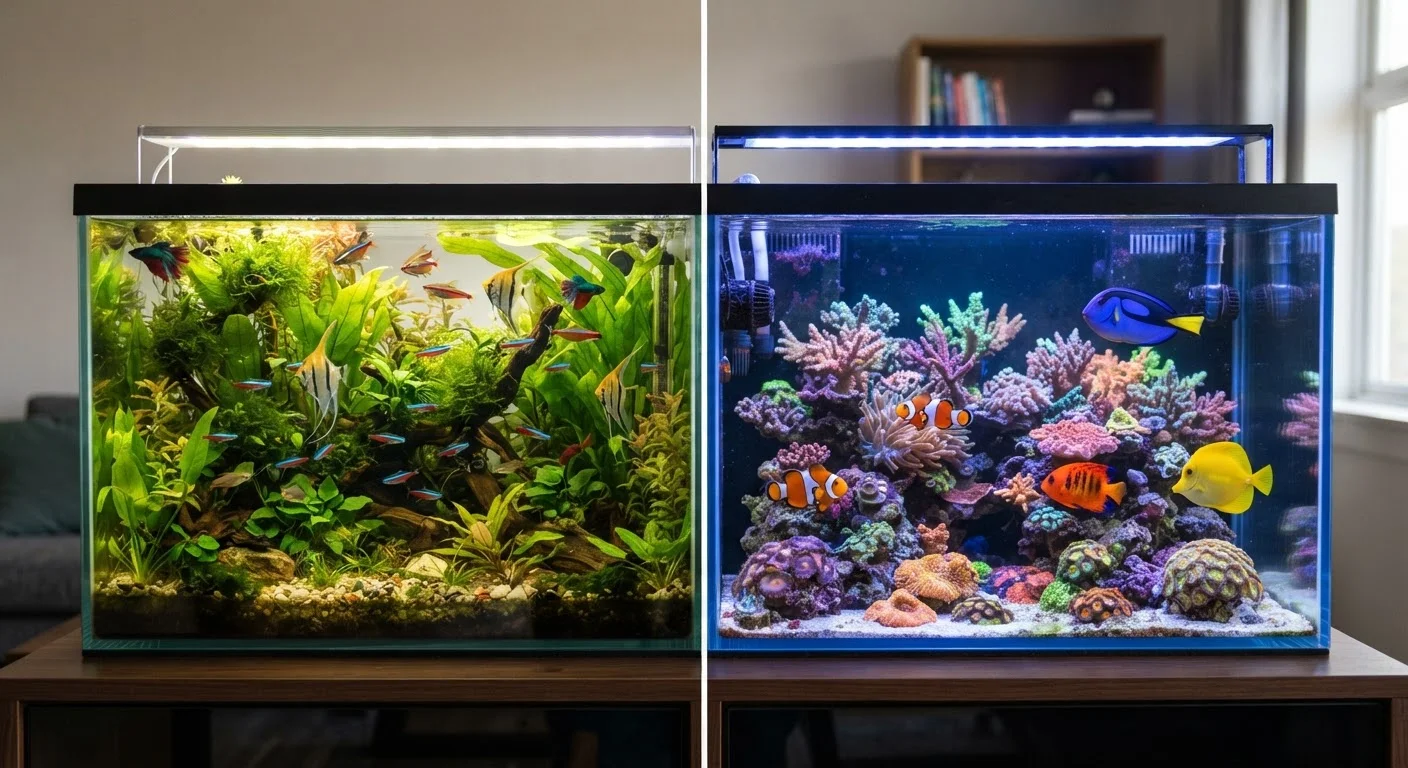
Photo credit: SyndicateExpert.com | Information At The Ready
In this article
Saltwater tanks are often described as harder to maintain, but what does that actually mean in practice? A clear, honest comparison for prospective fish owners.
Key Takeaways
- Saltwater tanks require more precise water chemistry management than freshwater setups.
- Startup and ongoing costs for saltwater aquariums are significantly higher on average.
- Freshwater fish are generally hardier and more tolerant of parameter fluctuations.
- Marine tanks often demand additional equipment such as protein skimmers and live rock.
- Both tank types require a properly cycled nitrogen cycle before adding fish.
- Neither type is inherently better — the right choice depends on your experience and commitment level.
What Actually Makes Saltwater Harder
The reputation saltwater tanks have for being difficult isn't exaggerated — but it's worth understanding why rather than accepting it as a vague warning. The core challenge is water chemistry stability. Marine fish and invertebrates evolved in an environment where salinity, pH, alkalinity, calcium, and magnesium levels fluctuate very little. Recreating that stability in a glass box at home requires attention and equipment that freshwater setups simply don't need.
Specific gravity — the measure of salt concentration — needs to remain in a narrow range, typically between 1.023 and 1.026. Evaporation alone will raise salinity daily, so saltwater keepers must top off tanks with fresh water regularly. Freshwater tanks, by contrast, tolerate a much wider range of conditions. Many popular freshwater species, such as bettas, tetras, and cichlids, have been bred in captivity for generations and adapt well to modest parameter swings.
Understanding the nitrogen cycle is essential for both tank types, but the consequences of getting it wrong are more severe in saltwater environments where livestock is less tolerant of ammonia and nitrite spikes.
Equipment and Setup Costs
Equipment requirements diverge significantly between the two systems. A basic freshwater setup needs a tank, filter, heater, lighting, and substrate. A comparable saltwater system typically adds a protein skimmer (which removes organic waste before it breaks down), live rock to seed beneficial bacteria, a more powerful lighting system for coral photosynthesis, and often a sump — a secondary reservoir that houses additional filtration equipment.
| Criterion | Freshwater Aquarium | Saltwater Aquarium |
|---|---|---|
| Startup cost | Lower; basic kits widely available | Higher; skimmer, sump, lighting required |
| Water chemistry complexity | Moderate; pH, ammonia, nitrate | High; salinity, alkalinity, calcium, magnesium |
| Fish hardiness | Generally more tolerant | Often more sensitive to fluctuations |
| Species variety | Very wide; many captive-bred options | Spectacular; more wild-caught livestock |
| Coral keeping | Not possible | Central feature of reef tanks |
| Maintenance frequency | Weekly to biweekly water changes | Frequent testing; daily top-offs for evaporation |
| Beginner friendliness | High | Low to moderate |
These aren't optional upgrades for saltwater tanks; they're functional necessities for maintaining a stable reef environment. The result is that entry-level saltwater setups routinely cost two to four times more than equivalent freshwater tanks, and ongoing expenses — salt mix, test kits, supplemental additives for calcium and alkalinity — continue to add up.
Species Selection and Livestock Availability
Freshwater aquariums offer remarkable diversity. Tetras, danios, gouramis, livebearers, corydoras catfish, and dozens of cichlid species are widely available, relatively inexpensive, and suited to community tanks. Many are captive-bred, which means they're hardier and their collection doesn't impact wild populations.
Saltwater livestock is genuinely spectacular — clownfish, tangs, wrasses, and the dramatic variety of reef invertebrates draw many hobbyists to marine tanks specifically. However, a larger proportion of marine fish are still wild-caught, which raises both ethical considerations and practical ones: wild-caught fish can be more sensitive to transport stress and may carry parasites like Cryptocaryon irritans (marine ich) that require quarantine protocols before introduction to a display tank.
For new aquarium owners, the new fish owner checklist covers compatibility and quarantine steps relevant to both setups before any fish comes home.
Maintenance Routines Compared
Both tank types require regular water changes, filter maintenance, and parameter testing — but the frequency and precision differ. Freshwater tanks typically call for 20–25% water changes weekly or biweekly, along with periodic filter media rinsing. Testing pH, ammonia, nitrite, and nitrate covers most of what a freshwater keeper needs to monitor.
Saltwater tanks demand all of the above plus consistent monitoring of salinity, alkalinity, calcium, and magnesium — especially in reef tanks where corals actively consume these elements. Some reef keepers test daily. Protein skimmers need regular cleaning, and live rock requires attention to prevent nuisance algae or pest hitchhikers from becoming established problems.
That said, a well-established saltwater tank with good equipment can reach a degree of stability that makes maintenance more routine over time. The difficulty is front-loaded in the setup and cycling phases. For a detailed guide on getting a freshwater system balanced from the start, see setting up a freshwater aquarium that actually stays balanced.
This article is for general informational purposes only. Always consult with an aquatic specialist or experienced fishkeeper when making decisions about livestock health or tank management.

Author
Pets & Animals Editorial Team
Pets & Animals Editorial Team is the collective byline for our editorial team and contributor network. Articles published under this byline or an editorial pen name are researched, written, and reviewed according to our editorial standards for clarity, consistency, and independence before publication.
View all articles →