
Wired Earbuds vs. Bluetooth: The Trade-Offs Most People Don't Think About
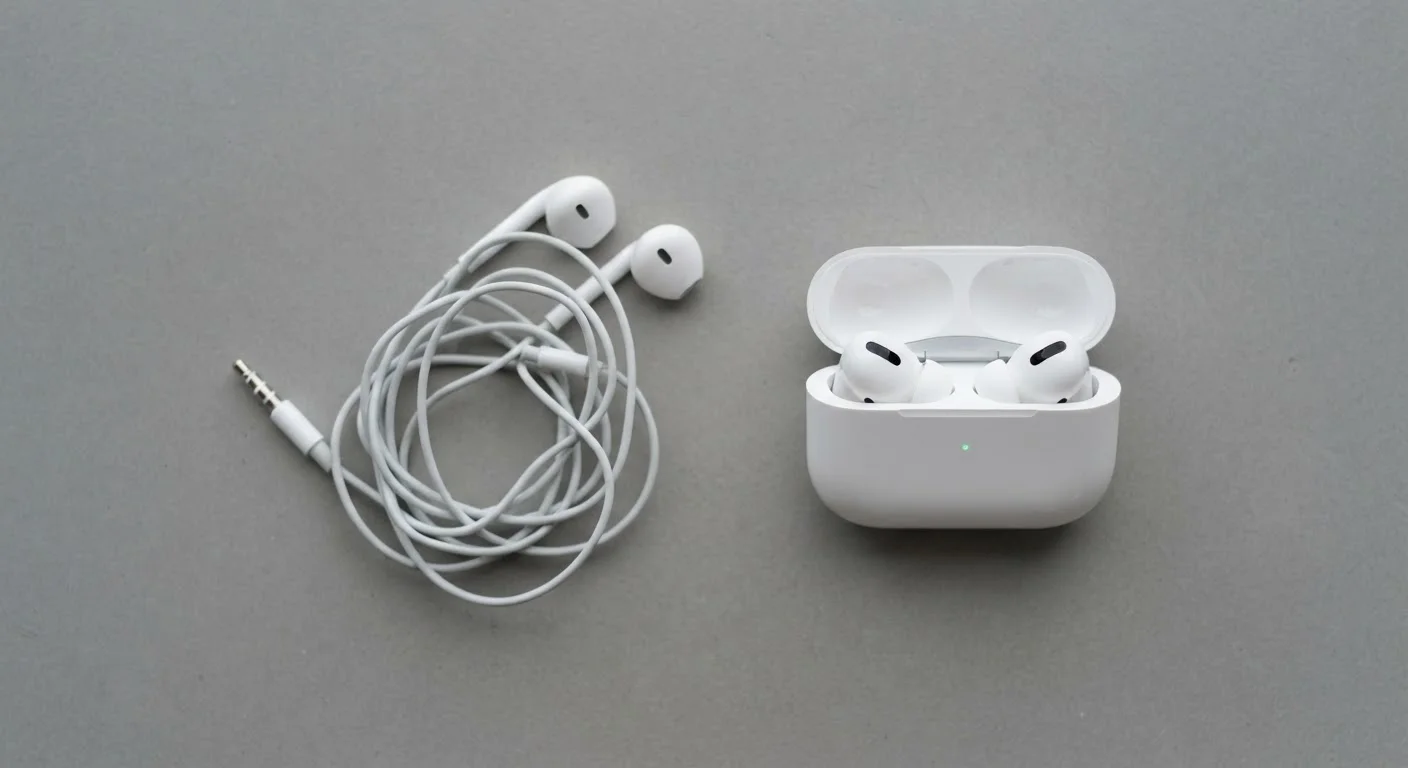
Photo credit: SyndicateExpert.com | Information At The Ready
In this article
Audio quality, latency, convenience, and battery life all shift depending on which you choose. Here's how to think through the decision clearly.
Key Takeaways
- Wired earbuds deliver audio with no latency, making them more reliable for video editing or gaming.
- Bluetooth earbuds require charging and can experience signal interference in crowded wireless environments.
- Audio quality depends more on driver design and codec support than on the connection type alone.
- Wired connections are disappearing from smartphones, which is a real practical consideration.
- Battery life and connection stability are the two most common pain points with Bluetooth earbuds.
The Core Difference Nobody Talks About: Signal Path
Most people frame this choice as "wires versus no wires," but the more useful frame is about how audio signal travels from your device to your ears — and what gets lost or changed along the way.
Wired earbuds receive an analog signal directly from your device's headphone jack or, via a dongle, from its digital output. The signal path is short, consistent, and free from interference. Bluetooth earbuds work differently: your device converts audio into a compressed digital signal, transmits it wirelessly, and your earbuds decode it on the other end. Every step in that chain can introduce variables.
That doesn't automatically make Bluetooth worse. Modern Bluetooth audio codecs — the compression formats used to transmit audio — have improved significantly. Codecs like aptX, LDAC, and AAC can transmit high-resolution audio with minimal perceptible quality loss for most listeners. The catch is that both your source device and your earbuds need to support the same codec, or they'll fall back to the baseline SBC format, which compresses more aggressively. If you've ever wondered why your Bluetooth earbuds sound noticeably better paired with one phone than another, codec mismatch is often why. For a deeper look at what's actually happening inside wireless connections, see why Bluetooth connections drop.
Latency: Where Wired Still Has a Clear Edge
Latency — the delay between audio being produced and you hearing it — is where wired earbuds maintain a meaningful advantage. Wired connections operate at near-zero latency. Bluetooth introduces a delay that typically ranges from 40 to 200 milliseconds depending on the codec and device pairing.
For streaming music or podcasts, that delay is imperceptible and irrelevant. For watching video, it can cause lips and audio to fall out of sync. For gaming, it can affect timing in ways that matter. Some Bluetooth earbuds offer a dedicated "low latency" or "gaming" mode that compresses this gap, but even these modes rarely match wired performance.
| Criterion | Wired Earbuds | Bluetooth Earbuds |
|---|---|---|
| Audio Latency | Near-zero | 40–200ms depending on codec |
| Audio Quality Ceiling | High, consistent | High, codec-dependent |
| Battery Required | No | Yes, separate charging needed |
| Interference Risk | None | Moderate in crowded RF environments |
| Noise Cancellation | Passive only | Active (ANC) available |
| Multi-device Switching | Manual reconnect required | Multipoint pairing available |
| Headphone Jack Required | Yes (or dongle) | No |
| Long-term Durability | No battery degradation | Battery capacity fades over time |
The latency gap is the primary reason audio professionals and gamers often keep a wired option on hand even when they own quality Bluetooth gear.
Battery, Charging, and the Hidden Overhead of Wireless
One of the least-discussed trade-offs of Bluetooth earbuds is the cognitive and logistical overhead of keeping them charged. Wired earbuds draw no power from a dedicated battery — they work indefinitely as long as your source device has charge.
Bluetooth earbuds typically deliver between four and eight hours of playback on a single charge, with their charging cases providing two to four additional charges. That math works well for most daily use, but it requires remembering to charge, and battery capacity degrades over time. After 18–24 months of regular use, many users notice meaningfully shorter playback sessions from aging battery cells — a cost wired earbuds never impose.
There's also a device obsolescence consideration worth flagging: many smartphones have removed the 3.5mm headphone jack entirely, which means wired earbuds now often require a USB-C or Lightning dongle. That dongle adds its own friction, and audio quality through a low-quality dongle can be noticeably worse than a native wired connection.
Convenience, Features, and What Each Format Enables
Bluetooth earbuds have expanded well beyond simple audio playback. Active noise cancellation (ANC), ambient sound modes, touch controls, voice assistant integration, and in-ear detection are now standard on mid-range and above wireless earbuds. None of these features are available in standard wired earbuds, which generally offer inline volume and play/pause controls at most.
If you work in a noisy environment, the noise cancellation alone may justify the Bluetooth trade-offs for you. If you prefer simplicity — plug in and it works, no pairing, no firmware updates, no modes to configure — wired earbuds deliver that reliability consistently.
It's also worth thinking about how you use audio across devices. Wired earbuds require physical reconnection each time you switch devices. Bluetooth earbuds with multipoint pairing can maintain connections to two devices simultaneously and switch between them automatically. For people toggling between a phone and a laptop throughout the day, that convenience is substantial. To think through similar cross-device trade-offs in software, native apps versus browser-based tools follows a similar decision framework.

Author
Tech & Devices Editorial Team
Tech & Devices Editorial Team is the collective byline for our editorial team and contributor network. Articles published under this byline or an editorial pen name are researched, written, and reviewed according to our editorial standards for clarity, consistency, and independence before publication.
View all articles →