
America's National Parks, Ranked by What Kind of Traveler You Are
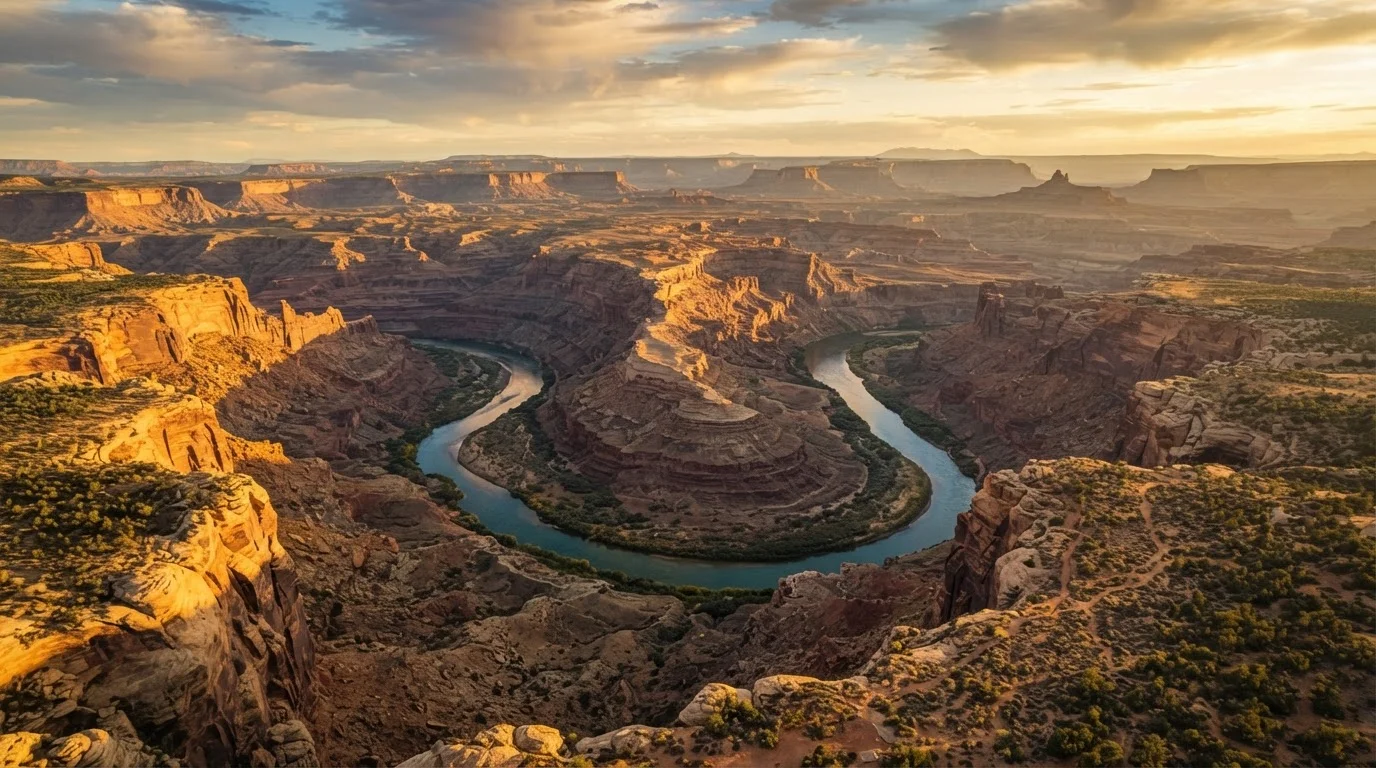
Photo credit: SyndicateExpert.com | Information At The Ready
In this article
Not every park suits every visitor. Here's how to match your travel style—solo hiker, family road-tripper, or first-timer—to the right national park.
Key Takeaways
- The right national park depends heavily on your travel style, fitness level, and group composition.
- Crowd levels, permit requirements, and accessibility vary dramatically from park to park.
- First-timers often do best starting with parks that offer clear infrastructure and ranger programming.
- Solo hikers should prioritize parks with well-marked backcountry trails and reliable cell or satellite coverage.
- Families benefit most from parks with short interpretive trails, campfire programs, and Junior Ranger activities.
- Visiting in shoulder season can dramatically improve your experience at many of America's busiest parks.
One Country, 63 Parks, Zero One-Size-Fits-All Answer
America's national parks are not a monolith. Yellowstone and Acadia are both national parks the way a kayak and a cruise ship are both watercraft — technically true, experientially worlds apart. The mistake most travelers make is choosing a park based on name recognition alone, then arriving to discover the terrain, crowd density, or required fitness level doesn't match what they actually wanted from the trip.
This guide flips that script. Instead of ranking parks by sheer grandeur, we've matched them to traveler types — because the "best" park is the one that fits you. Whether you're a solo adventurer, a family road-tripper hauling three kids and a cooler, or someone stepping into a national park for the very first time, there's a park calibrated to your rhythm. Below, you'll find eight traveler profiles and the parks most likely to reward each one.
A quick note before you dive in: entry fees, permit requirements, and seasonal access change regularly. Always verify current conditions and reservation requirements at nps.gov before you travel — conditions on the ground may differ significantly from what any article describes. And if timing is part of your decision, it's worth reading about the real trade-offs of peak vs. off-season travel before booking.
Parks Matched to Your Travel Style
The Solo Hiker: Olympic National Park, Washington
Olympic packs three distinct ecosystems — temperate rainforest, alpine meadows, and wild Pacific coastline — into a single park that rewards the traveler willing to move at their own pace. Solo hikers appreciate that the park's trails are well-signed and varied enough to match any fitness level, from beach walks along Rialto Beach to multi-day backcountry routes in the Olympics' interior. Wilderness permits are required for overnight backcountry stays; check current nps.gov requirements before planning. Cell coverage is limited in many areas, so a downloaded offline map and a satellite communicator are worth packing.
Three ecosystems in one park make Olympic a solo hiker's endlessly rewarding playground.
The First-Timer: Grand Canyon National Park, Arizona
It feels almost too obvious, and yet it's true: the South Rim of the Grand Canyon remains one of the most logistically straightforward introductions to national parks in the country. Shuttle buses run frequently, the Rim Trail is paved and accessible, and the scale of what you're seeing is genuinely awe-inspiring without requiring a single strenuous step. Rangers lead free interpretive programs throughout the day. First-timers should resist the urge to hike to the bottom on day one — the Canyon's heat and elevation change are often underestimated. Start with rim viewpoints and short inner-rim trails, and build from there.
The Grand Canyon's infrastructure makes it the most forgiving entry point for first-time park visitors.
The Family Road-Tripper: Acadia National Park, Maine
Acadia is compact, coastal, and almost preternaturally family-friendly. The carriage roads — 45 miles of broken-stone paths closed to motor vehicles — are ideal for family bike rides, and the park's rocky shoreline around Bar Harbor gives kids endless tidal-pool exploration without demanding long hikes. Jordan Pond is shallow enough for wading and has a historic restaurant nearby for an easy lunch stop. The park's Junior Ranger program keeps younger visitors engaged throughout. Acadia is also one of the most accessible parks in the Northeast by car from major population centers, making it a practical choice for families with limited travel windows. It's a very different vibe from Hawaii's island parks — if that contrast interests you, Hawaii's islands are worth understanding on their own terms.
Carriage roads, tidal pools, and a Junior Ranger program make Acadia a near-perfect family park.
The Wildlife Watcher: Yellowstone National Park, Wyoming
Nowhere else in the continental U.S. offers comparable density of megafauna. Bison herds routinely block roads. Wolf packs move through the Lamar Valley at dawn. Bears are a genuine, not decorative, presence. Serious wildlife watchers arrive early, bring quality optics, and spend time in the Lamar and Hayden Valleys rather than competing for space at Old Faithful. Summer crowds at the geyser basins can be intense; consider a shoulder-season visit in May or October for fewer people and more active wildlife behavior. Maintain required safe distances from all wildlife — the park's rules exist for both animal welfare and visitor safety.
Yellowstone's Lamar Valley at dawn is the closest thing to an African safari in North America.
The Photography Enthusiast: Great Sand Dunes National Park, Colorado
The Great Sand Dunes remain one of America's most visually surreal and undervisited landscapes — a field of towering dunes rising against the Sangre de Cristo Mountains, with Medano Creek running seasonally at their base. Golden hour and blue hour light here are extraordinary: the dunes shift from burnt orange to deep violet as the sun drops. Photographers benefit from arriving mid-week to avoid weekend crowds and should plan for both sunrise and sunset sessions, which require camping nearby or staying in Alamosa. The dunes themselves are free to walk on but physically demanding; plan footwear accordingly for shooting at distance versus close range.
Few American landscapes rival Great Sand Dunes for visual drama at golden and blue hour.
The History & Culture Traveler: Mesa Verde National Park, Colorado
Mesa Verde is the only U.S. national park created specifically to protect the works of human hands rather than natural formations. The ancestral Puebloan cliff dwellings — particularly Cliff Palace — are extraordinarily preserved and genuinely moving to stand before. Ranger-guided tours into the cliff dwellings are required for many sites and must be reserved in advance; they sell out quickly in summer. The park's Chapin Mesa Archeological Museum provides crucial context before you head to the dwellings themselves. Mesa Verde rewards travelers who slow down, read the interpretive materials, and listen to ranger talks — the depth of what's here only reveals itself with patience.
Mesa Verde's ancestral Puebloan cliff dwellings reveal themselves fully only to patient, curious travelers.
The Solitude Seeker: Isle Royale National Park, Michigan
Isle Royale is the least visited national park in the contiguous United States — by design and by distance. Reachable only by ferry or floatplane from Michigan or Minnesota, this island wilderness in Lake Superior sees a fraction of the visitors of its famous peers. There are no roads, no cars, and no cell service. Wolves and moose share the island; sightings of both are possible but never guaranteed. The park requires real self-sufficiency: backcountry camping with a permit, water filtration, and navigation by paper map and compass. If solitude is the goal, Isle Royale delivers it with unusual honesty. Permits and ferry schedules must be arranged well in advance.
Isle Royale is America's most intentionally remote park — accessible only by ferry or floatplane.
The First-Time Solo Traveler: Shenandoah National Park, Virginia
For someone taking their first solo national park trip, Shenandoah threads a useful needle: it's wild enough to feel genuinely remote, but Skyline Drive — the 105-mile road running the park's ridge — keeps you oriented and never far from a visitor center or lodge. The Appalachian Trail runs through the park, offering day-hike access to backcountry-feeling terrain without requiring a multi-day commitment. Ranger programs are available throughout the season. Shenandoah is also within a day's drive of the Eastern Seaboard's major cities, lowering the logistical barrier for first-timers. If you're building confidence as a solo traveler, read our ground-up introduction to solo travel alongside your park planning.
Shenandoah's Skyline Drive keeps first-time solo visitors oriented while genuine wilderness stays close.
Reserve Early for Popular Parks
Timed-entry reservations and backcountry permits at heavily visited parks — including Zion, Rocky Mountain, and Yosemite — often open months in advance and sell out quickly. Check each park's nps.gov page for its specific reservation system and window. Shoulder-season visits (May, September, October) frequently offer the same scenery with significantly less competition for permits and parking.
Pick Your Park With Intention, Not Just Inspiration
Instagram has done more to fuel national park visitation than any single ad campaign — and that's a double-edged gift. Zion's Angels Landing and the Maroon Bells in Colorado look astonishing in a photo. They also require advance timed-entry permits, fill parking lots before 7 a.m. in summer, and can feel more like a theme-park queue than a wilderness escape if you arrive unprepared. None of that makes them bad parks. It makes them parks that reward research.
The takeaway here is simple: read the park you're considering the way you'd read a travel companion. What does it demand of you? What does it give in return? If you're organizing a trip around children, the planning decisions that matter most when traveling with kids apply just as much in a national park as anywhere else — pacing, backup plans, and realistic daily distance matter enormously. Solo travelers should similarly think through logistics ahead of time; a grounded starting point for solo trip planning can help structure that process from destination selection through safety prep.
The parks on this list represent a range of landscapes, difficulty levels, and visitor experiences across the continental U.S. and beyond. None of them will disappoint a well-prepared traveler. All of them will humble an unprepared one.

Author
Travel & Trips Editorial Team
Travel & Trips Editorial Team is the collective byline for our editorial team and contributor network. Articles published under this byline or an editorial pen name are researched, written, and reviewed according to our editorial standards for clarity, consistency, and independence before publication.
View all articles →