
Iceland in Summer vs. Iceland in Winter: What Actually Changes
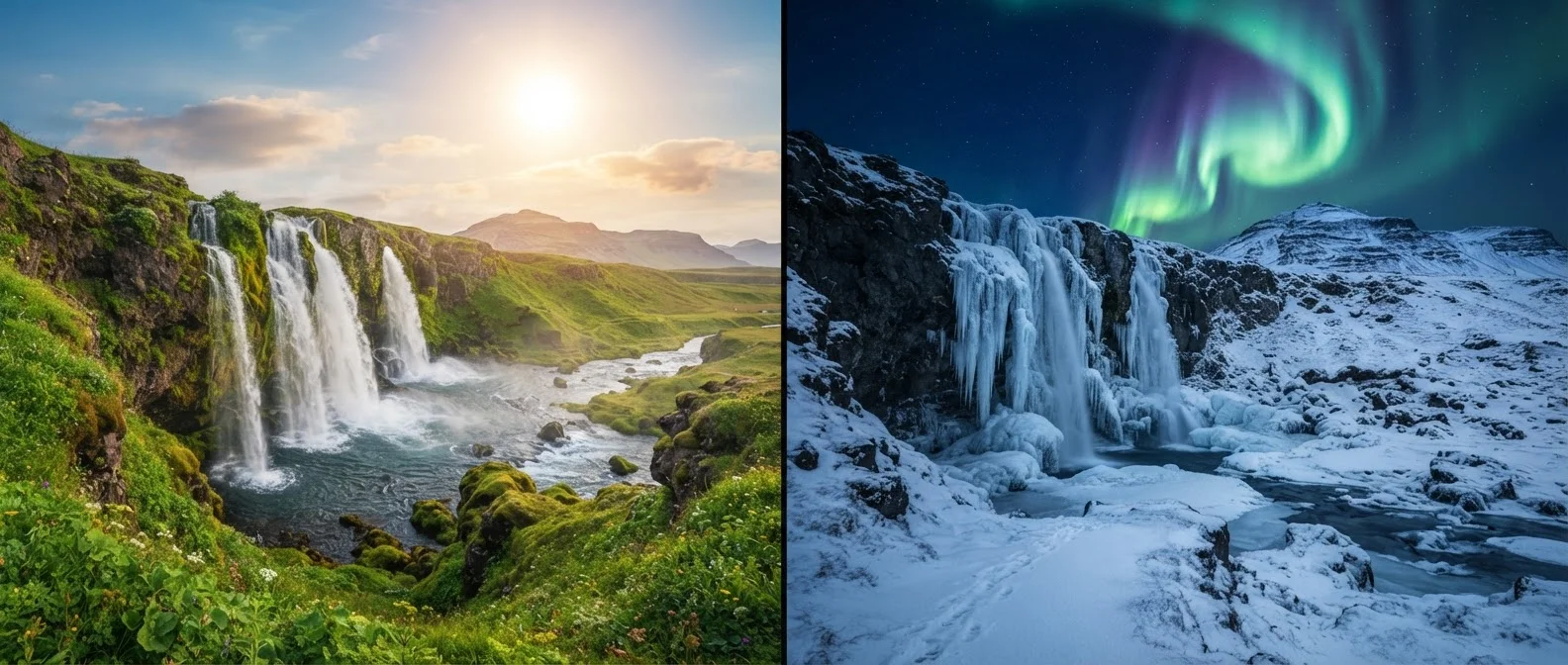
Photo credit: SyndicateExpert.com | Information At The Ready
In this article
Midnight sun or northern lights? Puffins or ice caves? Here's an honest look at what each season in Iceland offers—and what it costs you.
Key Takeaways
- Summer offers up to 24 hours of daylight; winter delivers the darkness needed to see the northern lights.
- Ice caves in Vatnajökull glacier are only safely accessible in winter, while puffins only appear in summer.
- Summer is Iceland's peak tourist season — expect higher prices, busier roads, and crowded popular attractions.
- Winter road conditions can be severe; some highland routes (F-roads) are entirely closed from October to June.
- Both seasons have genuinely extraordinary things to offer — the right choice depends entirely on your priorities.
Light: The Single Biggest Difference
Nothing divides Iceland's two main travel seasons more starkly than light — or its absence. In June and July, Iceland experiences the midnight sun, with daylight lasting up to 24 hours near the solstice. You can photograph Skógafoss waterfall at 2 a.m. or drive the Ring Road after dinner as if it were noon. It's disorienting in the best way.
Winter flips the script entirely. By December, Reykjavík sees fewer than five hours of true daylight. That darkness is essential for aurora viewing — the northern lights require a dark sky, and summer's relentless sun makes them invisible no matter how active solar conditions are. If seeing the aurora borealis is on your bucket list, winter is non-negotiable.
Neither extreme is objectively better. Travelers who struggle with disrupted sleep may find the midnight sun more exhausting than magical. Conversely, limited daylight in winter requires careful planning to make the most of sightseeing hours. Pack a good eye mask for summer; pack flexibility for winter.
| Criterion | Summer (June–August) | Winter (November–February) |
|---|---|---|
| Daylight | Up to 24 hours (midnight sun) | 4–6 hours near solstice |
| Northern Lights | Not visible (too bright) | Prime viewing conditions |
| Ice Caves | Closed (structurally unsafe) | Open, guided tours available |
| Puffin Watching | Available May–August | Not available |
| F-Roads / Highlands | Open (4WD required) | Closed |
| Crowd Levels | Peak — very busy | Lower (excluding holidays) |
| Road Conditions | Generally good | Can be hazardous; storms frequent |
| Typical Temperatures (Reykjavík) | 50–60°F | 20–35°F |
Access, Activities, and What You'll Actually See
Summer unlocks Iceland's interior. The F-roads — rough highland tracks leading to places like Landmannalaugar and the Kjölur route — are closed from roughly October through late May or June. In summer, with a proper 4WD vehicle, these dramatic volcanic landscapes become reachable. Wildflowers carpet the valleys, lupine blooms in purple waves, and Atlantic puffins crowd sea cliffs from the Westfjords to Látrabjarg.
Winter closes the highlands but opens something entirely different underground. Crystal blue ice caves form inside Vatnajökull glacier when temperatures drop enough to stabilize them — typically November through March. These cave tours are among the most otherworldly experiences Iceland offers, and they simply don't exist safely in warmer months when the ice becomes structurally unstable.
The famous Golden Circle, South Coast waterfalls, and Blue Lagoon-area attractions are accessible year-round, but the surrounding mood shifts dramatically. Seljalandsfoss waterfall draped in ice and snow is a completely different photograph than the same falls in July. Neither is wrong — they're just different Icelands.
For a broader look at how seasonal timing shapes the entire character of a trip, the real trade-offs of traveling in peak season vs. off-season are worth understanding before you book.
Crowds, Costs, and Practical Realities
Iceland's summer is unambiguously its peak tourist season. June through August draws the largest share of annual visitors, which means popular sites like Seljalandsfoss, Jökulsárlón glacier lagoon, and the Reykjanes Peninsula geothermal area can feel genuinely crowded. Accommodation books out months in advance, and campsites fill quickly on weekends.
Winter travel generally involves thinner crowds at major sights, though Reykjavík's holiday season (December) still sees lively visitor traffic. The trade-off is unpredictability: winter storms can close roads, cancel tours, and ground flights with little warning. A three-day window of clear skies for aurora viewing might shrink to one night — or none. Flexibility in your itinerary isn't just nice to have; it's practically required.
Weather-wise, neither season is reliably mild. Icelandic summers are cool and often windy, with temperatures typically ranging between 50–60°F in Reykjavík. Winters are raw and dark, but coastal temperatures rarely plunge as far as people expect — think 20–35°F rather than Arctic extremes, thanks to the Gulf Stream. That said, wind chill and sudden storms can make conditions feel far harsher. Layering and waterproof gear are essential in any season.
Always verify road and weather conditions through official Icelandic sources (road.is and vedur.is) before heading out, especially in winter. Conditions can shift faster than any forecast can capture.
If you enjoy the quieter, more intimate character that off-season travel can bring, the same logic explored in our piece on visiting Coastal Maine in the off-season applies here — fewer people, more atmosphere, but real logistical considerations to plan around.
A Note on Aurora Forecasts
The northern lights are a natural phenomenon — not a guaranteed attraction. Iceland's Meteorological Office (vedur.is) publishes aurora forecasts on a 1–9 scale of geomagnetic activity, which can help you time an evening out. Even on a high-activity night, cloud cover can block the view entirely. Building extra nights into your winter itinerary significantly improves your odds of catching a display.

Author
Travel & Trips Editorial Team
Travel & Trips Editorial Team is the collective byline for our editorial team and contributor network. Articles published under this byline or an editorial pen name are researched, written, and reviewed according to our editorial standards for clarity, consistency, and independence before publication.
View all articles →