
The Blind Spot Problem: What Mirrors Don't Show You and What To Do About It
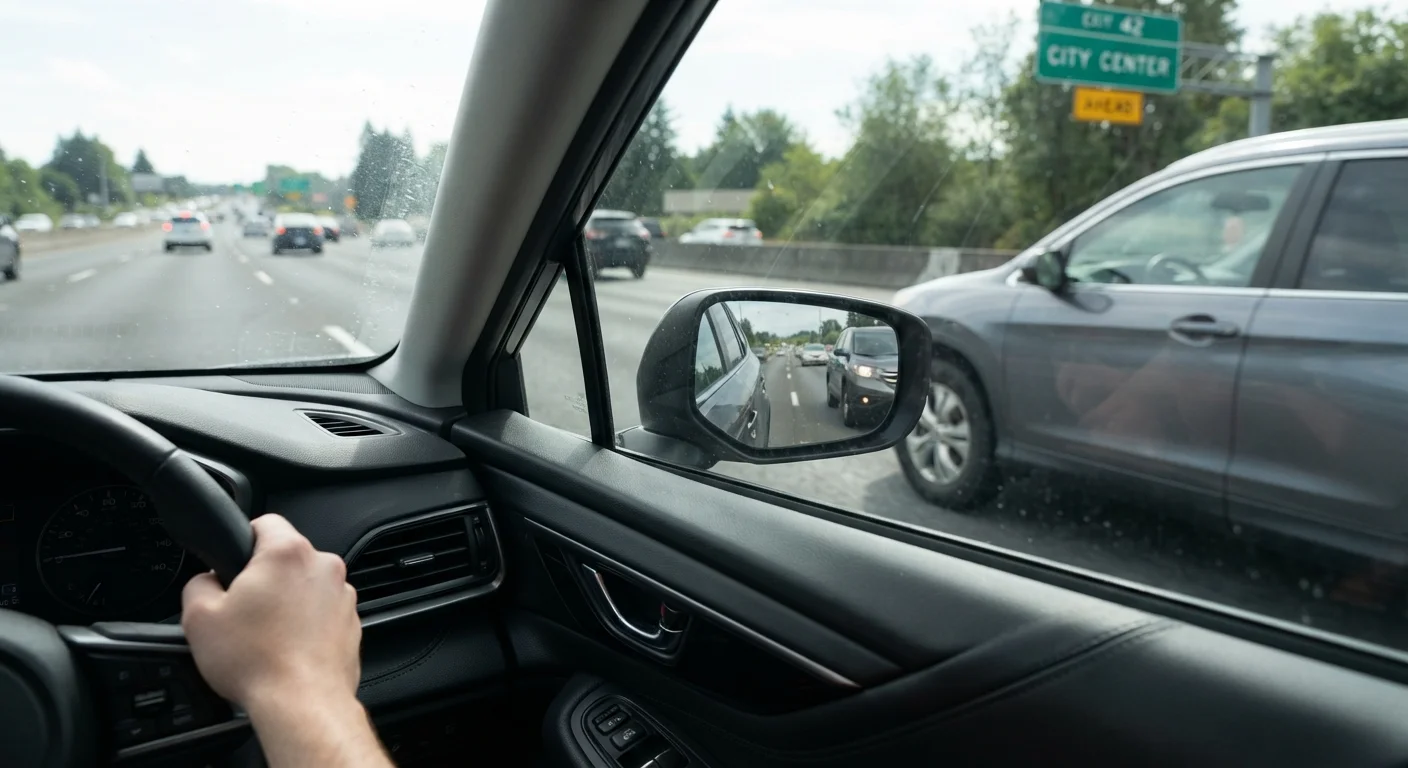
Photo credit: SyndicateExpert.com | Information At The Ready
In this article
Every vehicle has blind spots that mirrors cannot cover. Understand where yours are and the techniques drivers use to compensate safely.
Key Takeaways
- Mirrors alone cannot eliminate blind spots — they reduce them but always leave uncovered zones.
- The largest blind spots on most vehicles sit at roughly the 7–8 o'clock and 4–5 o'clock positions relative to the driver.
- A quick shoulder check before lane changes remains the most reliable way to clear your blind spot.
- Proper mirror adjustment dramatically shrinks your blind zones but requires deliberate setup.
- SUVs, trucks, and vans have significantly larger blind spots than sedans.
- Blind spot monitoring technology assists but does not replace active driver awareness.
Why Mirrors Leave Gaps
Your rearview and side mirrors are essential tools, but they were never designed to give you a complete picture of the road around you. Each mirror covers a specific cone of vision. The problem is that those cones don't add up to 360 degrees — the geometry of your vehicle's own body gets in the way.
The pillars supporting your roof are the primary culprits. The C-pillars (the structural columns behind the rear doors) create the most significant blind zones on either side, roughly at the 7–8 o'clock position on the left and 4–5 o'clock on the right when you imagine a clock face around the car. The A-pillars framing your windshield create a second, often overlooked forward blind zone — at certain intersection angles, they can conceal an entire motorcycle or pedestrian.
Vehicle design compounds the issue. Taller ride heights, thicker roof pillars for improved crash safety, and smaller rear windows all trade some visibility for structural integrity and fuel efficiency. This is a genuine engineering tradeoff, not an oversight, which is why driver awareness remains the essential compensating factor.
Blind Spots Are Bigger in Larger Vehicles
Pickup trucks, full-size SUVs, and vans have significantly larger blind zones than passenger sedans — both along the sides and directly behind the vehicle. If you've recently switched from a car to a truck or SUV, give yourself time to recalibrate your spatial awareness and mirror setup for the new vehicle's dimensions. The rear blind zone on a full-size truck can extend 10 feet or more behind the bumper.
How to Actually Set Your Mirrors
Most drivers set their side mirrors to show a sliver of their own vehicle's flank — a habit that feels reassuring but wastes mirror coverage. When you can see your own car in your side mirror, you're seeing information you already have. What you need is coverage of the lane beside you.
The approach recommended by the Society of Automotive Engineers works like this: sit in your normal driving position, lean slightly toward the driver's window, then adjust the left mirror outward until your own vehicle's side just disappears from view. Do the reverse for the passenger mirror by leaning slightly right. When properly set, a vehicle passing you should transition smoothly from appearing in your side mirror into your peripheral vision without ever fully disappearing.
Your rearview mirror should frame the full rear window, centered. If passengers or cargo block it, rely more deliberately on your side mirrors and increase your shoulder-check frequency. See our pre-trip safety checklist for a good habit of verifying mirror position before every drive.
The Shoulder Check: Still the Gold Standard
No amount of mirror optimization replaces the shoulder check — a brief, deliberate glance over your shoulder in the direction you intend to move before changing lanes. It takes roughly half a second and directly observes the zone your mirrors cannot cover.
The technique matters. You're not craning your neck to look behind you; you're rotating your head to glance at the space beside and slightly behind your vehicle. Keep your hands steady on the wheel and maintain your lane position during the check. A good shoulder check is quick, controlled, and habitual.
This habit becomes especially critical on highway merges. Improper merging is a documented contributor to highway incidents, and many of those situations trace back to a driver who trusted mirrors alone. The sequence to internalize: signal, check mirrors, shoulder check, then move — in that order, every time.
Pair this with defensive driving habits like avoiding prolonged travel in another driver's blind spot. If you can't see their mirrors, they likely can't see you.
Avoid Lingering in Other Drivers' Blind Spots
Blind spot awareness isn't only about your own vehicle — it's about understanding where you sit relative to other drivers. When traveling on a multi-lane road, avoid matching the speed of the car beside you for extended periods. Either accelerate to pass or ease off to drop back into a position where you're clearly visible in their mirrors. This simple adjustment removes you from the highest-risk zone in freeway traffic.
Technology Helps — But Understand Its Limits
Blind spot monitoring (BSM) systems use radar sensors or cameras to detect vehicles in adjacent lanes and alert you — typically via a warning light in the mirror housing or an audible chime. When functioning correctly, they provide a meaningful safety layer, particularly on crowded highways where maintaining constant visual vigilance is demanding.
However, BSM systems have known limitations. Sensors can struggle to detect motorcycles, cyclists, or narrow vehicles. Adverse weather — heavy rain, snow, or road debris — can temporarily degrade sensor accuracy. Systems vary by manufacturer in how quickly they respond and how wide a zone they cover. Backup cameras, federally mandated on new U.S. vehicles since 2018, address the rear blind zone for low-speed reversing, but they don't help during highway lane changes.
The right mental model: treat these technologies as a backup alert system, not a primary sensor. They confirm what you're already checking, and they catch what you might miss. They do not replace the mirror-check-plus-shoulder-check sequence that competent drivers build into every lane change.
840,000+
Annual U.S. blind spot-related crashes
The National Highway Traffic Safety Administration has attributed hundreds of thousands of annual lane-change crashes to blind spot failures — a figure that underscores how common and preventable these incidents are.
2018
Year backup cameras became federally required
The U.S. federal government mandated rear visibility systems (backup cameras) on all new passenger vehicles sold in the U.S. starting with model year 2018, addressing the critical rear blind zone during low-speed reversing.
~10 ft
Rear blind zone depth on full-size trucks
Studies of vehicle blind zones have found that full-size pickup trucks can have rear blind areas extending roughly 10 feet or more behind the bumper — enough to conceal a small child or a parked bicycle entirely.
Frequently Asked Questions

Author
Cars & Driving Editorial Team
Cars & Driving Editorial Team is the collective byline for our editorial team and contributor network. Articles published under this byline or an editorial pen name are researched, written, and reviewed according to our editorial standards for clarity, consistency, and independence before publication.
View all articles →