
Merging on the Highway: Where Most Drivers Go Wrong
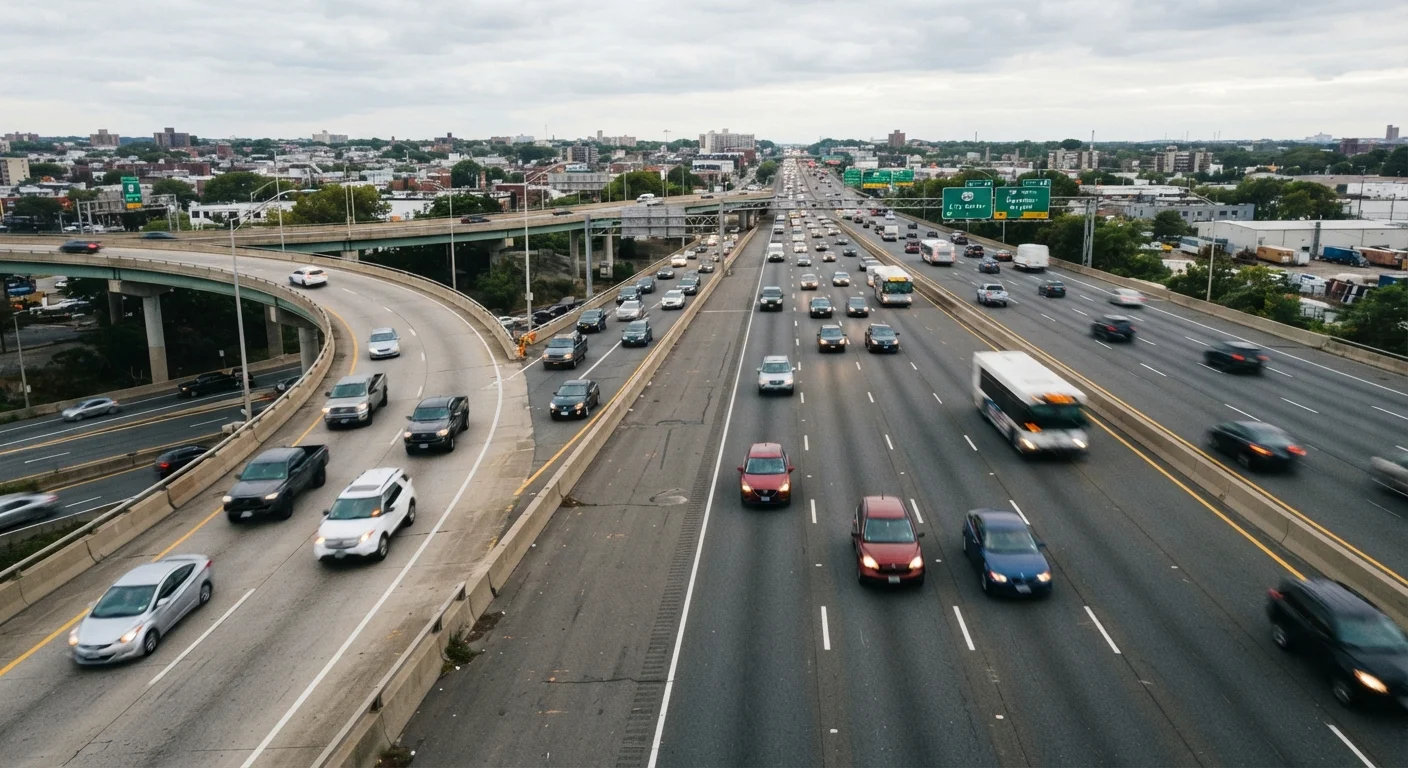
Photo credit: SyndicateExpert.com | Information At The Ready
In this article
Improper merging is a leading cause of highway incidents. See which habits create risk and what smooth, safe merging actually looks like.
Key Takeaways
- Merging requires matching highway traffic speed before entering the travel lane — not after.
- Failure to signal, check blind spots, or yield correctly are the most common merging errors.
- Both merging drivers and highway drivers share responsibility for safe lane transitions.
- Poor merging habits contribute to rear-end crashes, sideswipes, and sudden braking chain reactions.
- Practicing defensive awareness during every merge can significantly reduce collision risk.
Why Merging Goes Wrong So Often
Highway merging looks straightforward on paper: match traffic speed, find a gap, signal, and move over. In practice, it's one of the highest-stress maneuvers a driver performs regularly — and one of the most frequently botched. The combination of high speed, limited time, and pressure from surrounding vehicles creates conditions where small mistakes have large consequences.
Unlike an intersection, there is no stop sign to reset the situation. Errors on a ramp or during a lane transition ripple downstream: a driver who brakes unnecessarily at 65 mph can trigger a chain of hard stops behind them. Understanding why these mistakes happen is the first step toward eliminating them. As with most driving errors, the root cause is rarely recklessness — it's usually incomplete understanding of what safe merging actually requires. Defensive driving principles apply directly here: anticipate, scan early, and manage your position deliberately.
The Most Common Merging Mistakes
The errors below represent the patterns traffic safety researchers and driving instructors see most consistently. Recognizing them in your own habits is the clearest path to correcting them.
Merging below highway traffic speed.
Why it happens: Drivers feel unsafe entering fast-moving traffic and instinctively slow down on the ramp, hoping a gap will open. This backfires: arriving at the lane merge point significantly slower than surrounding traffic creates a much greater collision risk than the speed itself.
Failing to signal before changing lanes.
Why it happens: Many drivers treat the signal as optional during a merge, either because they're focused on the gap or because they assume nearby drivers can see the maneuver coming. Signals are a communication tool, not a formality.
Skipping blind spot checks at highway speed.
Why it happens: Mirrors provide a wide view, and many drivers over-rely on them, forgetting that vehicles in the adjacent lane can sit entirely within the mirror's blind spot at highway distances. The higher the speed, the more consequential a missed vehicle becomes.
Stopping or near-stopping at the end of an on-ramp.
Why it happens: When traffic appears dense and no obvious gap is visible, some drivers brake to a near-stop at the ramp's end to wait. On most American highway on-ramps, this creates a stationary or very slow vehicle at the edge of 65–75 mph traffic.
Merging into the fast lane instead of the rightmost open lane.
Why it happens: On-ramps typically feed into the right lane, but some drivers immediately push left to avoid what they perceive as slower traffic, cutting across multiple lanes in a short window.
Misjudging gap size at highway speeds.
Why it happens: Speed perception is unreliable, especially for drivers accustomed to city driving. A gap that looks sufficient at 35 mph closes much faster at 70 mph, and drivers underestimate how little time they have once they commit.
It's also worth noting that highway drivers play a role. Refusing to adjust speed or move over when a merging vehicle needs space — particularly on shorter on-ramps — creates the same friction as a poorly executed merge. Right-of-way expectations don't disappear at highway speed; they just demand faster execution.
Building Better Merging Habits
Safe merging is a skill built on preparation and repetition, not split-second improvisation. A few deliberate changes to your approach can make a significant difference.
Use the full length of the on-ramp. It exists to give you time and distance to accelerate. Drivers who treat the ramp as a slow approach and try to accelerate on the highway shoulder are working against the system's design.
Check mirrors and blind spots before the ramp ends — not as you reach the lane. Shoulder checks take less than a second but must happen early enough to act on what you see. Late checks give you information with no time to use it.
Commit to your gap. Hesitation mid-merge — where a driver slows, speeds up, and then brakes — is more dangerous than a decisive merge into a slightly tight space. If the gap is workable, take it smoothly. If it isn't, adjust speed on the ramp, not in the lane.
Tailgating After Merging Creates New Risk
After successfully merging, some drivers immediately follow the car ahead too closely — either from the momentum of the aggressive entry or simply out of habit. At highway speeds, following distance matters enormously. The physics of tailgating at 70 mph mean that even a momentary distraction can eliminate your ability to stop in time. Once you're in the lane, establish a safe following gap immediately.
Highway driving in low-visibility conditions — rain, fog, or darkness — adds another layer of complexity to merging. Night driving hazards and reduced-traction surfaces demand even earlier scanning and more conservative gap selection. Adjust your merging strategy as conditions change, not just your overall speed.
Finally, remember that aggressive responses to poor merging — blocking, brake-checking, or tailgating a driver who merged improperly — dramatically escalate risk for everyone. Road rage responses to bad merges are among the most preventable causes of serious highway incidents.

Author
Cars & Driving Editorial Team
Cars & Driving Editorial Team is the collective byline for our editorial team and contributor network. Articles published under this byline or an editorial pen name are researched, written, and reviewed according to our editorial standards for clarity, consistency, and independence before publication.
View all articles →