
Wet Roads, Black Ice, and Gravel: Adjusting Your Driving for Different Surfaces
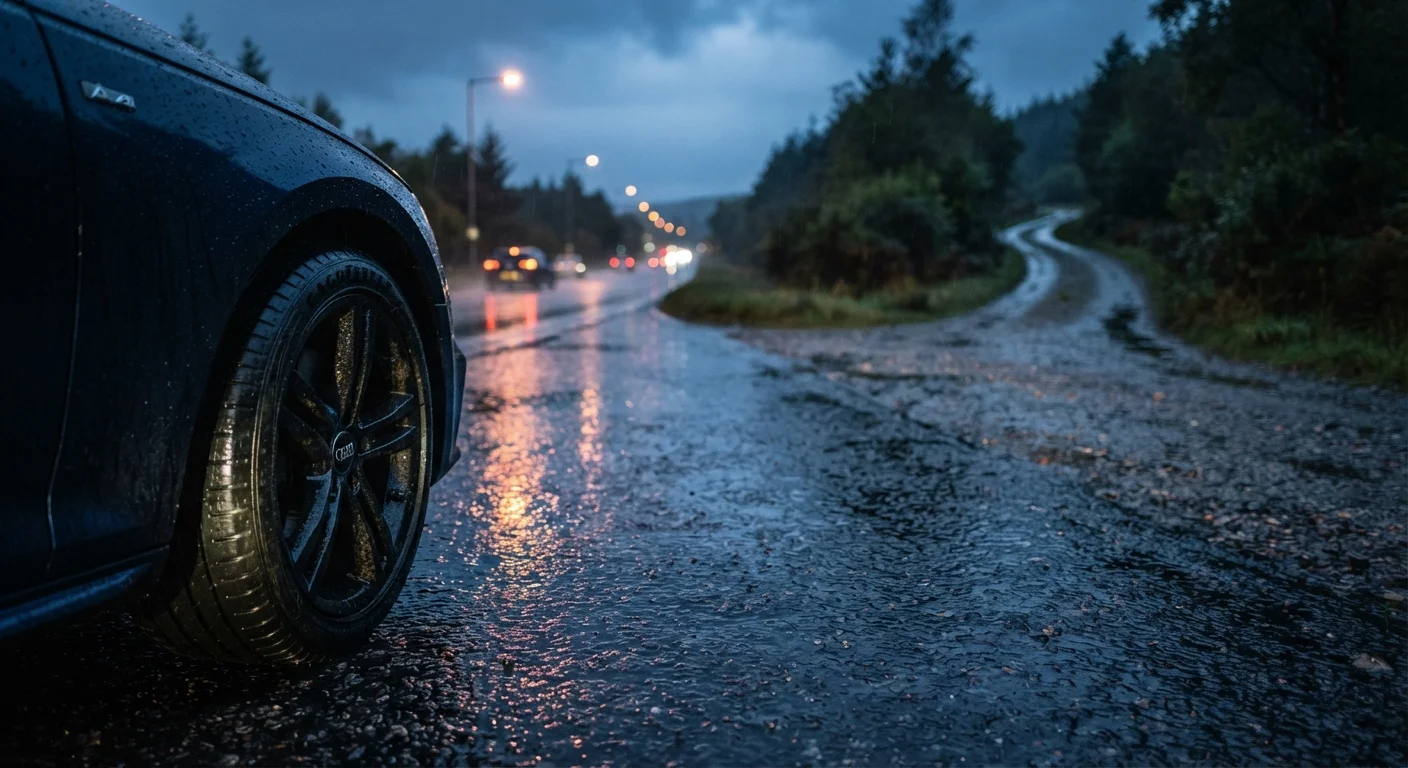
Photo credit: SyndicateExpert.com | Information At The Ready
In this article
Each road surface demands a different approach. Learn how traction, braking, and steering behavior shift across common American road conditions.
Key Takeaways
- Wet roads reduce traction significantly — increase following distance and brake earlier than you think necessary.
- Black ice is nearly invisible; the biggest danger is not recognizing it until your car has already lost grip.
- Gravel surfaces require slower speeds and gentler inputs on both the steering wheel and brake pedal.
- Your tires are your first line of defense — tread depth and pressure directly affect how your car handles any surface.
- Smooth, gradual inputs on the accelerator, brakes, and steering wheel are the common thread across all challenging surfaces.
Why Surface Conditions Change Everything About How Your Car Behaves
Every driving decision you make — how quickly you stop, how sharply you turn, how steadily you accelerate — depends on one thing: the friction available between your tires and the road. Change the surface, and you change the rules your car is operating under, often without warning.
Asphalt delivers strong, predictable grip in dry conditions. Add water and that grip drops substantially. Water acts as a lubricant between the tire and the road surface, and if your tires cannot channel that water away fast enough, you risk hydroplaning — a condition where your tires are riding on a film of water rather than contacting the road at all. Tread depth is critical here; worn tires dramatically increase hydroplaning risk. Our tire maintenance guide explains how to check tread and recognize when replacement is overdue.
Black ice — a thin, nearly transparent layer of ice that forms on pavement — is a different problem altogether. It is dangerous not because drivers can't handle it, but because many don't realize they're on it until the car is already moving independently of their inputs. Gravel introduces yet another challenge: loose aggregate that shifts underfoot, reducing braking effectiveness and sending the rear of a vehicle sideways when driven too aggressively.
Understanding how each surface behaves is the foundation of adjusting your driving. The steps below walk through how to approach each condition practically.
Test Traction Before You Need It
When you first encounter a suspect surface — a shaded stretch of road in winter, or a freshly graveled rural lane — tap your brakes gently at low speed in a safe location to feel how much grip is actually available. This brief test gives you real information rather than assumptions, helping you calibrate your speed and distance before a situation becomes critical.
Tools and Preparation That Matter Before You Drive
Adapting to hazardous road surfaces begins before you turn the ignition. Tire condition is the most critical variable — no amount of skilled technique compensates for bald tires on black ice or gravel. Check pressure and tread depth regularly, and consider tire pressure and rotation schedules part of your seasonal routine, not a reactive fix.
Brakes also deserve attention in this context. If you've noticed squealing, grinding, or a soft pedal, have your system inspected before driving in conditions that demand maximum braking performance. Our article on brake wear signs covers what to listen and feel for.
Tire Pressure Gauge
Verify that all four tires are inflated to the vehicle manufacturer's recommended PSI before driving on challenging surfaces.
Tread Depth Gauge (or Penny/Quarter)
Measure remaining tread depth to confirm tires can channel water and grip loose surfaces adequately.
Ice Scraper and Brush
Clear frost, snow, and ice from all glass surfaces and mirrors before driving in cold conditions.
Windshield Washer Fluid (Winter-Rated)
Maintain visibility when road spray coats the windshield on wet or slushy roads.
What you will need
Loss of Control Can Happen Instantly
On black ice or wet roads, traction can disappear faster than your reflexes can respond. The only reliable protection is reducing speed before you reach a hazardous surface, not after. If your vehicle begins to skid, do not slam the brakes — ease off the accelerator and steer gently in the direction you want the front of the car to go.
Step-by-Step: Adjusting Your Driving Across Three Common Surfaces
The steps below apply regardless of your vehicle type. Note that AWD and four-wheel-drive systems affect acceleration traction but not braking or cornering grip — a point addressed in our overview of persistent driving myths. Apply these techniques to your vehicle as it actually behaves, not as marketing suggests it should.
AWD Does Not Mean All-Terrain Invincibility
All-wheel drive improves a vehicle's ability to accelerate on slippery surfaces, but it does not meaningfully shorten stopping distances. Drivers of AWD and four-wheel-drive vehicles should apply the same speed reductions and following distances as any other driver on wet, icy, or loose-surface roads. See our article on common driving myths for more on this misunderstanding.
Recognize the Surface Before You're On It
Surface identification starts well before your tires touch it. Scan the road ahead for visual cues: standing water or a mirror-like sheen signals wet asphalt; a dull, matte gray patch on an otherwise dark road in near-freezing temperatures is a classic indicator of black ice; and a lighter, loose-looking surface ahead suggests gravel or chip-seal.
On highways, pay attention to bridge decks and shaded underpasses — these freeze first because cold air contacts the road from both above and below. Check your outside temperature gauge: once temperatures drop near or below 32°F, treat any suspicious surface as potentially icy until you can confirm otherwise.
Reduce Speed Proportionally to the Hazard
Speed is the single most controllable variable in your response to a changing surface. On wet roads, stopping distances can increase by 50% or more compared to dry asphalt, depending on tire condition and vehicle weight. On black ice, braking distances can be 10 times longer than on dry pavement.
As a practical guideline: reduce your speed by roughly 10–15 mph below the posted limit on wet roads, and drop significantly lower — or avoid driving entirely — when black ice is confirmed. On loose gravel, 25–35 mph is often a realistic ceiling, depending on the road's condition and visibility. These are general benchmarks, not guarantees — your specific vehicle, tires, and load all affect stopping performance.
Extend Your Following Distance
The standard three-second following distance taught in most driver education programs applies to dry roads and a vehicle in good condition. On wet surfaces, extend that to at least five to six seconds. On icy roads, traffic safety researchers commonly recommend eight to ten seconds or more, depending on conditions.
To measure following distance, pick a fixed object on the roadside — a sign, a lamppost. Count the seconds between when the vehicle ahead passes it and when your front bumper reaches the same point. Adjust your speed until you consistently have the margin you need. This is not a comfortable cushion — it is the physics of stopping.
Modulate Your Braking and Acceleration Inputs
On any low-traction surface, abrupt inputs are the enemy. Sudden braking — even with ABS engaged — puts maximum stress on the tires' contact patch at the worst possible moment. Instead, begin braking earlier and apply pressure gradually, building to firm-but-steady pressure rather than a stomp.
The same logic applies to the accelerator. On wet roads, spinning a drive wheel during acceleration can trigger a loss of directional control, particularly on rear-wheel-drive vehicles. On gravel, a burst of throttle can kick loose stones into a steering correction you weren't expecting. Accelerate steadily and progressively, especially when pulling away from stops or cresting hills where the surface ahead is not yet visible.
Steer Smoothly and Look Where You Want to Go
Traction lost through steering is just as dangerous as traction lost through braking. Sharp, jerky steering inputs on wet or icy surfaces can push the tires past their grip limit, causing a slide. Keep steering movements deliberate and gradual — particularly when entering or exiting curves.
In the event of a skid, the foundational rule remains consistent: look and steer in the direction you want to travel. The instinct to look at what you're sliding toward is strong, but resisting it is essential. Ease off the accelerator, avoid hard braking, and make small corrective steering inputs. On black ice especially, over-correction is a primary cause of loss of control. Our guide on driving in severe weather covers skid recovery in greater depth.
Adjust Your Lighting and Visibility Practices
Rain and low-visibility conditions often occur together. On wet roads, turn on your headlights — many states require this by law whenever wipers are in use, and it helps other drivers see you in spray and splash, not just in darkness. Avoid using high beams in heavy rain or fog, as the light reflects back off water droplets and can reduce your effective visibility.
On gravel roads — common in rural areas across the Midwest, South, and Mountain West — dust kicked up by your own vehicle or oncoming traffic can reduce visibility suddenly and dramatically. Slow down and use low beams to help without creating glare off the dust cloud. Before any trip on unpredictable road surfaces, it is worth reviewing our pre-trip safety checklist to confirm lights, wipers, and mirrors are all operational.
How Surface Awareness Connects to Broader Safe Driving Habits
Driving on difficult surfaces exposes the limits of habits that feel fine in normal conditions. Tailgating that seems manageable on dry pavement becomes dangerous on wet roads — the physics of following distance change dramatically when stopping distances double or triple. Our piece on why tailgating is dangerous at highway speeds lays out the stopping-distance math in plain terms.
For older drivers, reaction time and night vision changes can compound the challenges of wet or icy roads. Our article on driving after 65 addresses how to adapt as physical capabilities shift. And if you frequently drive at night — when black ice is harder to see and wet roads glare under headlights — night driving hazards are worth understanding in their own right.
Surface awareness is not a specialized skill — it is an extension of attentive driving applied to specific conditions. The underlying discipline is the same: scan ahead, manage speed, leave room, and input smoothly. Practice these habits consistently and they become instinctive well before you need them.

Author
Cars & Driving Editorial Team
Cars & Driving Editorial Team is the collective byline for our editorial team and contributor network. Articles published under this byline or an editorial pen name are researched, written, and reviewed according to our editorial standards for clarity, consistency, and independence before publication.
View all articles →