
Why Tailgating Is Far More Dangerous on Highways Than Residential Streets
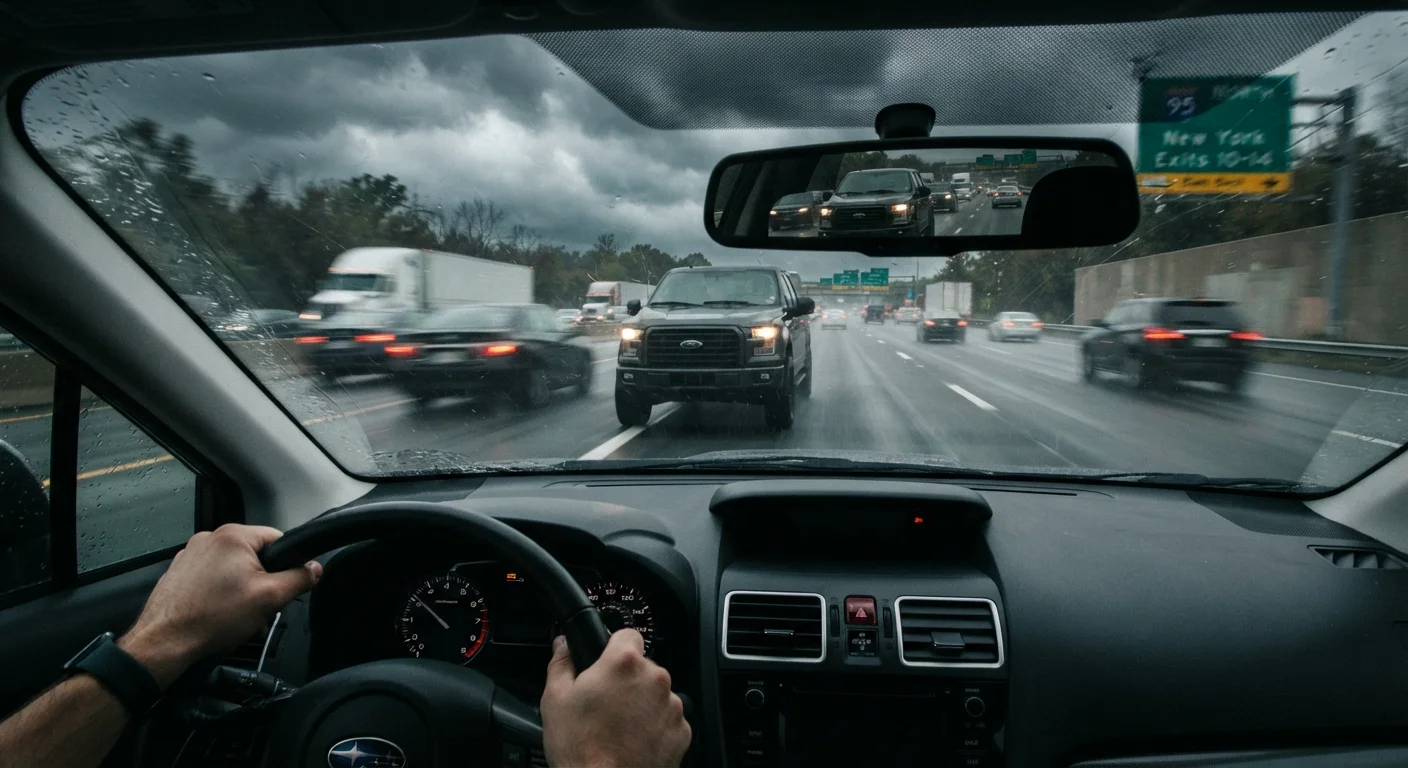
Photo credit: SyndicateExpert.com | Information At The Ready
In this article
The physics of following too closely change dramatically at highway speeds. Here's what the stopping-distance math actually looks like at 70 mph.
Key Takeaways
- At 70 mph, a car travels roughly 103 feet per second — before braking even begins.
- The average driver takes 1.5 seconds to react, consuming about 155 feet at highway speed.
- Stopping distance at 70 mph can exceed 300 feet under ideal conditions; wet roads push that figure much higher.
- Highway tailgating significantly reduces the time available for evasive action, making multi-vehicle chain collisions far more likely.
- The three-second following-distance rule is a minimum; adverse conditions demand even more space.
- Tailgating is classified as aggressive driving in most U.S. states and can carry legal penalties.
The Physics That Make Highway Tailgating So Lethal
Most drivers instinctively understand that following too closely is risky. Fewer appreciate just how dramatically that risk multiplies once highway speeds enter the equation. The core reason comes down to physics: stopping distance does not scale linearly with speed — it scales with the square of speed.
Consider two scenarios. At 25 mph on a residential street, a typical car needs roughly 65–70 feet to come to a full stop from the moment a hazard is perceived — reaction distance plus braking distance combined. At 70 mph on an interstate, that same vehicle needs well over 300 feet under ideal dry-pavement conditions. That is a distance longer than a football field, and it assumes alert, undistracted driving.
The reaction-time component alone is eye-opening. Research consistently places average human perception-reaction time at around 1.5 seconds. At 25 mph, your vehicle travels approximately 55 feet during those 1.5 seconds. At 70 mph, it covers roughly 155 feet — before braking even begins. In a tight following situation at highway speed, that gap is often already gone.
~155 ft
Distance traveled at 70 mph during reaction time alone
Based on an average human reaction time of approximately 1.5 seconds at 70 mph, before any braking begins.
300+ ft
Total stopping distance at 70 mph (dry pavement)
Estimates from traffic engineering references place total stopping distance — reaction plus braking — at over 300 feet under ideal conditions at highway speed.
~8×
Crash energy increase from 25 mph to 70 mph
Kinetic energy scales with the square of velocity; a vehicle at 70 mph carries roughly eight times the energy of the same vehicle at 25 mph.
Speed and stopping distances are closely linked, and understanding the math behind your speedometer is one of the most practical things any driver can do.
Why Residential Streets Offer a Hidden Safety Buffer
On a quiet residential street, several factors naturally limit crash severity even when a driver is following too closely. Posted speeds of 25–35 mph mean shorter stopping distances. Traffic signals, stop signs, crosswalks, and parked cars force frequent speed reductions. Drivers on local streets tend to be in a lower-stakes, lower-speed mindset, and obstacles ahead are visible much sooner.
Perhaps most importantly, at 25 mph the kinetic energy involved in a collision is far lower. Crash energy increases with the square of velocity — a vehicle at 70 mph carries nearly eight times the kinetic energy of the same vehicle at 25 mph. That difference translates directly into crash severity, injury risk, and vehicle damage.
None of this is an argument that tailgating is safe at low speeds — it is not. But it does explain why the same behavior that results in a fender-bender in a neighborhood parking lot can cause a multi-vehicle fatality on an interstate.
Chain Reactions: How One Tailgater Creates a Multi-Car Pile-Up
Highway crashes rarely involve just two vehicles. When one driver follows too closely, any sudden braking event — a stalled vehicle, road debris, or a merging truck — can trigger a chain reaction through multiple vehicles behind. Each driver in the chain has even less warning than the one ahead, because their line of sight is obscured and their reaction is delayed by the vehicle in front.
This dynamic is particularly dangerous in heavy highway traffic, where gaps between vehicles may already be compressed. A tailgater three cars back may have no visibility of the original hazard at all, yet will face the same abrupt stop. The result is the kind of multi-vehicle pile-up that makes highway incidents so disproportionately deadly compared to urban crashes.
Conditions that reduce visibility amplify this risk significantly. Night driving and wet or icy roads both extend stopping distances and reduce the visual cues drivers rely on to judge following distance accurately.
Building Better Following-Distance Habits
The most practical tool for maintaining safe highway following distance is the time-gap method. Choose a fixed roadside marker — a sign, overpass, or shadow line. When the vehicle ahead passes it, count off seconds. You should reach that same marker no sooner than three seconds later at highway speeds. In rain, fog, or low light, extend that to four or five seconds.
Three seconds sounds like a small number, but at 70 mph it represents about 310 feet of buffer — enough to give a fully alert driver a fighting chance to stop. The two-second versus three-second rule debate is worth understanding in full, especially because vehicle type matters: a loaded pickup truck or SUV needs considerably more stopping distance than a compact car.
If someone is tailgating you, resist the urge to brake suddenly or engage with the driver. Move right when safe, allow them to pass, and increase your own following distance from the vehicle ahead — giving yourself extra buffer to absorb any sudden stop without the tailgater behind pushing you into a collision.
Aggressive following behavior can also escalate quickly. Understanding the boundary between frustration and legally defined aggressive driving matters for both your safety and your legal standing.
Frequently Asked Questions

Author
Cars & Driving Editorial Team
Cars & Driving Editorial Team is the collective byline for our editorial team and contributor network. Articles published under this byline or an editorial pen name are researched, written, and reviewed according to our editorial standards for clarity, consistency, and independence before publication.
View all articles →