
Keeping an Indoor Cat Mentally and Physically Active
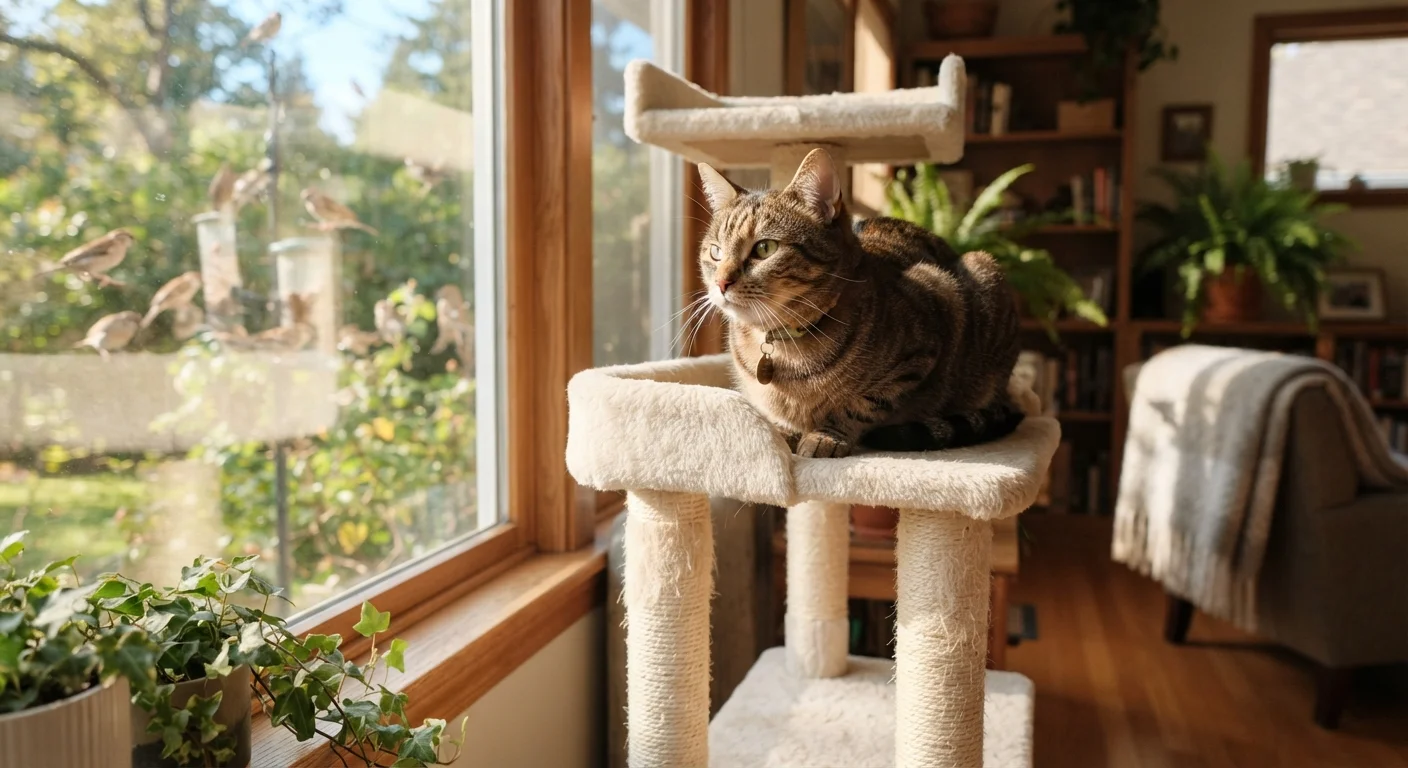
Photo credit: SyndicateExpert.com | Information At The Ready
In this article
Indoor life is safe but can be understimulating. These evidence-informed strategies help cats stay engaged and healthy.
Key Takeaways
- Indoor cats need daily mental stimulation and physical activity to stay healthy and prevent boredom-related behavior issues.
- Rotating toys, puzzle feeders, and vertical space can meaningfully reduce stress and destructive behavior.
- Short, consistent interactive play sessions — not just passive toys — are essential for a cat's wellbeing.
- Environmental enrichment addresses a cat's natural predatory instincts even when live prey is absent.
- Signs of understimulation include over-grooming, lethargy, and increased aggression or attention-seeking.
Why Indoor Life Demands Active Enrichment
Indoor living protects cats from traffic, predators, and infectious disease — but it removes a critical source of stimulation: the unpredictability of an outdoor environment. Cats are obligate hunters by evolution. Without outlets for stalking, pouncing, and problem-solving, that drive doesn't disappear; it redirects into less desirable behaviors like excessive vocalization, furniture destruction, or compulsive grooming.
Understimulation is one of the most underrecognized contributors to feline stress. Learn to spot the early signs of stress in cats — many owners mistake boredom-driven behavior for personality quirks rather than unmet needs. Addressing enrichment proactively is far easier than reversing entrenched behavioral problems.
Best Practices for Keeping Your Indoor Cat Engaged
The following evidence-informed practices reflect guidance from veterinary behaviorists and applied animal behavior research. Each targets a specific aspect of feline physical and mental health.
Schedule two dedicated interactive play sessions every day.
Passive toys alone rarely satisfy a cat's predatory drive. Directed play with a wand or feather toy simulates the chase-catch sequence, providing physical exercise and mental engagement. Consistent daily sessions help regulate energy levels and reduce nighttime restlessness.
Use puzzle feeders or food-dispensing toys for at least one meal daily.
Foraging behavior is central to feline psychology. Eating from a bowl in 90 seconds leaves a predatory brain with nothing to do. Puzzle feeders slow eating, reduce overeating-related weight gain, and provide meaningful cognitive work.
Create and rotate a varied enrichment library of toys and sensory items.
Cats habituate quickly to static stimuli. A toy that triggers intense interest on Monday may be completely ignored by Friday. Rotating a collection of textures, sounds, and motion types preserves novelty and keeps the environment feeling dynamic.
Provide vertical climbing and perching opportunities throughout the home.
Height is a resource cats actively seek for security and territory monitoring. Cats with access to vertical space show lower stress indicators than those confined to floor level. Elevated resting spots also encourage physical movement throughout the day.
Introduce safe, supervised outdoor experiences where appropriate.
Controlled outdoor access — via a secure catio, leash harness, or screened porch — exposes indoor cats to natural sensory input (smells, sounds, air movement) that no indoor setup fully replicates. Even brief exposure can meaningfully reduce chronic low-grade boredom.
Teach simple behaviors using positive reinforcement.
Contrary to popular belief, cats can learn cues and tricks reliably using reward-based training. Training sessions provide focused cognitive engagement and strengthen the human-cat bond — both of which contribute to long-term behavioral health. Several myths about cat trainability have discouraged owners from attempting this.
Quick Wins You Can Implement Today
Not every enrichment strategy requires planning or expense. Several high-impact changes take only minutes and cost nothing.
Building a Stimulating Environment Over Time
Sustainable enrichment is less about individual products and more about thoughtful environment design. Vertical space — shelving, cat trees, wall-mounted perches — gives cats a sense of territory and the ability to observe their domain from height, which is instinctively reassuring. Window perches with bird feeders or insect activity outside provide a form of passive stimulation sometimes described as "cat television."
Feeding structure matters too. Rather than leaving food out all day, splitting meals into two or three smaller portions — or using a puzzle feeder at least once daily — mimics the hunting-and-eating cycle cats are biologically wired for. Explore enrichment tools that genuinely hold cats' attention beyond the first week. Rotating enrichment items every few days also restores novelty; a toy that's been ignored for two weeks often becomes interesting again after a short absence.
Social enrichment matters for some cats more than others. If your household has a single cat and you're away for long hours, a carefully managed feline companion may reduce isolation-driven behavior — though this varies significantly by individual temperament and should never be rushed.
This article is for general informational purposes only and does not constitute veterinary advice. If your cat displays sudden behavioral changes or signs of distress, consult a licensed veterinarian or veterinary behaviorist.

Author
Pets & Animals Editorial Team
Pets & Animals Editorial Team is the collective byline for our editorial team and contributor network. Articles published under this byline or an editorial pen name are researched, written, and reviewed according to our editorial standards for clarity, consistency, and independence before publication.
View all articles →