
Scratching Posts, Puzzle Feeders, and Other Enrichment Cats Actually Use
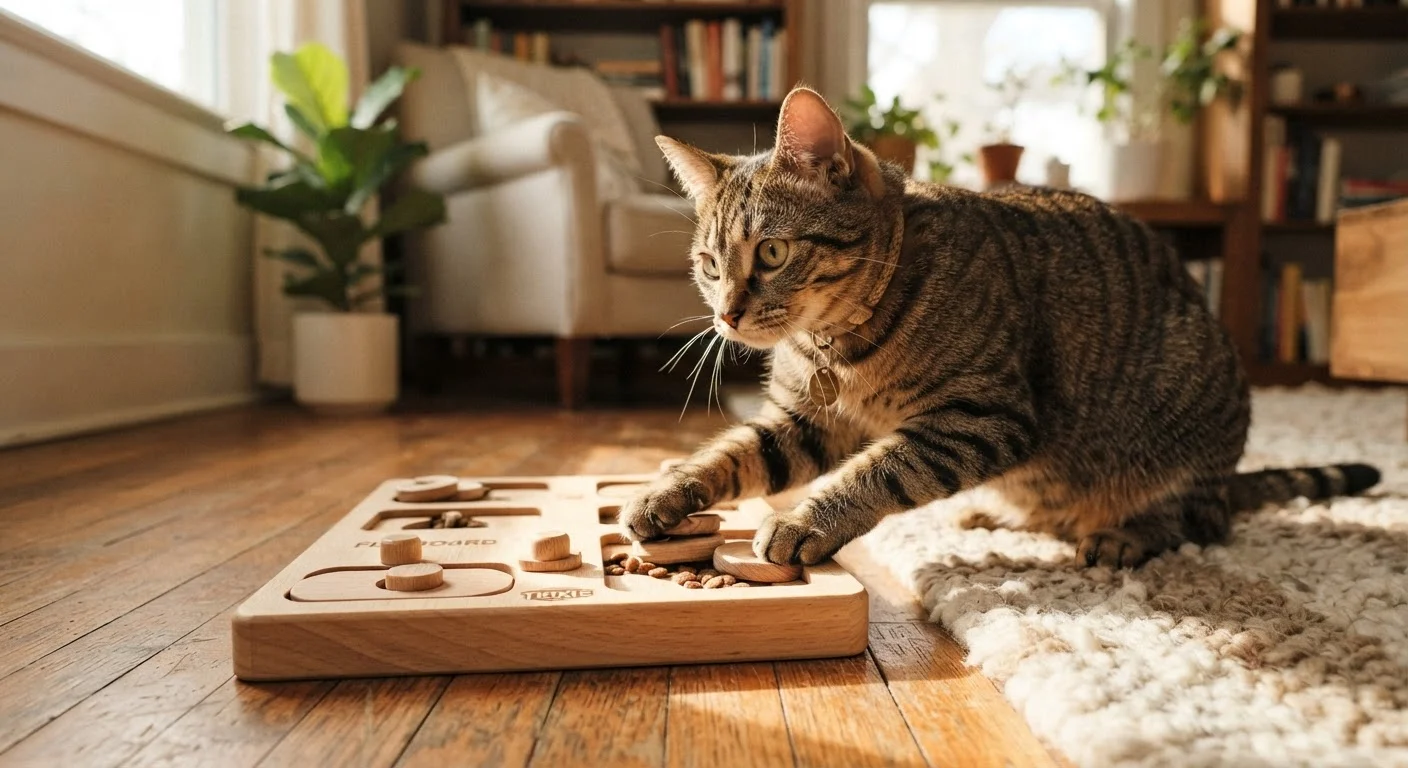
Photo credit: SyndicateExpert.com | Information At The Ready
In this article
Not all cat toys collect dust. These enrichment options address real feline instincts and hold attention over time.
Key Takeaways
- Effective enrichment addresses specific feline instincts — hunting, climbing, scratching, and problem-solving.
- Cats often ignore toys that don't mimic prey movement or reward interaction with food or texture.
- Rotating and combining enrichment types prevents boredom better than any single item alone.
- Scratching is a communication and stress-relief behavior, not just nail maintenance — post placement matters.
- Puzzle feeders slow eating and engage the predatory sequence, benefiting both physical and mental health.
Why Most Cat Enrichment Fails
Walk through any pet store and you'll find aisles of cat toys — crinkle balls, feather wands, catnip mice — most of which end up under the sofa within a week. The problem isn't that cats are uninterested in play; it's that enrichment designed without feline behavioral biology in mind quickly loses its appeal.
Cats are obligate carnivores hardwired for a hunt-catch-consume-groom cycle. Enrichment that interrupts or mimics that sequence holds their attention. Enrichment that doesn't gets ignored. Indoor cats in particular face understimulation that can manifest as overeating, destructive behavior, or lethargy — concerns covered in depth in our guide on keeping an indoor cat mentally and physically active.
The enrichment options below are consistently used by cats because they're built around what felines actually need — not what looks appealing to human buyers. Each addresses a distinct behavioral drive.
Rotate Enrichment to Maintain Interest
Even enrichment cats love will lose novelty if it's always available. Try keeping two or three items in rotation, swapping them every few days. Reintroducing a toy after a week of absence can trigger renewed interest almost as strong as when it was brand new. Storing items in a closed container also helps preserve scent novelty.
Enrichment Options Cats Actually Engage With
Tall, Stable Scratching Posts
Scratching isn't a destructive habit — it's essential. Cats scratch to shed claw sheaths, stretch the muscles from paw to shoulder, and deposit scent from glands in their paws. A post that wobbles or stands too short will be abandoned immediately.
The key specs: a post should be tall enough that the cat can fully extend while standing on their hind legs (most adult cats need at least 28–32 inches), and it must be stable enough to resist tugging. Sisal rope or raw sisal fabric tends to outperform carpet as a surface because it shreds satisfyingly rather than catching claws. Placement near sleeping areas and at household entry points matters — cats scratch where they want to leave a mark.
A post must be tall enough for full stretch and stable enough to resist serious tugging.
Puzzle Feeders and Slow-Feed Bowls
In the wild, a cat might spend several hours each day in pursuit of multiple small prey items. A bowl of kibble consumed in two minutes satisfies hunger but leaves the predatory sequence completely unfulfilled. Puzzle feeders close that gap by requiring cats to manipulate an object — sliding panels, rotating compartments, or tunneled chambers — to release food.
Start with a simpler puzzle and increase difficulty over time. Cats that eat too quickly also benefit from slow-feed bowls, which create physical barriers to gulping. If your cat eats wet food, look for lick mats or tray-style puzzles designed for moisture. For more on choosing appropriate food formats, see our breakdown of wet food vs. dry food for cats.
Puzzle feeders engage the predatory sequence that a standard food bowl completely bypasses.
Cat Trees and Vertical Space
Height is security for cats. Elevated perches allow them to monitor their environment, avoid conflict with other pets, and rest without feeling exposed. A cat tree that includes multiple platforms at varied heights, a hiding box or cave, and a sisal-wrapped post combines several enrichment functions in one structure.
Placement near a window dramatically increases usage — outdoor sights, sounds, and smells provide passive stimulation throughout the day. Even without a cat tree, installing wall-mounted shelves at graduated heights creates a climbing route that cats will use consistently. The investment in vertical space often reduces stress-related behaviors in multi-cat households.
Height equals security — cats with elevated perches show measurably lower signs of stress.
Interactive Wand Toys Used Regularly
The distinction between interactive and passive toys is significant. Passive toys — balls, stuffed mice — lose appeal quickly once a cat learns they don't fight back. Wand toys, controlled by a person, mimic the unpredictable movement of real prey and can sustain genuine hunting behavior for an entire session.
The technique matters as much as the toy. Let the feather or lure dart behind furniture, freeze momentarily, then dart away. End sessions by allowing your cat to "catch" the toy several times so the predatory sequence reaches completion. A cat that never catches its prey during play can become frustrated. Even 10–15 minutes of focused wand play daily makes a measurable difference for indoor cats.
End every wand play session with successful "catches" — incomplete hunts can leave cats frustrated.
Window Perches and Bird Feeders Outside
Passive enrichment — stimulation that doesn't require active participation — is underutilized by many cat owners. A padded perch suctioned or bolted to a window gives cats a front-row seat to outdoor activity. Positioning a bird feeder or small bird bath within sightline transforms an ordinary window into what behaviorists sometimes call "cat TV."
This is particularly valuable for senior cats or those recovering from illness who may not have the energy for active play but still benefit from mental stimulation. Some cats also respond strongly to nature sound recordings or wildlife videos played on a screen at ground level — though individual response varies widely.
A bird feeder positioned outside a window provides free, ongoing mental stimulation for indoor cats.
Tunnels, Paper Bags, and Low-Cost Hiding Spots
Cats have a strong instinct to hide — both as hunters waiting in ambush and as prey animals seeking cover when stressed. Collapsible fabric tunnels satisfy both impulses, giving cats a space to dart through, wait inside, and pounce from. They're especially popular with younger and more active cats.
Paper grocery bags (handles removed to prevent entanglement) and cardboard boxes serve the same function at no cost. Rotate these items in and out to maintain novelty. A hiding spot in every main room of the home ensures cats always have access to a place they feel secure, which is especially important in households with children, dogs, or multiple cats.
Access to hiding spots in every main room reduces baseline stress for cats living with other pets.
Building a Routine Around Enrichment
No single enrichment item — however well-designed — covers all of a cat's behavioral needs. The most successful approach combines several types: something to scratch, something to climb, something that challenges problem-solving, and regular interactive play with a person. Variety also matters; rotating puzzle feeders and toy types every few days maintains novelty.
Pay attention to what your individual cat gravitates toward. Some cats are intense hunters who prefer wand toys; others are more food-motivated and light up for puzzle feeders. A cat's interest in particular enrichment often reflects their personality and history more than their breed.
It's also worth noting that enrichment and nutrition are connected — a cat eating a balanced diet has the energy and motivation to engage with stimulating activities. If you're reviewing your cat's overall care, our article on cat nutrition explains what a genuinely balanced feline diet looks like. And if your cat displays unusual behaviors — like persistently knocking objects off surfaces — understanding the instinct behind it (explored in why cats knock things off tables) can help you redirect those impulses more effectively.
This article is for general informational purposes only and is not a substitute for professional veterinary advice. Consult your veterinarian if you have concerns about your cat's behavior or health.

Author
Pets & Animals Editorial Team
Pets & Animals Editorial Team is the collective byline for our editorial team and contributor network. Articles published under this byline or an editorial pen name are researched, written, and reviewed according to our editorial standards for clarity, consistency, and independence before publication.
View all articles →