
Guinea Pig vs. Hamster: Which Small Mammal Suits Your Household?
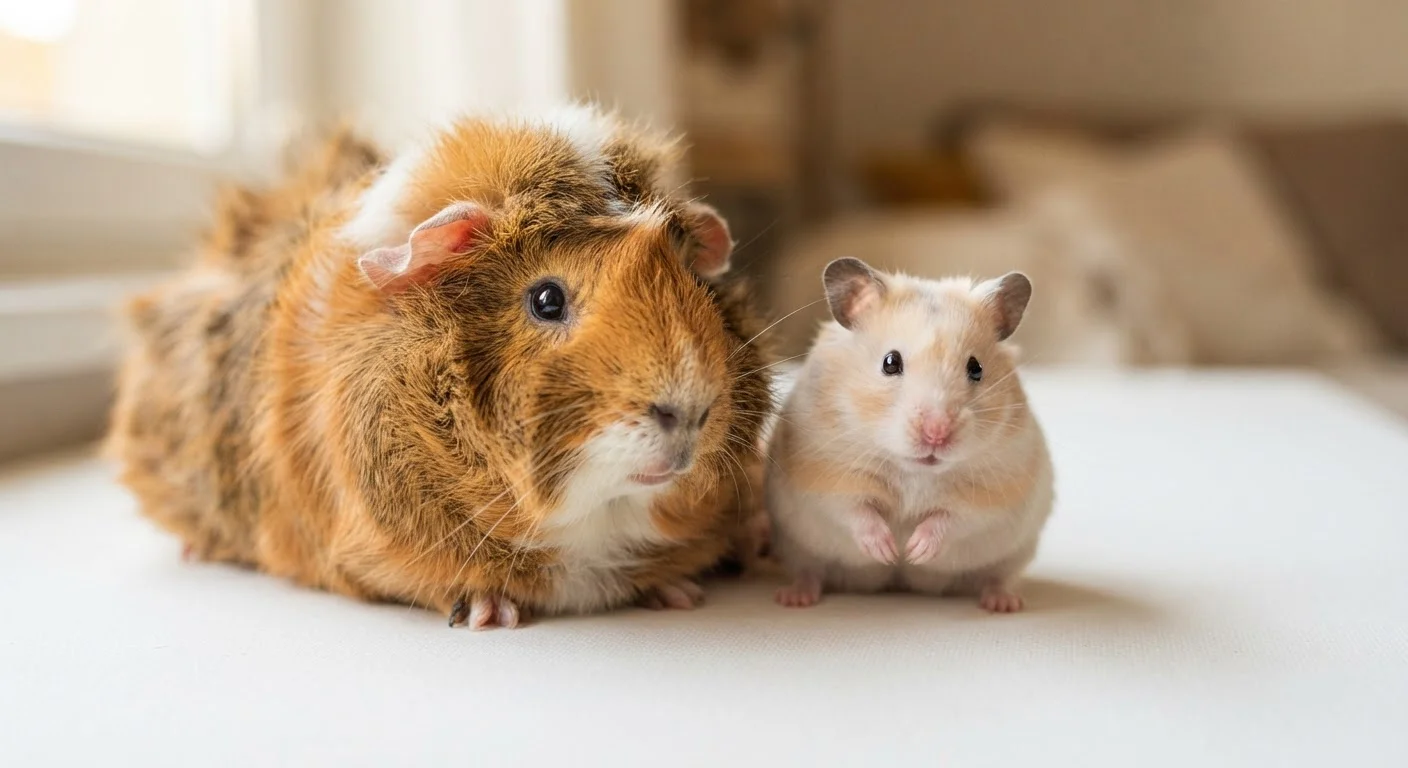
Photo credit: SyndicateExpert.com | Information At The Ready
In this article
Guinea pigs and hamsters have very different needs, temperaments, and lifespans. Compare them side by side before bringing one home.
Key Takeaways
- Guinea pigs typically live 5–7 years; hamsters average just 2–3 years.
- Guinea pigs are social animals that do best in pairs; hamsters are largely solitary and territorial.
- Hamsters are nocturnal, which can make daytime interaction limited and disruptive to the animal.
- Guinea pigs require more space, fresh vegetables, and daily vitamin C, making their care more involved.
- Neither species is a hands-off pet — both need daily feeding, cage cleaning, and attentive health monitoring.
Temperament and Sociability
One of the sharpest differences between guinea pigs and hamsters is how each species relates to people — and to members of their own kind.
Guinea pigs (Cavia porcellus) are highly social herd animals. They communicate through a range of vocalizations — including the distinctive "wheek" — and generally become more confident and interactive with regular, gentle handling. Veterinary and animal welfare organizations broadly recommend keeping guinea pigs in pairs or small groups to meet their social needs; a lone guinea pig may show signs of stress or boredom over time.
Hamsters, by contrast, are largely solitary in the wild. Most commonly kept species, including the Syrian hamster (Mesocricetus auratus), are territorial and should be housed alone to prevent serious fighting. Dwarf hamster species sometimes tolerate same-sex pairs if introduced early, but this still carries risk and requires careful monitoring.
In terms of human interaction, hamsters can become reasonably tame with patient, consistent handling, but they startle more easily and are quicker to nip when stressed. This doesn't make them poor pets — it simply means they suit a more hands-off, observational style of ownership.
Activity Patterns and Daily Life
Before choosing either animal, it's worth understanding when they're actually awake and active — because it affects how much you'll genuinely interact with your pet.
Guinea pigs are diurnal, meaning they are active during daylight hours with periods of rest interspersed throughout the day. This makes them far more compatible with typical household schedules, especially for children or owners who want daytime engagement.
Hamsters are crepuscular to nocturnal — most active at dusk, through the night, and into early morning. Waking a hamster during the day to handle it is stressful for the animal and increases the likelihood of defensive biting. If your household is quiet in the evenings, a hamster's active hours may align well; if you're looking for a pet the kids can play with after school, timing becomes a real friction point.
Both species benefit from enrichment. Guinea pigs explore open play areas and enjoy foraging-based toys. Hamsters are driven by instinctive burrowing and running behaviors — a solid-surface wheel of appropriate size (typically 8–10 inches for Syrian hamsters) is considered an essential cage component, not an optional accessory.
| Criterion | Guinea Pig | Hamster |
|---|---|---|
| Average lifespan | 5–7 years | 2–3 years |
| Social needs | Requires companionship (pairs recommended) | Solitary; cohabitation risky |
| Activity hours | Daytime (diurnal) | Evening/night (crepuscular–nocturnal) |
| Minimum space guideline | 7–8 sq ft for a pair | 600–800 sq in of floor space |
| Diet complexity | Hay, pellets, daily fresh veg, vitamin C | Seed/pellet mix, limited fresh food |
| Handling temperament | Generally gentle and tolerant | Can startle easily; nipping possible |
| Suitability for children | Good for ages 8+ | Better for older children or adults |
| Noise level | Vocal (wheeking, purring) | Quiet; wheel noise at night |
Care Requirements and Space
Neither guinea pigs nor hamsters are genuinely low-maintenance, though the nature of their demands differs significantly.
Guinea pigs need a larger enclosure than most pet store caging suggests — a minimum of 7–8 square feet of floor space for a pair is a commonly cited welfare guideline, though more is always better. Their diet requires daily fresh vegetables alongside unlimited grass hay and fortified pellets. Critically, guinea pigs cannot synthesize vitamin C internally and must receive it through food sources — deficiency leads to scurvy. Our guide to small pet nutrition covers exactly which foods meet these needs and which common offerings are harmful.
Hamsters require less floor space — though hamster welfare guidelines have shifted upward in recent years, with many experts now recommending enclosures of at least 600–800 square inches of unbroken floor space, far larger than typical starter cages. Their diet is simpler: a quality seed-and-pellet mix supplemented with small amounts of fresh food. Cheek pouch impaction and diabetes (particularly in dwarf species) are health concerns owners should understand before purchasing.
Cage cleaning frequency is similar for both: spot-cleaning daily and full bedding changes weekly or as needed. Both species are also prone to hiding illness — learning to recognize subtle warning signs matters for either pet. Our article on signs of illness in small pets is worth reading before you bring either animal home.
Lifespan and Long-Term Commitment
Lifespan is an emotionally significant factor that's easy to underestimate at the point of purchase, particularly for families with children.
Guinea pigs live an average of 5–7 years, with some reaching 8 or beyond under attentive care. This is a meaningful commitment — and it also means more years of veterinary expenses, daily care, and travel accommodation planning.
Hamsters have a significantly shorter lifespan, typically 2–3 years. For some households — particularly those new to small pet ownership or those wanting to limit long-term commitment — this may feel like an advantage. For children, however, the loss of a hamster within a year or two of bringing it home can be an unexpectedly abrupt experience.
Both species can incur veterinary costs that surprise first-time owners. Exotic animal vets — those experienced with small mammals — are not available in all areas, and specialist care can be costly. Factoring in a basic emergency fund for veterinary care is advisable for either species.
If you're also considering a rabbit as an alternative small mammal, our piece on the realities of rabbit ownership provides an honest look at a pet that is often more demanding than people anticipate.
A Note on Sourcing Either Animal
Wherever possible, consider adopting from a small animal rescue or shelter before purchasing from a pet store. Guinea pigs and hamsters frequently end up in rescues when owners underestimate care demands. Rescues can also give you more information about an individual animal's temperament before adoption. Always consult an exotic small mammal veterinarian early in ownership — ideally before any health issue arises — to establish baseline care expectations.

Author
Pets & Animals Editorial Team
Pets & Animals Editorial Team is the collective byline for our editorial team and contributor network. Articles published under this byline or an editorial pen name are researched, written, and reviewed according to our editorial standards for clarity, consistency, and independence before publication.
View all articles →