
The Truth About Goldfish: Myths That Have Shaped (and Harmed) How We Keep Them
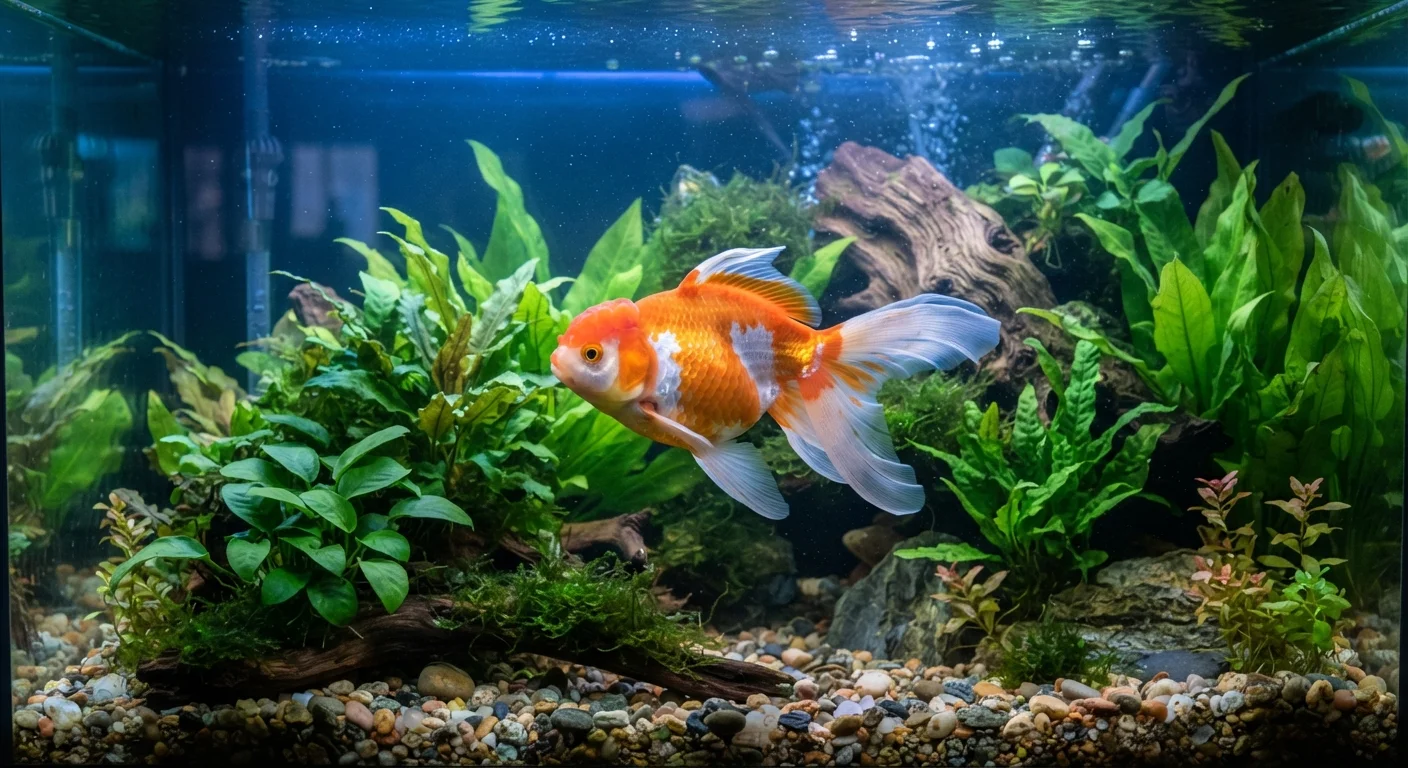
Photo credit: SyndicateExpert.com | Information At The Ready
In this article
Goldfish don't have three-second memories, and they don't belong in bowls. Separating the most persistent goldfish myths from what the evidence actually shows.
Key Takeaways
- Goldfish memory spans months, not three seconds — they can be trained and recognize patterns.
- Goldfish do not stay small to fit their environment; stunted growth is a sign of poor conditions.
- A properly filtered, cycled aquarium is essential — bowls cause chronic stress and early death.
- Common goldfish can live 10–15 years or longer with appropriate care.
- Goldfish are social, cold-water fish with specific dietary and space needs often misunderstood by owners.
Why Goldfish Myths Matter More Than You Think
Goldfish are among the most commonly kept pets in the United States, yet they are also among the most frequently mistreated — not out of cruelty, but out of misinformation. The myths surrounding goldfish care are so deeply embedded in popular culture that most people repeat them without question. A carnival prize fish dropped into a small bowl, fed daily pinches of flake food, and expected to thrive is a familiar image. It's also a blueprint for a short, stressed life.
Understanding what goldfish actually need requires setting aside decades of casual assumptions. These fish are hardy in the sense that they tolerate neglect longer than many species — but tolerance is not the same as thriving. If you're a current or prospective goldfish owner, separating myth from evidence can make a meaningful difference in how long and how well your fish lives. You might also find these patterns familiar if you've read about how myths shape care in other animals — see common cat health myths for a similar deep-dive.
Myth
Goldfish have a three-second memory and can't retain information between moments.
Fact
Goldfish memory has been demonstrated to last months in controlled studies. They can learn to associate stimuli with feeding times, recognize their owners, and complete simple navigational tasks.
The three-second memory claim has no credible scientific basis. Research published in peer-reviewed animal behavior literature has shown goldfish can be conditioned to respond to specific signals — including levers that trigger food delivery — and retain that learned behavior for months. Their spatial memory allows them to navigate mazes and remember routes. The myth likely persists because fish behavior is less legible to humans than mammal behavior, making it easy to project an absence of cognition onto them.
Myth
Goldfish will only grow as large as their tank allows, so a small bowl keeps them conveniently small.
Fact
Goldfish growth is not regulated by tank size in any healthy sense. Confining them to small spaces stunts their skeletal and organ development, which is a sign of compromised health, not convenient scaling.
What actually happens in undersized environments is that goldfish produce waste compounds — including growth-inhibiting hormones — that accumulate in the water. Without adequate filtration and volume to dilute these compounds, the fish's development is chemically suppressed. Internally, organ growth may continue even as external size stalls, which can cause serious health problems. A goldfish kept in proper conditions can reach 10–12 inches or more depending on variety. Stunting is not a feature — it's a welfare issue.
Myth
Goldfish are low-maintenance starter pets that can live happily in a bowl with regular water changes.
Fact
Goldfish are high-waste producers that require cycled, filtered aquariums. Bowls lack the biological filtration capacity to process ammonia safely, and frequent full water changes destabilize the tank further.
The aquarium nitrogen cycle — in which beneficial bacteria convert toxic ammonia from fish waste into less harmful nitrate — is the foundation of any stable fish environment. Bowls have insufficient surface area and volume to establish or maintain this bacterial colony. Without it, ammonia and nitrite spike rapidly, causing gill damage, immune suppression, and chronic stress. This is why goldfish kept in bowls typically die within months, leading owners to assume goldfish are simply fragile — when the housing is actually the problem. A properly cycled and filtered tank changes the entire outcome.
Myth
Goldfish are solitary animals that do fine on their own.
Fact
Goldfish are social fish that generally do well when kept with compatible companions and show behavioral differences — including increased activity and feeding response — in group settings.
While goldfish won't necessarily decline rapidly when kept alone, they are not solitary by nature. Studies on shoaling behavior in cyprinids (the family goldfish belong to) suggest group environments promote more active, exploratory behavior. The practical caveat is that adding tank mates increases bioload — meaning your filtration and tank size must be planned accordingly. It's also worth noting that common goldfish and fancy varieties often shouldn't be mixed, as their swimming speeds and food competition dynamics differ significantly.
Myth
Goldfish only live two or three years, so extensive care investment isn't warranted.
Fact
With proper husbandry, common goldfish routinely live 10–15 years, and some individuals have been documented living beyond 20 years.
Short goldfish lifespans are almost entirely a product of inadequate care conditions — primarily poor water quality, insufficient space, and inappropriate feeding. The belief that they're naturally short-lived becomes a self-fulfilling prophecy: owners don't invest in proper setups because they assume the fish won't last, and the fish don't last because the setup is inadequate. Goldfish kept in correctly sized, cycled aquariums with attentive care are long-term companions, not disposable novelties.
What Good Goldfish Care Actually Looks Like
Once the myths are cleared away, a clearer picture of goldfish husbandry emerges. These are cold-water fish — generally comfortable between 65°F and 72°F — that produce significantly more waste than tropical species of comparable size. That waste output makes filtration not optional but essential. A filter rated for at least twice your tank's volume is a reasonable starting point for most goldfish setups.
Tank size matters enormously. A single common or comet goldfish needs a minimum of 20–30 gallons to develop normally and maintain water quality between partial water changes. Fancy varieties like orandas and ryukins can be somewhat more compact, but they still require far more space than a bowl provides. Before bringing fish home, confirm your setup is ready — cycling a tank before fish arrive is one of the most important steps new owners skip.
Skipping Tank Cycling Harms Fish Immediately
Adding goldfish to an uncycled tank exposes them to ammonia and nitrite spikes that can cause serious gill and organ damage within days. Never add fish to a new tank that hasn't completed the nitrogen cycle — this process typically takes four to six weeks. If you've already added fish to an uncycled tank, frequent partial water changes and ammonia-neutralizing water conditioners can reduce harm while the cycle establishes. Consult a knowledgeable aquarium specialist for guidance specific to your setup.
Diet is another area where myths cause real harm. Goldfish are omnivores that benefit from variety: quality pellets formulated for goldfish, blanched vegetables like zucchini or peas, and occasional protein sources. Feeding exclusively dry flake food can lead to digestive problems, particularly in fancy varieties with compressed body shapes. Portion size matters too — feed only what fish consume in two to three minutes, and remove uneaten food promptly. For a broader look at setting up a stable environment for your fish, setting up a freshwater aquarium that stays balanced covers the fundamentals that apply well beyond goldfish alone.
10–15 years
Typical lifespan with proper care
Common goldfish kept in appropriate aquarium conditions have well-documented lifespans of 10–15 years, with some individuals exceeding 20 years.
20–30 gallons
Minimum tank size per goldfish
Aquarium care guidelines from fish welfare organizations recommend at least 20–30 gallons for a single common or comet goldfish, with additional volume per fish added.
2–3 minutes
Recommended feeding window
Goldfish should be fed only what they can consume in two to three minutes per feeding session to prevent uneaten food from degrading water quality.

Author
Pets & Animals Editorial Team
Pets & Animals Editorial Team is the collective byline for our editorial team and contributor network. Articles published under this byline or an editorial pen name are researched, written, and reviewed according to our editorial standards for clarity, consistency, and independence before publication.
View all articles →