
Seasonal Car Prep: Getting Your Vehicle Ready for Summer and Winter
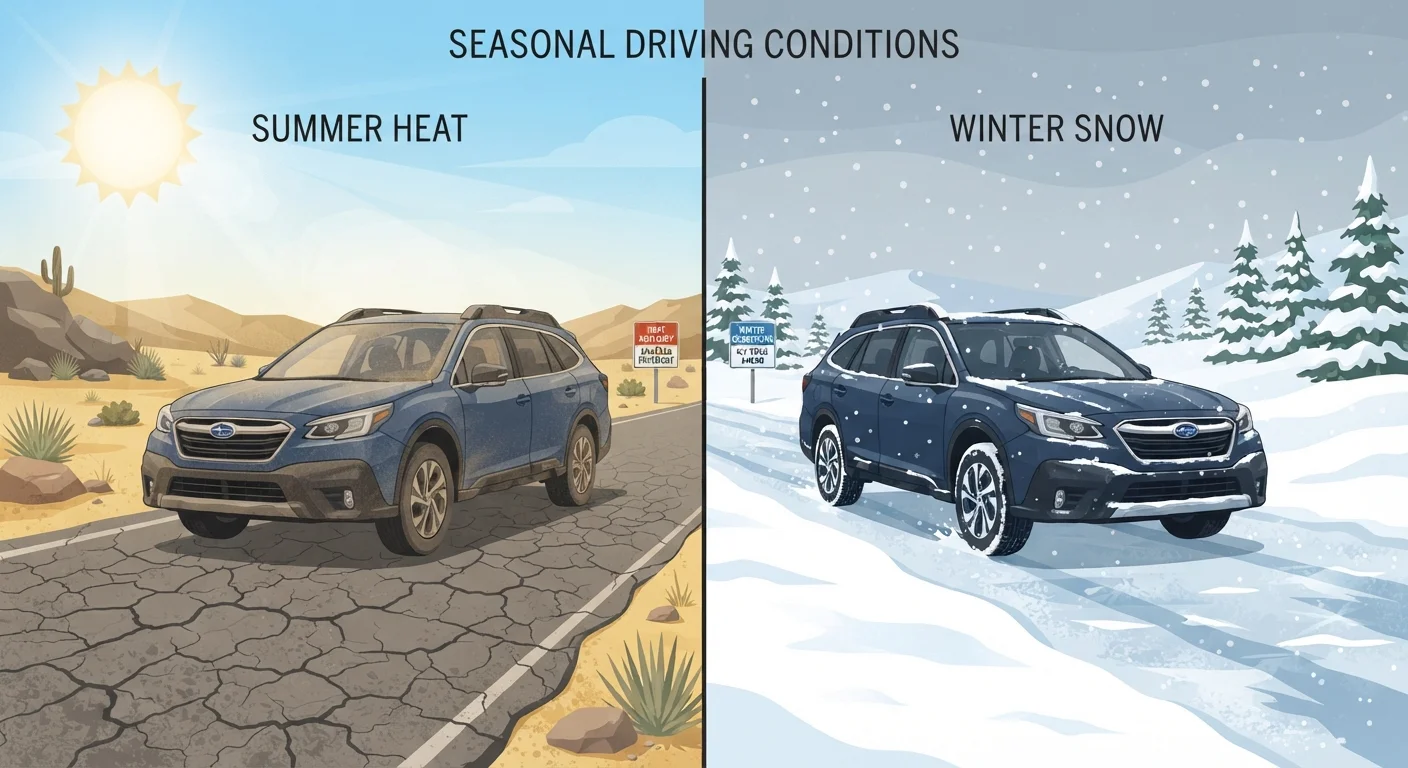
Photo credit: SyndicateExpert.com | Information At The Ready
In this article
Extreme temperatures stress different systems in your car. This guide covers the checks and adjustments that matter before each season arrives.
Key Takeaways
- Extreme heat and cold affect different vehicle systems, so each season requires its own preparation checklist.
- Battery health is critical in both summer and winter - heat degrades it, cold exposes that weakness.
- Tire pressure drops roughly 1 PSI for every 10°F drop in temperature and rises similarly in heat.
- Coolant condition matters as much in summer as it does in winter - it prevents both overheating and freezing.
- Many seasonal checks take under an hour and can prevent costly breakdowns during peak driving months.
Why Seasonal Prep Is More Than an Oil Change
Temperature extremes don't just make driving uncomfortable - they actively stress vehicle systems that perform fine in mild weather. A battery that powers up easily in October may fail to turn over in January. Tires inflated correctly in spring may be dangerously under-inflated by December. Coolant that prevents overheating in July may not protect your engine block at 10°F.
Seasonal preparation is about anticipating these stress points before they become roadside emergencies. It's not a replacement for your standard maintenance schedule - it's a layer on top of it. If you're unsure what your manufacturer recommends as a baseline, your owner's manual is the most reliable starting point. Our guide on reading the maintenance schedule section of your owner's manual walks through how to interpret those intervals in practical terms.
Use the checklists below as a seasonal audit - one for summer, one for winter. You don't need a lift or a shop. Many of these checks are visual or require basic tools you likely already own.
Tire pressure gauge
Accurately measures PSI in each tire for both summer and winter pressure checks.
Battery load tester
Determines whether your battery can deliver sufficient current under real-world demand - many auto parts stores offer this service free.
Coolant test strip or antifreeze tester
Verifies your coolant's freeze and boil-over protection level before extreme temperatures arrive.
Tread depth gauge
Provides a precise measurement of remaining tire tread rather than relying on visual estimates.
Flashlight or headlamp
Essential for inspecting hoses, battery terminals, and undercarriage areas in low-light conditions.
Wire brush and terminal cleaner
Removes corrosion from battery terminals to ensure a solid electrical connection.
Summer Prep Checklist
Summer brings sustained heat, longer road trips, and air conditioning running at full load. The goal is to identify anything that's been quietly degrading over winter and spring before temperatures peak. Pay particular attention to cooling system components and tires, which are most directly affected by heat.
For safer highway driving this summer, also review our pre-trip safety check before any extended journey.
Summer: Cooling System
Summer: Tires and Battery
Summer: Air Conditioning and Fluids
Winter: Battery and Electrical
Winter: Tires, Brakes, and Traction
Winter: Fluids and Visibility
Winter Prep Checklist
Cold weather shrinks fluids, thickens oils, drains batteries, and reduces traction. Winter preparation is especially important if you live in a region with significant snowfall or sustained temperatures below 32°F. Start these checks four to six weeks before your first hard freeze so you have time to address anything that needs professional attention.
If severe weather driving is a concern in your area, our guide to driving in severe weather covers what to do once conditions deteriorate.
Don't Mix Coolant Types Without Flushing First
Coolant comes in several chemistries - green (IAT), orange or red (OAT), and yellow or pink (HOAT) - and mixing them can cause chemical reactions that reduce protection and clog your cooling system. If you're unsure what type your vehicle uses, check your owner's manual before topping off. When in doubt, have a mechanic perform a full coolant flush rather than adding to an unknown mix.
Winter Tire Swaps Require Attention to Load Ratings
If you switch to dedicated winter tires, confirm that the replacement tires meet or exceed the load and speed ratings specified in your owner's manual or on the door jamb sticker. Using tires with insufficient load ratings - even temporarily - can affect handling and may void your vehicle's warranty coverage for related damage.
Making Seasonal Prep a Reliable Habit
The most effective approach is to tie seasonal checks to something you already do - a calendar reminder at daylight saving transitions, a note in your phone when you change your smoke detector batteries, or a bookmark in your owner's manual. Consistency matters more than perfection.
If you're newer to vehicle ownership and want to understand why these systems matter beyond just the checklist, our car ownership maintenance guide for beginners explains the underlying logic in plain language. And for a complete view of every major system in your vehicle, the comprehensive car maintenance overview provides end-to-end context.
Seasonal prep won't prevent every breakdown, but it dramatically reduces the chances of one happening at the worst possible time - in peak heat on a highway or in the middle of a January snowstorm.

Author
Cars & Driving Editorial Team
Cars & Driving Editorial Team is the collective byline for our editorial team and contributor network. Articles published under this byline or an editorial pen name are researched, written, and reviewed according to our editorial standards for clarity, consistency, and independence before publication.
View all articles →