
Driving in Fog, Heavy Rain, and Severe Weather: A Practical Field Guide
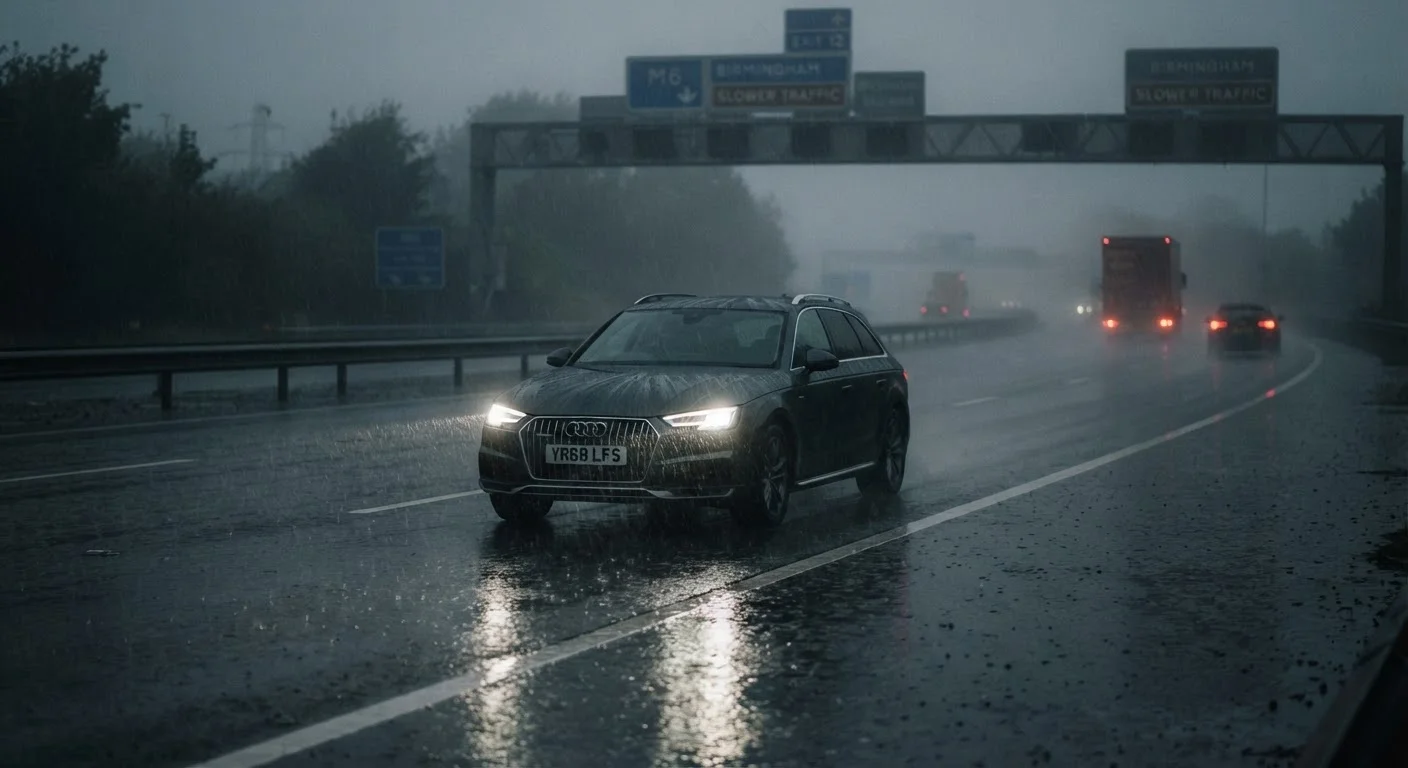
Photo credit: SyndicateExpert.com | Information At The Ready
In this article
Severe weather turns familiar roads into unpredictable ones. This end-to-end guide covers what to do before, during, and after driving in dangerous conditions.
Key Takeaways
- Slow down significantly in any low-visibility or slick-road condition — posted speed limits assume ideal conditions.
- Never drive through standing or moving floodwater; just six inches can sweep a vehicle off course.
- In dense fog, use low-beam headlights — high beams reflect off moisture and reduce your effective sight distance.
- Pull completely off the road and out of traffic if conditions exceed your ability to drive safely.
- Preparation before the trip — tires, wipers, lights — dramatically reduces risk during severe weather.
Why Severe Weather Crashes Are So Preventable
Weather-related vehicle crashes claim thousands of lives in the United States every year. According to the Federal Highway Administration, roughly 21 percent of all vehicle crashes — more than 1.2 million annually — are weather-related. Rain accounts for the largest share of those events, followed by fog, snow, and high winds.
What makes these statistics sobering is that the vast majority of weather-related crashes happen on wet pavement during active rain — not in extreme blizzards. That means everyday rain events, not rare catastrophes, represent the greatest danger. The good news: most of the risk can be mitigated with the right knowledge and a willingness to adjust your behavior before conditions get critical.
Unlike mechanical failures or sudden medical events, severe weather gives you time to prepare and react. The drivers who stay safest are those who treat weather as a variable that demands a different strategy — not just a backdrop for normal driving. For a broader mental framework, see our guide on defensive driving habits.
21%
Of all U.S. vehicle crashes are weather-related
According to the Federal Highway Administration, weather contributes to over 1.2 million crashes annually across the country.
6 inches
Of moving water needed to move a vehicle off course
The FHWA and NOAA both note that shallow moving floodwater poses an extreme risk even to full-size vehicles.
50%+
Increase in stopping distance on wet pavement
Wet road surfaces significantly extend braking distances compared to dry conditions, particularly at highway speeds.
Before You Drive: Setting Yourself Up for Success
The most effective safety work happens before you turn the key. Your vehicle's ability to handle poor conditions depends heavily on maintenance you've already done — or haven't.
- Tires: Tread depth directly determines how water is channeled away from the contact patch between your tire and the road. Worn tires hydroplane (lose contact with the road surface on a film of water) far more readily than tires with adequate tread. Check that all four tires meet the legal minimum tread depth of 2/32 inch, though 4/32 or more provides meaningfully better wet traction.
- Wipers: Wiper blades degrade over time and leave streaks that compound glare. If your wipers skip, smear, or chatter, replace them before driving in rain.
- Lights: Confirm all headlights, taillights, and brake lights work. In fog and heavy rain, your lights serve double duty: they help you see and help others see you.
- Defrost systems: A fogged windshield is an interior visibility problem. Test both front and rear defrosters so you're not fighting condensation while also navigating poor conditions outside.
Before any significant trip, run through the pre-trip safety checklist to catch issues you might otherwise overlook. Seasonal readiness matters too — our seasonal car prep guide covers the checks that keep your vehicle reliable when weather turns extreme.
Driving in Heavy Rain and Flooded Roads
Rain changes the physics of driving in ways that catch even experienced drivers off guard. Here's what to adjust:
Speed and Following Distance
Wet roads can increase stopping distances by 50 percent or more compared to dry pavement. Reduce your speed below the posted limit when rain is heavy, and extend your following distance to at least four seconds rather than the standard two. If you can hear rain loudly on your roof, that's a reliable cue that conditions are serious.
Hydroplaning
Hydroplaning occurs when your tires can't channel water away fast enough, and the vehicle begins to ride on a thin film of water rather than the road surface itself. Steering and braking inputs become largely ineffective. If you feel your vehicle start to float or your steering go light, ease off the accelerator gently — do not brake sharply — and allow the tires to regain contact gradually.
Flooded Roads
The phrase "turn around, don't drown" exists because it works. As little as six inches of moving water can knock an adult off their feet; twelve inches can carry a small car. Two feet of rushing water can sweep away most full-size vehicles. Do not attempt to cross flooded roadways regardless of how shallow they appear — the road surface beneath the water may be compromised or entirely washed away.
For more on how your vehicle behaves across different wet and hazardous surfaces, see wet roads and surface adjustments.
Navigating Fog: Visibility Is Not Optional
Fog is uniquely dangerous because it creates a false sense of spatial awareness. Drivers often feel they can see farther than they actually can — a phenomenon sometimes called the "fog illusion." Speed should match the distance within which you can stop, not the distance you think you can see.
Headlight Use in Fog
Always use your low-beam headlights in fog, not high beams. High beams project light upward into the moisture-laden air and bounce it back at you, reducing visibility rather than improving it. If your vehicle has dedicated fog lights (typically mounted low on the front bumper), use them in conjunction with low beams.
The Two-Second Rule Becomes Insufficient
In dense fog, four to five seconds of following distance is a more appropriate minimum. You also need to account for vehicles ahead that may slow or stop suddenly — and for vehicles behind you that may be closing faster than conditions warrant.
When to Pull Over
If visibility drops to the point where you cannot confidently identify road markings, pull completely off the road — ideally into a parking lot or well past the fog line on the shoulder. Turn off your driving lights to avoid misleading other drivers into thinking they're following your taillights when you're stationary. Leave your hazard flashers on.
When driving in fog, use the right edge of the road or lane markings as your primary visual guide rather than trying to follow the taillights of the vehicle ahead — you may be driving too close to see hazards in time.
Following taillights in fog is one of the most common causes of multi-vehicle pileups, because drivers unconsciously close the gap to maintain visual contact, eliminating safe stopping distance.
In a heavy rainstorm, if your windshield wipers can't keep up with the rainfall, find a safe place to pull off the road entirely rather than pushing through — the storm usually passes in minutes.
Visibility thresholds matter more than schedule. Waiting out an intense cell is almost always faster and safer than navigating one you can barely see through.
Thunderstorms, High Winds, and Tornadoes
Lightning, high crosswinds, and the rare but deadly tornado each call for different responses.
Thunderstorms and Lightning
A fully enclosed metal vehicle provides meaningful protection from lightning — the current travels around the outside of the body to the ground. Avoid contact with metal parts inside the vehicle and keep windows closed. Pull away from tall isolated trees, which can fall or attract strikes.
High Crosswinds
Strong crosswinds make high-profile vehicles — SUVs, vans, trucks with light loads — difficult to control, particularly on open highways, bridges, and overpasses. Reduce speed and use a firm, two-handed grip. Anticipate sudden gusts when emerging from sheltered areas like tree lines or buildings.
Tornado Warnings While Driving
If you see a tornado or receive a confirmed warning, do not attempt to outrun it by driving in its apparent path. The best immediate options depend on your situation: if a substantial building is nearby and accessible, seek shelter inside it away from windows. If no structure is available and the tornado is distant, drive at right angles to its apparent track. Do not shelter under highway overpasses — they create a dangerous wind tunnel effect and provide no real protection.
Never park in a low-lying area during a severe storm, as flash flooding can develop with little warning.
After the Storm: Roads Are Still Dangerous
Many drivers drop their guard the moment precipitation stops, but post-storm roads introduce a new set of hazards:
- Debris: Tree limbs, blown cargo, displaced signage, and gravel washed onto pavement create real collision risks. Scan farther ahead than usual.
- Downed power lines: If you encounter a downed line across or near the road, do not attempt to drive over it. Stay in your vehicle if you've stopped near one, call 911, and wait for utility workers to clear it.
- Hidden damage: Flooding can undermine road surfaces, leaving asphalt that looks intact but has no structural support beneath it. Treat any puddle-covered section with caution.
- Wet leaves: In autumn, wet leaves on pavement reduce traction nearly as much as ice. Approach intersections and turns conservatively.
Check your dashboard warning lights after driving through significant water. Some vehicles will display low tire pressure readings or traction control alerts if systems were stressed during the event. If anything unusual appears, have it inspected before your next trip.
Severe weather driving is a skill that benefits from ongoing practice and attention. Sharing these habits with newer drivers matters — the supervised practice period for teen drivers is an ideal time to introduce weather-specific scenarios in a controlled way. And for additional context on reduced-visibility driving at any time of day, our piece on night driving risks applies many of the same core principles.

Author
Cars & Driving Editorial Team
Cars & Driving Editorial Team is the collective byline for our editorial team and contributor network. Articles published under this byline or an editorial pen name are researched, written, and reviewed according to our editorial standards for clarity, consistency, and independence before publication.
View all articles →