
Why DIY Oil Changes Aren't as Simple as They Seem
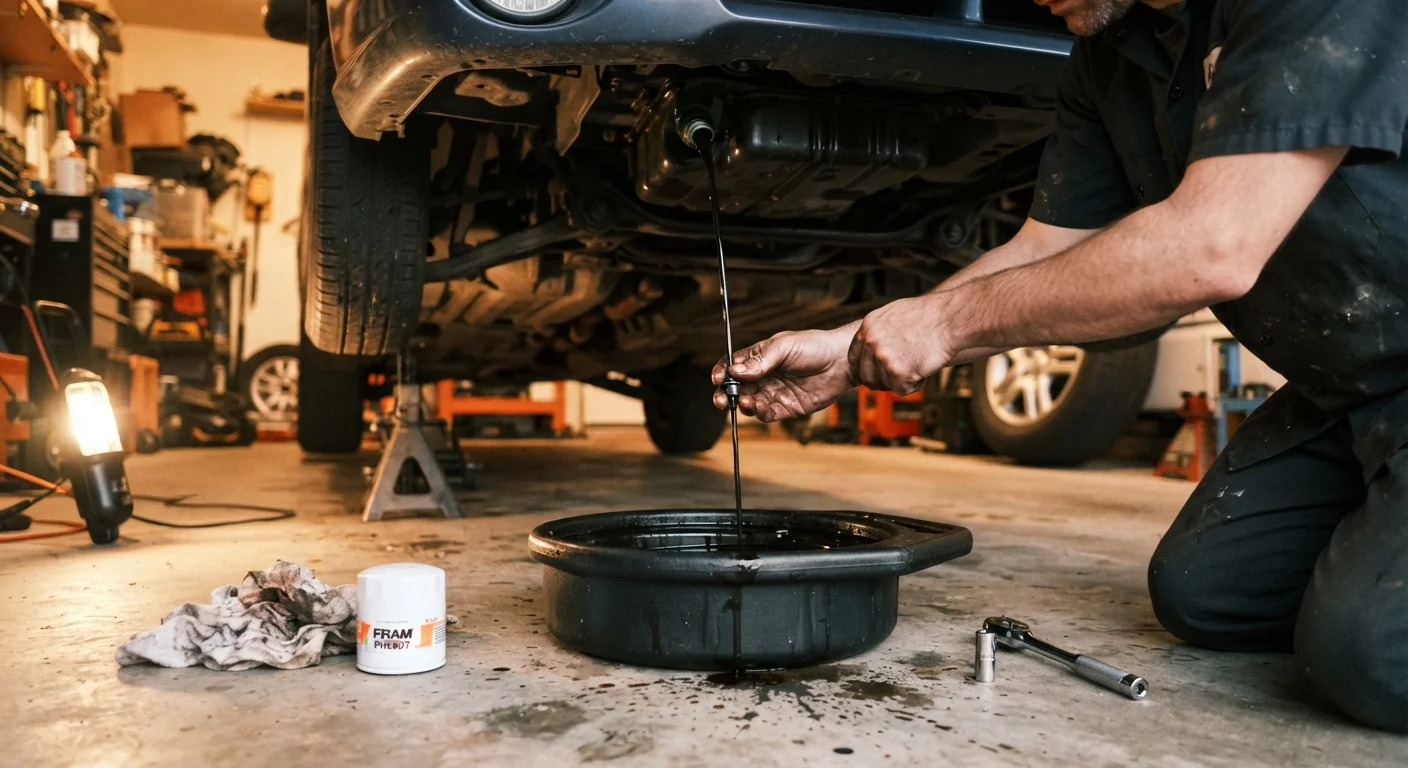
Photo credit: SyndicateExpert.com | Information At The Ready
In this article
Changing your own oil can save money, but there are real tradeoffs in time, disposal, and error risk. Here's an honest look at both sides.
Key Takeaways
- DIY oil changes can save money per service, but require upfront investment in tools and supplies.
- Improper disposal of used motor oil is illegal in most states and an environmental hazard.
- Mistakes like overtightening the drain plug or using the wrong oil can cause serious engine damage.
- Modern vehicles often have specific oil type and filter requirements that are easy to overlook.
- For many drivers, the time and effort tradeoff makes professional service the more practical choice.
Lower per-service cost once tools are in hand
After the initial tool investment, the recurring cost of oil and a filter is typically less than a shop service, producing real savings over multiple changes.
You control the exact oil and filter used
Buying your own supplies lets you verify the viscosity grade and oil specification called for in your owner's manual, without relying on a service counter.
Opportunity to inspect the underside of your vehicle
While you're underneath, you can visually check for leaks, damaged components, or worn hardware that might otherwise go unnoticed between professional visits.
Builds mechanical familiarity with your car
Hands-on maintenance, even basic tasks, helps drivers recognize unusual sounds, smells, or behaviors more quickly because they understand the system better.
Upfront tool cost can wipe out early savings
A drain pan, filter wrench, ramps or jack stands, and proper sockets can add up to $60-$100 or more before a single oil change is completed.
Used oil disposal is legally regulated and inconvenient
Dumping used motor oil is illegal in most states and environmentally harmful. Drivers must collect it and transport it to a designated recycling facility.
Easy to use the wrong oil type or quantity
Modern engines require specific viscosity grades and often synthetic formulations; using an incorrect specification can compromise engine protection and potentially affect warranty coverage.
Drain plug or filter errors can cause costly damage
Overtightening the drain plug can strip threads in the oil pan, while an under-torqued filter can leak - both mistakes can lead to repairs far exceeding any savings.
Requires appropriate workspace and conditions
Working safely under a vehicle requires a level surface, jack stands or quality ramps, and adequate lighting - conditions not every driver has access to at home.
The Appeal of Doing It Yourself
The pitch for DIY oil changes is straightforward: buy a few quarts of oil, a filter, and an afternoon of your time, and you'll spend less than a shop charges. That math is partially correct. The cost of oil and a filter is often lower than a full-service price at a quick-lube shop, and for drivers who change their oil frequently or own multiple vehicles, those savings add up.
There's also a genuine sense of control that comes with doing your own maintenance. You know exactly what oil went in, you can inspect underneath the vehicle while you're down there, and you're not relying on a service writer to upsell you on extras. For drivers who want a closer relationship with how their car works, an oil change is a reasonable entry point.
That said, the full picture is more complicated - and understanding both sides helps you make a genuinely informed decision rather than one based on a half-true assumption. For context on how often this job actually needs doing, see our guide on oil change intervals.
The Real Costs and Complications
The upfront investment surprises many first-timers. You'll need an oil drain pan, a filter wrench, the correct socket for your drain plug, jack stands or ramps if your car sits low, and gloves and rags. Quality tools aren't optional - a stripped drain plug or a filter you can't remove will turn a 30-minute job into an expensive problem. That initial gear spend can easily exceed $60 to $100, erasing several services worth of savings before you break even.
Then there's the oil itself. Modern engines are picky. Many require a specific viscosity grade and may call for full synthetic rather than conventional oil. Using the wrong specification can affect engine protection and, in some cases, void warranty coverage on newer vehicles. Our article on synthetic vs. conventional motor oil explains why these distinctions matter more than many drivers realize.
Lower per-service cost once tools are in hand
After the initial tool investment, the recurring cost of oil and a filter is typically less than a shop service, producing real savings over multiple changes.
You control the exact oil and filter used
Buying your own supplies lets you verify the viscosity grade and oil specification called for in your owner's manual, without relying on a service counter.
Opportunity to inspect the underside of your vehicle
While you're underneath, you can visually check for leaks, damaged components, or worn hardware that might otherwise go unnoticed between professional visits.
Builds mechanical familiarity with your car
Hands-on maintenance, even basic tasks, helps drivers recognize unusual sounds, smells, or behaviors more quickly because they understand the system better.
The disposal question is where many DIYers get caught off guard. Used motor oil is classified as a hazardous material - pouring it down a drain or putting it in household trash is illegal in most states and genuinely harmful to waterways. You'll need to collect it in a sealed container and transport it to a recycling drop-off, which adds a step most guides don't emphasize.
Upfront tool cost can wipe out early savings
A drain pan, filter wrench, ramps or jack stands, and proper sockets can add up to $60-$100 or more before a single oil change is completed.
Used oil disposal is legally regulated and inconvenient
Dumping used motor oil is illegal in most states and environmentally harmful. Drivers must collect it and transport it to a designated recycling facility.
Easy to use the wrong oil type or quantity
Modern engines require specific viscosity grades and often synthetic formulations; using an incorrect specification can compromise engine protection and potentially affect warranty coverage.
Drain plug or filter errors can cause costly damage
Overtightening the drain plug can strip threads in the oil pan, while an under-torqued filter can leak - both mistakes can lead to repairs far exceeding any savings.
Requires appropriate workspace and conditions
Working safely under a vehicle requires a level surface, jack stands or quality ramps, and adequate lighting - conditions not every driver has access to at home.
Where Mistakes Happen - and What They Cost
An oil change looks simple because it involves few steps, but each one has a meaningful failure mode. The drain plug can be overtightened, damaging the threads in the oil pan - a repair that can cost several hundred dollars. The filter can be under-tightened, leading to a slow leak that ruins a driveway or, worse, goes unnoticed until the engine is low on oil. The new oil fill cap can be left loose, or the wrong amount of oil added.
None of these mistakes are inevitable, but they're all common enough to warrant honest acknowledgment. A professional tech does this job daily; a DIYer may do it a few times per year. Repetition builds the intuition to catch small errors before they escalate.
Check Your Owner's Manual First
Before purchasing supplies for a DIY oil change, consult your vehicle's owner's manual for the exact oil viscosity, API service rating, and filter specification. Many newer vehicles - particularly those with turbocharged engines or cylinder deactivation systems - have narrower oil requirements than older models. Using an off-spec oil, even temporarily, can affect how well the engine is protected between changes.
It's also worth noting that skipping or delaying oil changes - whether DIY or professional - is one of the more quietly damaging habits a driver can develop. Our piece on maintenance tasks drivers put off covers how deferred service compounds into larger repair bills over time.
Making the Right Call for Your Situation
The honest answer is that DIY oil changes work well for some drivers and less well for others. If you have a suitable workspace, already own basic tools, and feel confident following a procedure carefully, the savings are real and the experience is worthwhile. If you're working in a tight apartment parking lot, lack the right tools, or find the disposal logistics burdensome, a shop visit is likely the smarter use of your time and money.
What matters most isn't who changes the oil - it's that the right oil goes in, the right amount is used, and the interval is respected. For a broader look at where common car ownership assumptions go wrong, car ownership myths that cost Americans money is worth a read before you make any routine maintenance decisions on autopilot.
~4-5 qts
Typical engine oil capacity per change
Most passenger cars require between 4 and 5 quarts per oil change, though some performance or larger engines need significantly more - always verify in the owner's manual.
~1 billion
Gallons of used motor oil generated annually in the U.S.
The U.S. Environmental Protection Agency estimates roughly 1 billion gallons of used oil are generated each year, making proper disposal a significant environmental concern.

Author
Cars & Driving Editorial Team
Cars & Driving Editorial Team is the collective byline for our editorial team and contributor network. Articles published under this byline or an editorial pen name are researched, written, and reviewed according to our editorial standards for clarity, consistency, and independence before publication.
View all articles →