
Your First Budget in Seven Steps
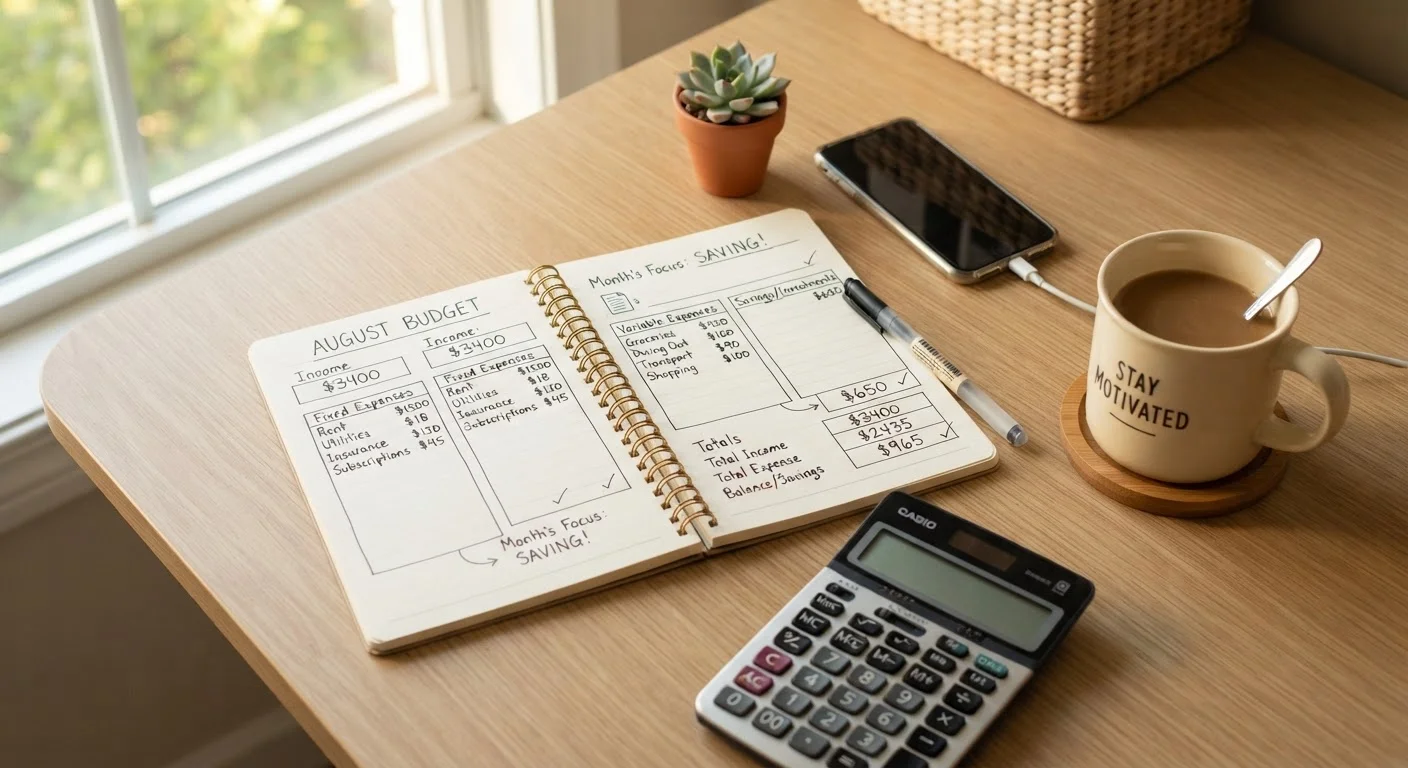
Photo credit: SyndicateExpert.com | Information At The Ready
In this article
Never made a budget before? This plain-language walkthrough covers income, expenses, and how to put a working plan on paper.
Key Takeaways
- A first budget only needs two things: what comes in and what goes out.
- Tracking actual spending for 30 days before budgeting prevents guesswork.
- Fixed expenses are predictable; variable expenses are where most savings opportunities hide.
- A gap between income and expenses tells you whether you're moving forward or backward.
- Budgets require regular adjustment — a working plan beats a perfect plan every time.
Why a First Budget Is Different
A first budget isn't about being perfectly disciplined. It's about seeing your finances clearly for the first time — likely with some surprises. Most people who avoid budgeting aren't careless; they simply don't have a clear picture of where their money actually goes.
This walkthrough treats your first budget as a discovery process. You're not committing to a rigid plan. You're building the foundation that every other financial move — saving, paying down debt, eventually investing — depends on.
For a broader view of how budgeting fits into your overall financial life, the complete budgeting guide is a useful companion.
Steps 1–3: Know Your Numbers
Step 1: Calculate your real take-home income. Start with what actually lands in your bank account each month after taxes and deductions — not your gross salary. If your income varies, use a conservative estimate based on your lowest recent months.
Step 2: List every fixed expense. Fixed expenses are consistent month to month: rent or mortgage, car payment, insurance premiums, loan minimums, subscriptions. Write down the exact amounts. These are non-negotiable in the short term.
Step 3: Track variable spending for 30 days. Before estimating categories like groceries, dining, gas, or entertainment, look at what you've actually spent. Pull three months of bank and credit card statements and average the amounts. Most people underestimate variable spending by 20–30% when guessing from memory.
If your income is irregular — gig work, freelance, or seasonal — see the FAQ section below for how to set a reliable baseline.
Steps 4–5: Build the Plan
Step 4: Subtract expenses from income. Add up all fixed and variable expenses and subtract the total from your monthly take-home pay. The result tells you one of three things: you have a surplus (income exceeds spending), you're breaking even, or you have a deficit (spending exceeds income).
A deficit doesn't mean failure — it means the budget is working. You now know exactly what to address. Review your variable categories first; that's where most adjustments are possible without major lifestyle changes.
Step 5: Assign every remaining dollar a job. If you have a surplus after covering expenses, decide in advance where it goes: emergency savings, debt payments, a specific goal. Unassigned money tends to disappear. Even a small automatic transfer to savings — whatever you can manage — is a meaningful first step. For more on building savings alongside debt management, see this ground-up guide to saving and debt.
Build in a Small Buffer Category
Add a 'miscellaneous' or 'buffer' line of $25–$50 to your first budget. Unexpected costs — a parking ticket, a birthday gift, a minor car repair — will come up, and a buffer prevents them from derailing the entire plan. As your budget matures, this category often shrinks naturally.
Steps 6–7: Track, Adjust, and Keep Going
Step 6: Track spending in real time throughout the month. A budget written on paper and ignored is not a budget — it's a wish list. Log expenses as they happen, or do a brief daily review. The goal is to know where you stand before the month ends, not after.
Step 7: Review and adjust at month's end. Expect your first budget to be imperfect. Compare what you planned against what actually happened, note which categories ran over, and update your numbers for next month. Budgeting is an iterative skill, not a one-time event.
If your budget falls apart in the first few months, the problem is almost always structural — not a character flaw. Why your budget keeps failing walks through the most common structural mistakes and how to correct them. You can also use the monthly budget setup checklist to build a consistent start-of-month routine.
This article is for general informational and educational purposes only. It is not personalized financial advice. For guidance tailored to your specific situation, consult a qualified financial professional.
Choosing a Budgeting Method
Once you've completed your first month, consider adopting a structured method. Two common approaches suit beginners well:
- 50/30/20: Allocate roughly 50% of take-home income to needs, 30% to wants, and 20% to savings and debt repayment. Treat these as guidelines, not absolutes — your situation may require different proportions.
- Zero-based budgeting: Every dollar of income is assigned a category until the balance reaches zero. Nothing is left unplanned. This approach requires more upfront effort but leaves no room for unintentional spending. Learn more in Zero-Based Budgeting: Giving Every Dollar a Job.
Neither method is universally superior. The right choice is the one you'll use consistently. Once your first budget is stable, building long-term budget habits becomes the next priority.
Frequently Asked Questions

Author
Personal Finance Editorial Team
Personal Finance Editorial Team is the collective byline for our editorial team and contributor network. Articles published under this byline or an editorial pen name are researched, written, and reviewed according to our editorial standards for clarity, consistency, and independence before publication.
View all articles →